
Tire Services In Glendale, AZ
The Right Tires, Installed Right, Lasting Longer In Arizona’s Heat
Expert tire service from ASE-certified technicians who understand what Glendale’s extreme heat, summer asphalt, and high-mileage city driving demand from every set of tires.
- Accurate tire selection, installation, and inspection matched to your vehicle’s specifications and Glendale’s operating demands
- Tire service near me — same-day and Saturday appointments for tire installation, rotation, balancing, and repair
- Complete tire care covering new tire installation, rotation, balancing, flat repair, TPMS service, and tire pressure management
Tire Services Glendale
Why Tire Care Is More Critical In Glendale Than Most Drivers Realize
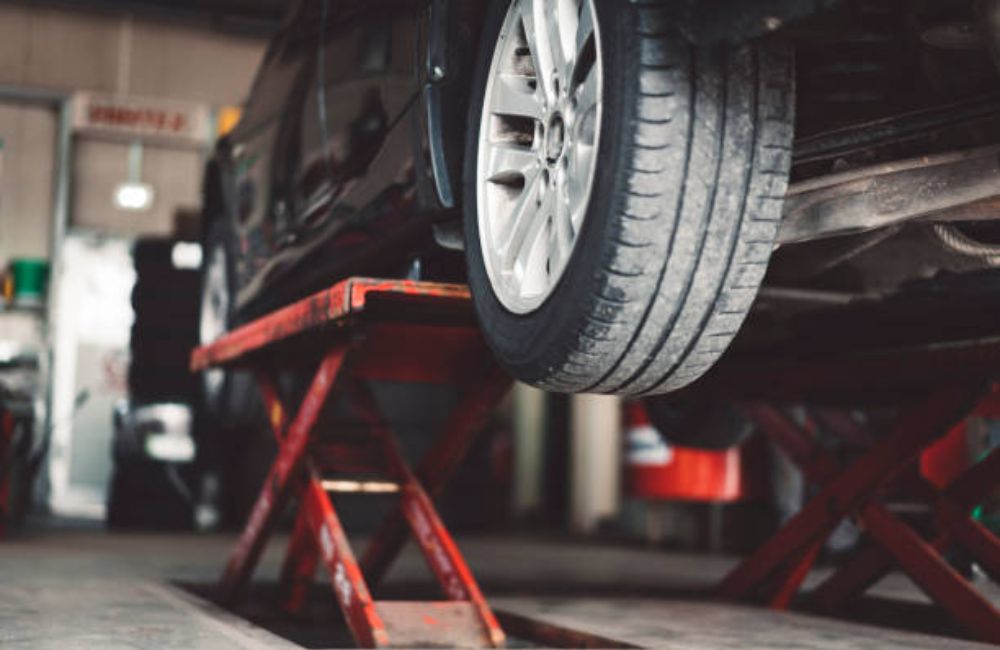
Glendale’s summer heat destroys tires faster than any other single factor
No variable shortens tire life more aggressively than sustained heat — and Glendale delivers more of it, more consistently, than virtually anywhere else drivers in the continental United States operate. Summer road surface temperatures in Glendale regularly exceed 150°F to 160°F, and the combination of ambient heat, direct sun on the tire sidewall, and friction heat from driving keeps tire rubber operating at temperatures that accelerate compound degradation throughout the summer months. Heat causes tire rubber to oxidize, lose elasticity, and develop sidewall cracking and tread separation risks on an accelerated timeline. A tire that would last five years in a cooler climate may show significant degradation in three in Glendale’s operating environment — making proactive tire inspection and informed replacement timing more important here than most tire manufacturers’ general guidelines anticipate.
Under-inflation in Glendale’s heat: the combination that causes blowouts
Tire pressure management in Glendale is complicated by a dynamic that catches many drivers off guard. Arizona’s dramatic temperature swing between cool desert nights and midday summer highs causes tire pressure to fluctuate significantly — tires that are correctly inflated in the morning parking lot can be over-inflated by afternoon as heat expands the air inside. More dangerously, a tire that is already slightly under-inflated at morning start-up operates at a structural disadvantage from the first mile — and under-inflation combined with Glendale’s heat is the leading cause of tire blowouts on West Valley highways. Under-inflated tires flex excessively with each rotation, generating internal heat that weakens the tire structure from inside, creates irregular wear patterns that consume tread faster, and reduces fuel efficiency on every mile driven.
Uneven tire wear patterns — what Glendale drivers see and what they mean
Tire wear patterns communicate the condition of the vehicle’s alignment, suspension, and inflation management clearly to anyone who knows how to read them — and in Glendale’s heat, where tread wear happens faster than in most climates, these patterns develop on a timeline that makes regular inspection genuinely important. Center wear that is faster than the shoulders indicates chronic over-inflation — common in Glendale vehicles whose owners inflate to the sidewall maximum rather than the door placard specification. Edge wear faster than center indicates chronic under-inflation or misalignment. Cupped or scalloped wear across the tread face indicates worn shock absorbers allowing excessive wheel bounce. Each pattern identifies a correctable vehicle condition — and each, left unaddressed, accelerates the tire replacement cycle that is already shortened by Glendale’s summer operating environment.
The TPMS warning light that Glendale drivers learn to ignore — and shouldn’t
Tire pressure monitoring systems became federally mandated on new vehicles in 2008, and the TPMS warning light is the most direct communication a vehicle provides about tire inflation status. Yet many Glendale drivers develop a habit of dismissing a TPMS warning after topping off a single tire — without investigating why that tire needed air, whether the TPMS sensor itself has failed, or whether the pressure differential between tires is creating a handling imbalance. A TPMS warning in Glendale’s heat is never a trivial alert — it indicates a tire operating outside its safe pressure range in exactly the conditions where pressure deviation creates the greatest risk. Proper TPMS service, including sensor testing, replacement, and reset after service, is a safety service as much as a maintenance one.
Why the right tire for Glendale is not necessarily the cheapest tire available
Not all tires are equal in Glendale’s operating environment — and tire selection decisions that prioritize upfront cost over heat tolerance, treadwear rating, and load index create a cycle of premature replacement that costs more per mile than the quality tire that lasts through multiple Arizona summers. Tires with higher temperature resistance ratings, reinforced sidewalls for the load demands of Glendale’s truck and SUV-heavy vehicle population, and tread compounds formulated for high-temperature operation deliver measurably better longevity in Arizona’s heat. Our tire selection guidance helps Glendale drivers understand the specifications that matter for their driving conditions and vehicle type — ensuring the tire investment delivers the mileage and safety performance it should in the West Valley’s demanding environment.

Tire Services Glendale
Our Tire Services
Complete tire service in Glendale, AZ — covering new tire installation, rotation, computerized balancing, flat repair, TPMS service, and tire selection guidance for all vehicle makes navigating Maricopa County’s extreme heat and demanding road conditions.
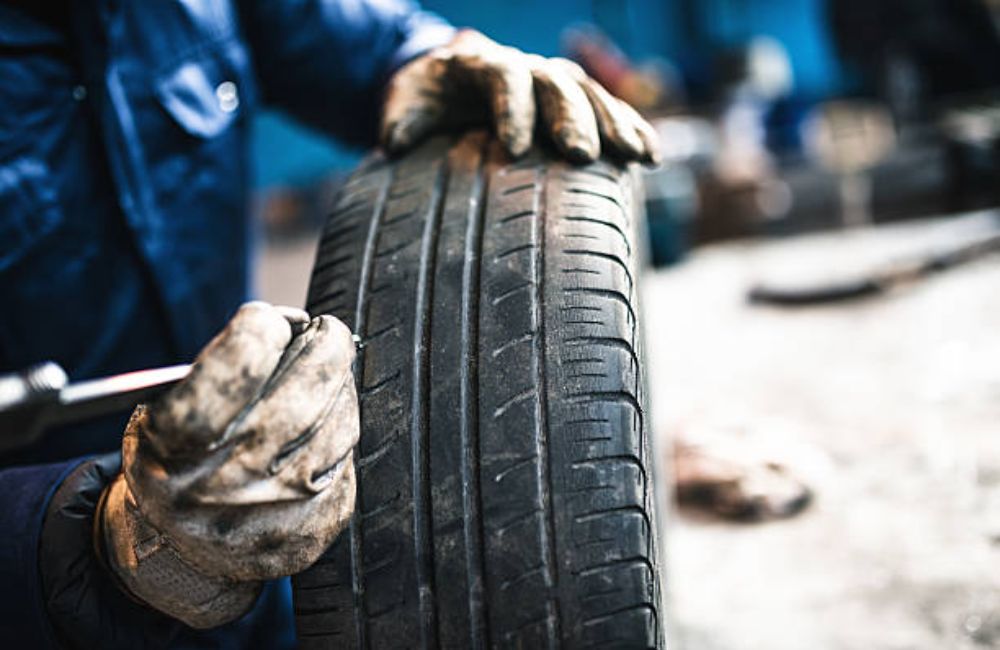
New Tire Installation And Mounting
Professional tire mounting and installation service matching your vehicle’s specifications for size, load index, speed rating, and temperature performance — with computerized balancing and TPMS confirmation completed as standard steps at every installation.

Tire Rotation Service
Scheduled tire rotation moving each tire to its optimal position for even wear distribution — extending overall tire set longevity and identifying developing wear pattern issues before they accelerate tread consumption in Glendale’s heat.
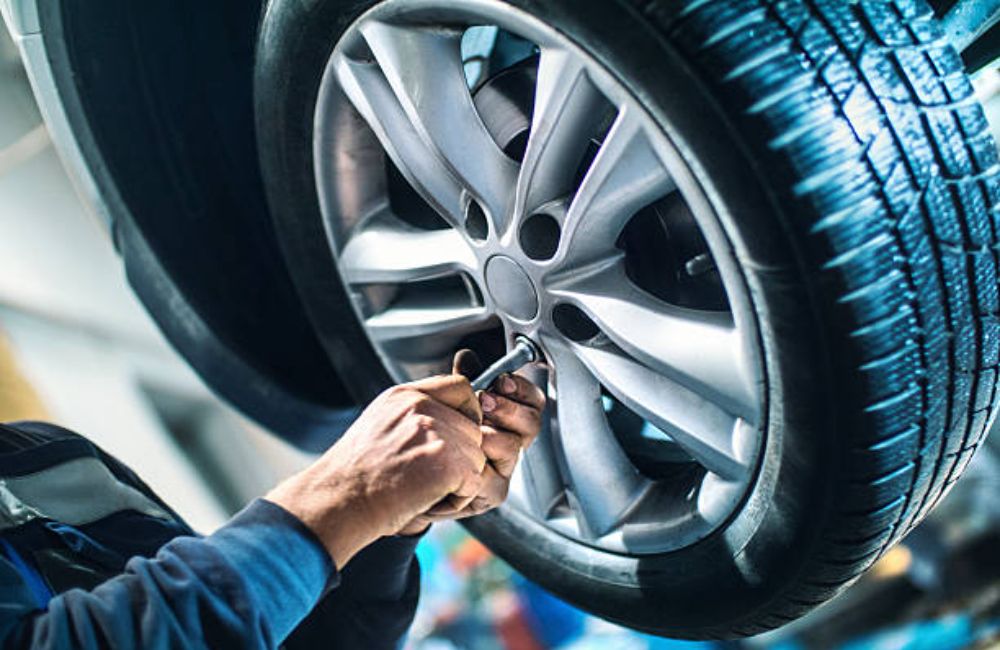
Computerized Wheel Balancing
Dynamic computerized wheel balancing measuring and correcting weight distribution imbalance across the full wheel and tire assembly — eliminating steering wheel vibration and highway shimmy that Glendale freeway commuters experience most acutely.
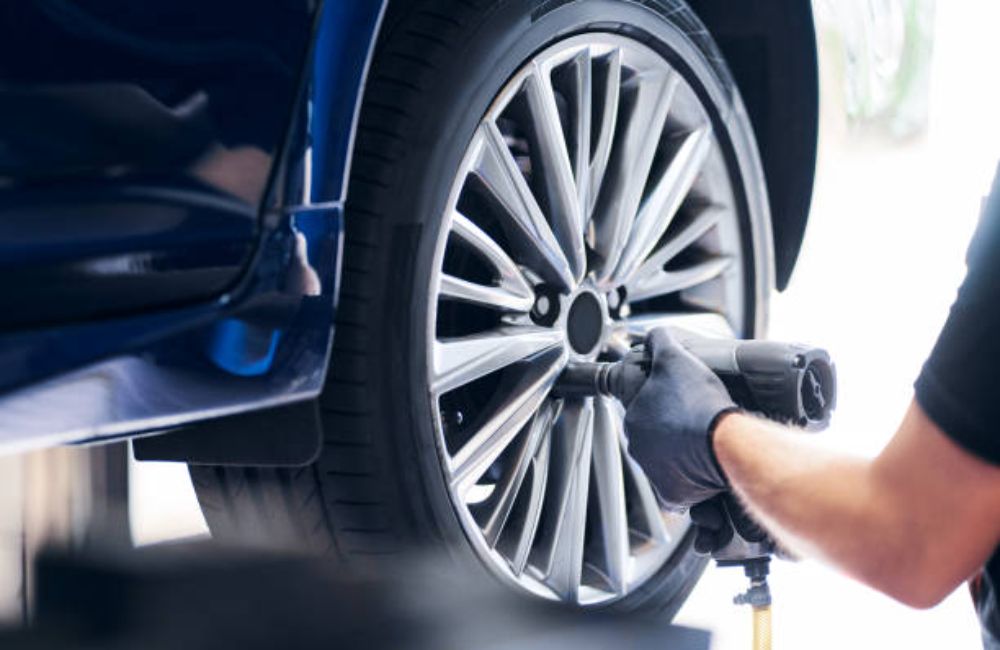
Flat Tire Repair And Patch Service
Proper flat tire repair using industry-standard plug-and-patch repair procedures — addressing punctures in the repairable zone of the tread safely and durably for Glendale drivers, and advising on replacement when damage location or tire condition makes repair inappropriate.

TPMS Sensor Service And Replacement
Tire pressure monitoring system sensor testing, replacement, and reset service — restoring accurate TPMS function after battery failure, sensor damage, or tire service that requires sensor removal and reinstallation.
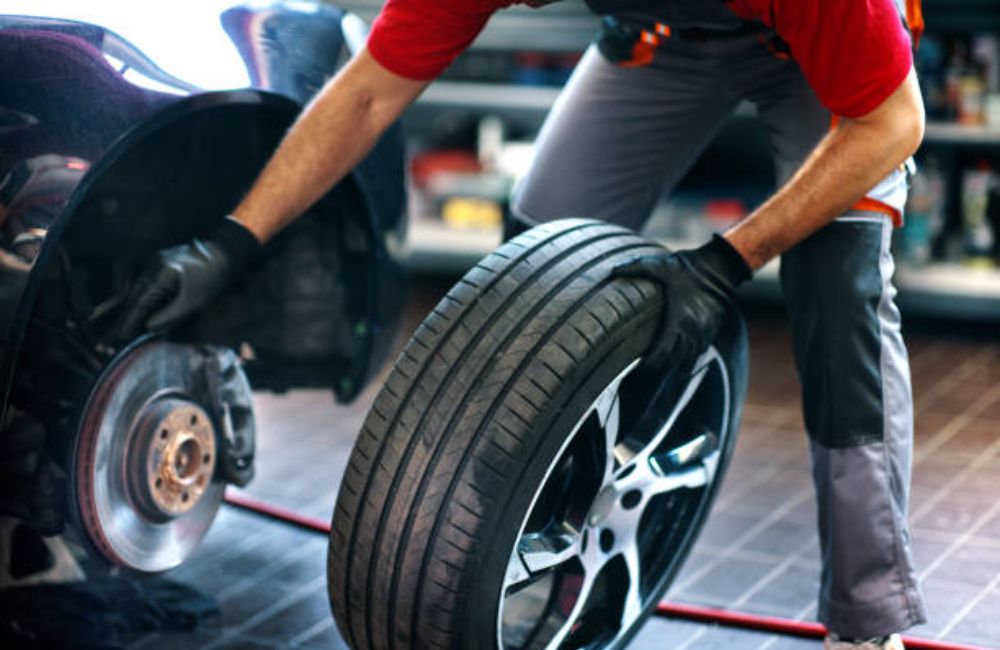
Tire Pressure Inspection And Adjustment
Tire inflation inspection and adjustment to door placard specification — correcting the over-inflation and under-inflation conditions that accelerate tire wear and create blowout risk in Glendale’s extreme heat and dramatic temperature cycling.

Tire Inspection And Tread Depth Measurement
Comprehensive tire condition inspection measuring tread depth at multiple points across each tire, evaluating sidewall condition, checking for age cracking and heat damage, and assessing load index and speed rating adequacy for the vehicle’s use.
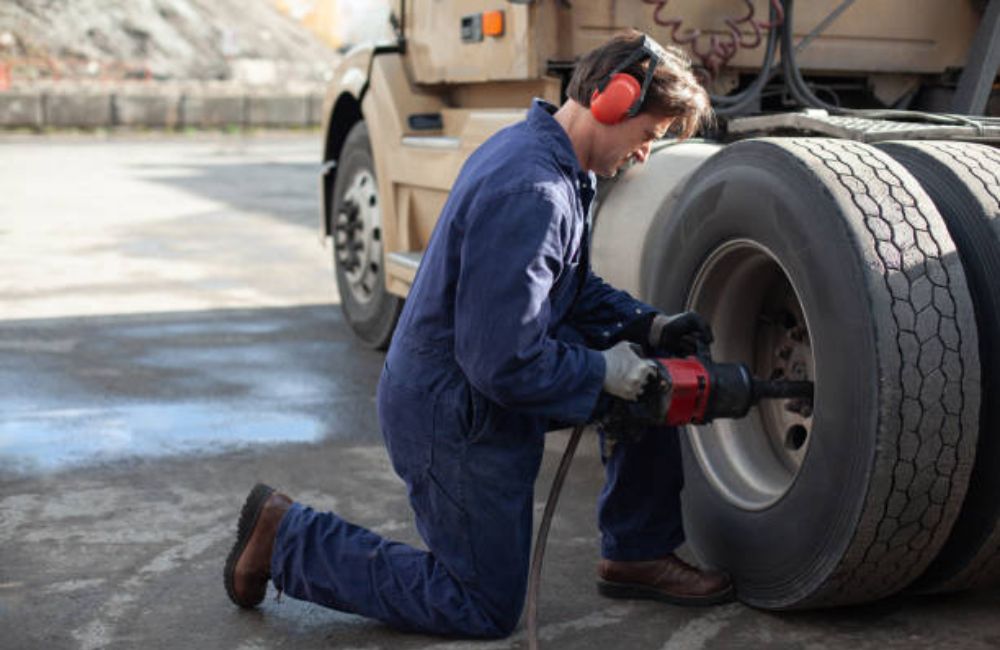
Tire Wear Pattern Analysis And Diagnosis
Systematic tire wear pattern evaluation identifying the alignment, inflation, or suspension conditions driving uneven wear — addressing the root cause of accelerated wear before new tires are installed to protect the replacement investment.
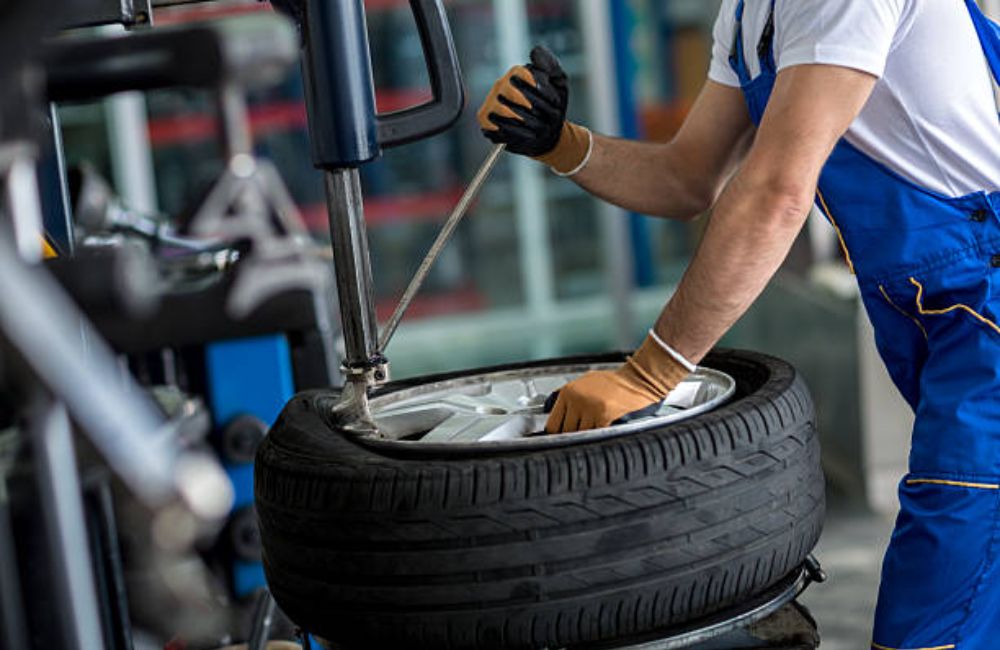
Run-Flat And Specialty Tire Service
Mounting, balancing, and service for run-flat tires, performance low-profile tires, all-terrain tires, and other specialty tire types — using equipment and procedures appropriate for the specific structural and handling characteristics of each tire category.

Tire Age And Heat Damage Assessment
Tire age evaluation and heat damage inspection assessing sidewall cracking, rubber compound hardening, and structural integrity — identifying tires that have exceeded their safe service life in Glendale’s UV and heat environment regardless of remaining tread depth.
Tire Services Glendale
Why Choose All Valley Car Care For Tire Services
All Valley Car Care brings comprehensive tire service capability and genuine Arizona climate expertise to every tire installation, rotation, and inspection in Glendale. Our technicians work across the full range of tire types and vehicle platforms — passenger, performance, truck, SUV, all-terrain, run-flat, and specialty tires — using professional tire mounting, computerized balancing, and a tire selection process that accounts for Glendale’s specific operating demands.
- Computerized dynamic wheel balancing with every tire installation — confirming smooth rotation and eliminating vibration before the vehicle leaves our service bay
- Tire pressure set to door placard specification at every service — not the sidewall maximum — with TPMS sensor function confirmed after inflation adjustment
- Complete tire inspection evaluating tread depth across all measurement points, sidewall condition, age cracking, load index adequacy, and speed rating compatibility
- Tire wear pattern analysis identifying the alignment, inflation, or suspension conditions driving accelerated wear — so the source of the wear is addressed alongside the replacement
- Arizona-specific tire selection guidance evaluating temperature rating, treadwear rating, and heat tolerance alongside standard load and speed specifications for Glendale’s operating environment
- TPMS sensor testing, replacement, and reset service performed as a standard step at every tire installation — not an afterthought
- Digital service records tracking tire brand, size, installation date, tread depth measurements, and rotation history for every vehicle.
Tire Services Glendale
How We Deliver Consistent Quality
- Vehicle-specific tire specification research confirming correct tire size, load index, speed rating, and temperature performance rating for every vehicle make, model, year, and trim level before any tire recommendation is made
- Computerized dynamic balancing with every tire installation and rotation — measuring imbalance at operating speed and confirming correction before the vehicle returns to service
- Tire inflation set to door placard specification — not sidewall maximum — at every service, with TPMS sensor function confirmed and reset where required
- Tire wear pattern documentation at every rotation and inspection visit — recording tread depth measurements across multiple points per tire and flagging developing wear issues for the customer’s awareness
- Arizona-specific tire selection guidance evaluating temperature resistance ratings, treadwear ratings, and heat tolerance characteristics alongside standard load and speed specifications
- Post-installation alignment check recommendation for any vehicle showing wear patterns suggesting alignment contribution — ensuring new tire investment is protected from day one
- Photo documentation of tire condition, tread depth readings, and TPMS status compiled before any replacement recommendation is presented to the customer
- Digital service records tracking tire brand, size, installation date, tread depth history, and rotation service intervals for every vehicle in our care.
Tire Services Glendale
Frequently Asked Questions
How much does tire service cost in Glendale, AZ?
Tire service pricing varies considerably by service type. Tire rotation and balancing are among the more accessible maintenance services. Flat repair pricing depends on damage location and tire condition assessment. New tire pricing varies by tire size, brand, and specification tier — with a meaningful spread between budget, mid-range, and performance options that is worth understanding in the context of Glendale's heat and your vehicle's specific requirements. We provide specific pricing after confirming your vehicle's tire specifications and discussing your driving conditions. Contact us at (623) 243-6206 to discuss your tire needs.
How often should I rotate my tires in Glendale's heat?
Most manufacturers recommend tire rotation every 5,000 to 7,500 miles, often timed with oil changes. In Glendale's operating environment — where summer heat accelerates uneven wear from misalignment, inflation variation, and driving pattern — adhering to the shorter end of this interval is practical for drivers who want to maximize tire set longevity. Vehicles with front-wheel drive accumulate front tire wear faster than rear, making rotation timing particularly consequential. Our technicians note tread depth measurements at every rotation to track wear progression and advise on replacement timing before tread reaches unsafe levels.
Can all flat tires be repaired, or do some need replacement in Glendale?
Not all flat tires are repairable — and determining which is which requires inspection of damage location, damage type, and overall tire condition. The industry standard from the Tire Industry Association establishes that punctures in the central tread area may be repaired with a proper plug-and-patch procedure. Punctures in the shoulder or sidewall area, damage from running flat for a distance, tires with existing sidewall cracking or age damage, and run-flat tires that have been driven on while deflated are typically not appropriate for repair. Our inspection process evaluates all of these factors before recommending repair or replacement — ensuring that a repaired tire is genuinely safe for continued service.
What does a TPMS warning light mean in Glendale and what should I do?
A TPMS warning light indicates that one or more tires is operating outside its specified pressure range — typically 25% or more below the door placard recommendation. In Glendale's heat, this warrants immediate attention: an under-inflated tire generates excessive heat from internal flexing, which compounds the already-elevated thermal stress of summer driving and significantly increases blowout risk. The correct response is to check all four tire pressures, inflate to door placard specification, and investigate why the low-pressure tire lost air — identifying the leak source rather than simply topping off and hoping the light resets. If the TPMS light remains on after inflation correction, the sensor itself may require service.
How do I know if my tires are too old to be safe in Glendale?
Tire age is an important safety factor independent of tread depth — and in Glendale's heat and UV environment, rubber degradation proceeds faster than in cooler climates. The general industry guidance recommends tire replacement at or before ten years from the manufacturing date, with inspection recommended from six years onward. The manufacturing date is encoded in the DOT code on the tire sidewall — the last four digits indicate the week and year of manufacture. Tires showing visible sidewall cracking, surface checking, or a hardened, brittle feel should be evaluated for replacement regardless of age or remaining tread. Our tire inspection includes age assessment and heat damage evaluation alongside tread depth measurement.
What tire specifications matter most for Glendale's operating environment?
The temperature performance rating is the specification most directly relevant to Glendale's heat — tires carry an A, B, or C temperature rating indicating their heat resistance at speed, with A being the highest performance level. Beyond temperature rating, load index adequacy for the vehicle's weight — particularly important for trucks and SUVs that carry regular loads — and treadwear rating as an indicator of compound durability are meaningful selection criteria for Glendale drivers. Speed rating affects heat resistance as well, with higher speed ratings generally indicating tires engineered for sustained high-temperature operation. Our tire selection guidance walks through these specifications in the context of your specific vehicle and driving conditions.
How does wheel balancing relate to tire service and when is it needed?
Wheel balancing is a standard component of complete tire service — performed at every new tire installation and recommended at every tire rotation. Balancing corrects the weight distribution imbalance that develops as tires wear unevenly and that is present to some degree in every new tire and wheel combination due to manufacturing variation. An unbalanced wheel and tire assembly produces steering wheel vibration and highway shimmy at specific speed ranges, accelerates uneven tread wear, and places additional stress on wheel bearings and steering components. In Glendale's heat, where tire wear is already accelerated, the compound effect of imbalance on tire longevity and handling comfort makes balancing at every rotation service a practical maintenance standard. For additional tire safety guidance, the Tire Industry Association provides consumer resources at tireindustry.org.
Tire Services Glendale
Our Process At A Glance
Discovery & Assessment
Your service advisor discusses your tire concerns in detail — current tread depth, any vibration or pull, recent pressure loss events, TPMS warning history, and the vehicle’s typical load and driving conditions. We confirm your vehicle’s tire specifications and inspect current tire condition before making any service recommendation.
Service Execution
Our ASE-certified technicians perform the requested tire service — installation, rotation, balancing, flat repair, or TPMS service — using equipment and procedures appropriate for your tire type and vehicle platform. Tread depth measurements are recorded, inflation is set to door placard specification, TPMS function is confirmed, and balancing is verified before the vehicle returns to service.
Performance Verification & Communication
We perform a post-service inspection confirming inflation, balance, and TPMS status, update your digital service record with tire brand, size, tread depth measurements, and service date, and advise on the recommended rotation interval and next tire inspection timing before returning your vehicle.
Tire Services Glendale
How Our Tire Services Suite Works In Glendale
New Tire Installation And Mounting
The right tire for Glendale’s heat — mounted and balanced to perform
New tire installation at All Valley Car Care begins with confirming the correct specification for your vehicle — not just the size, but the load index that matches your vehicle’s weight rating, the speed rating appropriate for your driving conditions, and the temperature performance rating that matters most in Glendale’s extreme operating environment. Our mounting process uses tire mounting equipment appropriate for the tire type, including the low-profile and run-flat procedures that standard mounting equipment handles incorrectly. Computerized dynamic balancing is performed on every new tire installation, TPMS sensors are confirmed functional and reset where required, and inflation is set to door placard specification before the vehicle leaves our service bay. For Glendale drivers replacing a full set, a post-installation alignment check is advised to ensure new tires begin their service life on a correctly aligned vehicle.
Tire Rotation Service
Even wear starts with consistent rotation on Glendale’s demanding roads
Tire rotation is the single most effective maintenance action for extending the service life of a tire set — and in Glendale’s heat, where tread wear is already accelerated by road surface temperatures and driving conditions, consistent rotation adherence produces measurably better tire longevity than irregular or skipped rotation. Our rotation service uses the correct rotation pattern for your vehicle’s drivetrain and tire type — directional tires, staggered fitments, and full-size spare inclusion each requiring different rotation approaches that a one-pattern-fits-all service doesn’t address correctly. Every rotation visit includes tread depth measurement at multiple points per tire, wear pattern documentation, and inflation adjustment to door placard specification — producing a service record that tracks tire health over the life of the set and identifies developing issues before they accelerate into premature replacement.
Computerized Wheel Balancing
Smooth Glendale highways start with wheels balanced to operate at speed
Computerized dynamic wheel balancing is a standard step in every tire service at All Valley Car Care — not an add-on or optional upgrade. Our balancing equipment spins each wheel and tire assembly at operating speed, measuring the imbalance magnitude and angular location around the complete circumference of the assembly in multiple planes of rotation. This dynamic measurement identifies the imbalance patterns responsible for the steering wheel vibration and highway shimmy that Glendale freeway commuters on the I-17 and Loop 101 corridors experience most acutely. Correction weights are placed at the precise locations the equipment identifies, and balance is re-measured to confirm accuracy after correction. For vehicles that continue to show vibration after standard balancing, our evaluation also assesses wheel runout, tire uniformity, and mounting interface condition — the secondary factors that prevent full vibration resolution.
Flat Tire Repair And Patch Service
Done right the first time — or honestly advised when replacement is needed
Flat tire repair done properly requires more than inserting a plug from the outside — the industry-standard repair procedure involves dismounting the tire, inspecting the inner liner for damage, and installing a combination plug-and-patch from the inside that seals both the puncture channel and the inner liner breach simultaneously. This two-component repair is what the Tire Industry Association and major tire manufacturers specify as the correct repair method — a plug alone, or an external plug without inner patch, leaves the inner liner unsealed and produces a repair that may hold temporarily but compromises the tire’s structural integrity under sustained load and heat. Our flat repair process follows the industry-standard procedure, and our inspection before repair confirms whether the damage location and tire condition make repair genuinely appropriate — ensuring that a repaired tire is safe for continued service in Glendale’s demanding conditions.
TPMS Sensor Service And Replacement
The safety system that tells you what your tires can’t say for themselves
TPMS sensors are battery-powered electronic devices mounted inside the wheel at each valve stem — and like all batteries, they have a service life that ends with sensor failure rather than gradual performance reduction. A failed TPMS sensor produces a persistent warning light or an inaccurate pressure reading that can mask genuine under-inflation in one tire while appearing to show normal system function. TPMS sensors also require specific service attention after any tire rotation or replacement that involves dismounting the tire — the service procedure requires sensor inspection, new valve core and seal installation, and system reset to the new wheel position assignments. Our TPMS service addresses sensor function at every tire service visit, replaces failed or expiring sensors with compatible units, and performs the programming reset that ensures the system accurately reports the correct pressure from each wheel position after service.
Tire Pressure Inspection And Adjustment
The correct inflation specification — not the sidewall maximum — every time
Tire pressure management is one of the most consequential and most frequently mishandled aspects of tire service in Glendale. The maximum pressure molded into the tire sidewall is not the target inflation for the vehicle — it is the maximum pressure the tire can structurally contain, and inflating to that number typically over-inflates the tire for its vehicle application, producing a harder ride, reduced contact patch, and center-heavy tread wear. The correct inflation specification is found on the vehicle door placard — a label inside the driver’s door frame that specifies front and rear pressure targets for the vehicle’s weight, suspension design, and expected load. Our technicians set inflation to door placard specification at every service, using calibrated equipment rather than the pressure gauge approximations that quick-service stops often rely on — a standard that produces correct inflation for Glendale’s heat and the vehicle’s actual requirements.
Tire Inspection And Tread Depth Measurement
Know where every tire stands before Glendale’s summer demands its most
Tire inspection and tread depth measurement at All Valley Car Care provides Glendale drivers with actual data on each tire’s condition — not a glance and a verbal assurance. Our inspection measures tread depth at a minimum of three points across each tire’s tread width, documents the reading at the vehicle’s thinnest wear location, assesses sidewall condition for cracking and bulging, evaluates age from the DOT date code, checks for heat damage indicators on the rubber compound, and confirms load index and speed rating adequacy for the vehicle’s use. The U.S. legal minimum tread depth of 2/32″ is a safety floor, not a replacement recommendation — at 4/32″, stopping distance on wet pavement increases significantly, and in Glendale’s monsoon season when dry roads become suddenly wet, that margin matters. Our inspection gives Glendale drivers the specific numbers that make tire replacement timing an informed decision rather than a guess.
Tire Wear Pattern Analysis And Diagnosis
What your tire tread tells us about your vehicle’s alignment and suspension
Tire wear patterns are among the most diagnostic-rich observations in vehicle maintenance — and in Glendale’s heat, where tread wear proceeds quickly, reading those patterns accurately at every rotation visit is a meaningful service. Center wear faster than the shoulders indicates chronic over-inflation, often from drivers inflating to the sidewall maximum. Shoulder wear faster than the center indicates chronic under-inflation or misalignment. One-sided inner or outer edge wear indicates camber or toe misalignment. Cupped or scalloped wear across the tread face indicates worn shock absorbers or struts allowing excessive wheel movement. Our wear pattern documentation at every rotation creates a record of each tire’s wear history, and our technicians explain what each pattern indicates and what corrective action addresses it — protecting the tire investment by resolving the cause of accelerated wear before it defeats a new set.
Tire Age And Heat Damage Assessment
Glendale’s UV and heat age tires faster than the date code alone reveals
Tire age assessment is a safety evaluation that tread depth measurement alone cannot provide — and in Glendale’s UV-intense, heat-extreme environment, it is more important than in most markets. Rubber compounds degrade under UV exposure and sustained heat in ways that reduce elasticity, create microscopic surface cracking that progresses to visible sidewall cracking, and harden the tread compound in ways that reduce wet traction regardless of remaining tread depth. Tires in Glendale vehicles parked outdoors age faster on their sun-exposed sidewall than on the wheel-side — creating an asymmetric degradation pattern that internal inspection reveals before visible external cracking makes it obvious. Our age and heat damage assessment evaluates the manufacturing date, visible rubber condition, compound hardness, and structural integrity — providing Glendale drivers with an honest evaluation of whether a tire’s remaining service life makes continued use the sensible choice or a safety compromise.
Ready For Expert Tire Services In Glendale?
All Valley Car Care serves Glendale and the broader West Valley with complete tire care, informed selection guidance, and a service process that protects every tire investment through Arizona’s most demanding seasons. We’re available Monday through Friday from 7:30 AM to 5:30 PM and Saturday mornings from 8 AM to 2 PM — because a flat tire, a TPMS warning, or a set of tires due for rotation in Glendale’s heat deserves same-day service and honest answers.
Proudly Serving in Glendale, AZ
-
Directions from Avondale, AZ to All Valley Car Care, Glendale, AZ
-
Directions from El Mirage, AZ to All Valley Car Care, Glendale, AZ
-
Directions from Litchfield Park, AZ to All Valley Car Care, Glendale, AZ
-
Directions from Peoria, AZ to All Valley Car Care, Glendale, AZ
-
Directions from Phoenix, AZ to All Valley Car Care, Glendale, AZ
-
Directions from Surprise, AZ to All Valley Car Care, Glendale, AZ
-
Directions from Tolleson, AZ to All Valley Car Care, Glendale, AZ
-
Directions from Youngtown, AZ to All Valley Car Care, Glendale, AZ
Serving Neighborhoods & Districts in Glendale, AZ
-
Directions from Arrowhead Ranch to All Valley Car Care, Glendale, AZ
-
Directions from Catlin Court Historic District to All Valley Car Care, Glendale, AZ
-
Directions from Cholla District to All Valley Car Care, Glendale, AZ
-
Directions from Downtown Glendale to All Valley Car Care, Glendale, AZ
-
Directions from Glendale Sports & Entertainment District to All Valley Car Care, Glendale, AZ
-
Directions from La Buena Vida to All Valley Car Care, Glendale, AZ
-
Directions from Maryvale to All Valley Car Care, Glendale, AZ
-
Directions from Ocotillo District to All Valley Car Care, Glendale, AZ
-
Directions from Rovey Farm Estates to All Valley Car Care, Glendale, AZ
-
Directions from Sahuaro Ranch to All Valley Car Care, Glendale, AZ
-
Directions from Thunderbird Palms to All Valley Car Care, Glendale, AZ
-
Directions from West Plaza to All Valley Car Care, Glendale, AZ
-
Directions from Yucca District to All Valley Car Care, Glendale, AZ
What Our Customers Say
Real Reviews from Your Gilbert Neighbors

