
How Do You Know If Your Car’s Brakes Are Overheating — and What’s Causing It in Avondale, AZ?
If you’ve ever come off the I-10 after a long stretch of stop-and-go traffic near Avondale and noticed a sharp burning smell, or your brake pedal suddenly felt softer than usual, your brakes may have been running too hot. Brake overheating isn’t just an inconvenience — it’s a safety issue that can turn into a dangerous situation quickly, especially during a Phoenix West Valley summer when the air temperature alone is already pushing 110°F and the pavement underneath your car is even hotter. The good news is that overheated brakes usually give you warning signs before they fail completely. Knowing what to look for can save you from a much bigger repair bill — or worse.
What Does Brake Overheating Actually Feel Like?
Most drivers don’t think about their brakes until something feels wrong. With overheating brakes, the feedback is usually pretty clear if you know what you’re noticing.
The most common signs include:
- A burning smell after braking — sharp, almost chemical, similar to burned rubber or hot metal
- Brake fade — your pedal feels normal, but the car takes noticeably longer to stop
- A soft or spongy pedal — the pedal travels further than usual before the brakes engage
- Vibration or pulsing when you press the pedal — often a sign that rotors have warped from heat
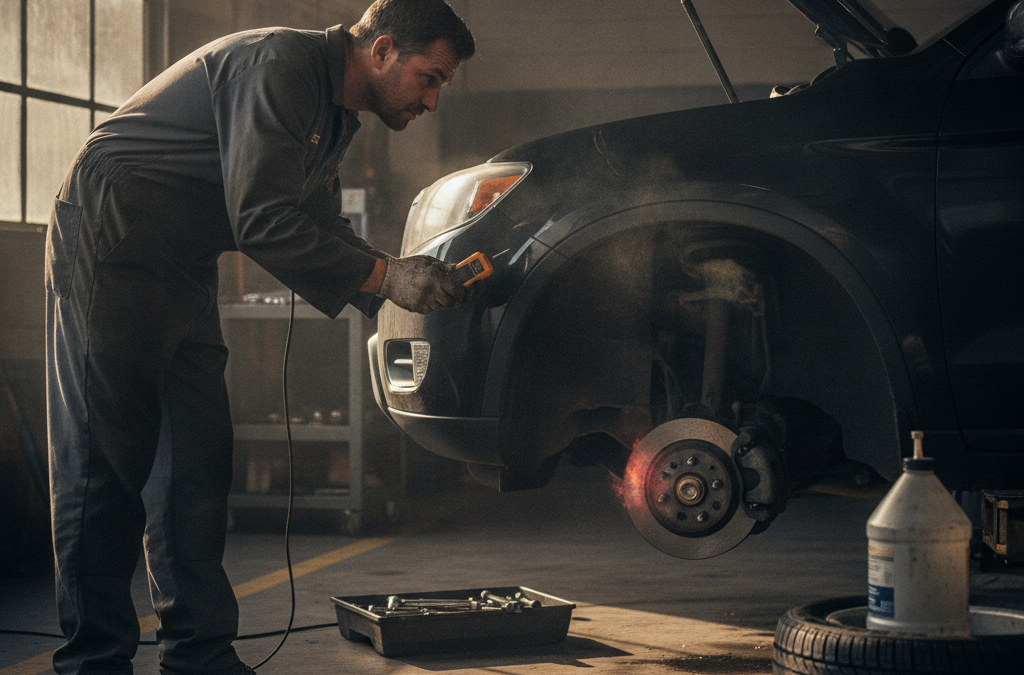
- Smoke coming from a wheel — a serious sign that something is stuck or severely overheated
Any one of these symptoms deserves attention. Two or more at the same time means you should stop driving and get your vehicle checked before your next trip — not next week.
Why Brakes Overheat — and Why Arizona Makes It Worse
Brakes generate heat by design. That’s literally how they work — friction converts your vehicle’s momentum into heat energy to slow you down. The problem is when they generate more heat than the system can safely dissipate. In most cases, that happens for one of a few reasons.
Worn Brake Pads
Brake pads have a layer of friction material designed to handle heat. When that material wears down, metal starts contacting metal — and that generates heat at a rate the system was never designed to handle. If your brakes are squealing or grinding, you’re likely already past the point where thin pads are causing overheating on every hard stop.
Riding the Brakes
Keeping light pressure on the brake pedal while driving — especially going downhill or in slow freeway traffic — builds up heat without giving the system time to cool down between applications. It’s a common habit drivers don’t realize they have until their mechanic points it out.
A Stuck Caliper
Brake calipers squeeze the pads against the rotor when you brake and release when you let off the pedal. If a caliper sticks in the engaged position, it drags constantly against the rotor. You’ll often notice the car pulling to one side and a burning smell even when you haven’t been braking hard. In Avondale and the surrounding West Valley, a stuck caliper is one of the more common reasons drivers come in with a single wheel smoking — and it’s something that needs to be addressed immediately.
Low or Degraded Brake Fluid
Here’s the one that surprises most people: your brake fluid plays a direct role in managing heat. It transfers hydraulic pressure through the system, but it also absorbs heat from the calipers. Brake fluid has a boiling point — and when it gets contaminated with moisture over time, that boiling point drops. When the fluid boils, it turns to vapor, and vapor compresses. That’s what causes the spongy pedal feeling. In Arizona’s heat, brake fluid degrades faster than it does in cooler climates, which means this issue shows up sooner than drivers expect.
Warped Rotors
Rotors that have been subjected to repeated heat cycles — especially if they’ve been quenched with cold water while still hot (something that can happen on a rainy day after heavy braking) — can warp. A warped rotor causes that pulsing or vibrating sensation under your foot when you brake. It also means uneven contact with the pads, which creates more heat in concentrated spots. Once a rotor is warped badly enough, resurfacing may help, but replacement is often the more reliable fix.
The Desert Heat Factor — and Why It’s Not Just About Your Driving
Drivers coming from out of state often underestimate how much the Arizona climate changes the math on brake maintenance. Goodyear, Litchfield Park, Avondale — these are all West Valley communities where summer temperatures bake vehicles sitting in parking lots for hours before a driver even starts the engine. Brake components that are already warm from ambient heat have less thermal headroom before they start overheating under normal use.
Add to that the stop-and-go patterns of growing West Valley traffic, construction zones on major corridors, and families hauling kids, gear, and groceries in heavy SUVs and trucks, and you have a recipe for brake systems working harder than they would in a milder climate. It’s not that Arizona drivers brake differently — it’s that the environment itself raises the baseline temperature your brakes are already working from.
This is also why brake fluid flushes matter more here than your owner’s manual may suggest. If you haven’t had your brake fluid tested or replaced in the last two to three years, it’s worth having it checked. A quick test can tell a technician whether your fluid’s boiling point has dropped enough to be a real concern.
What Competitors Aren’t Telling You: The Caliper and Fluid Connection
Most local shop websites mention brake pads and rotors — that’s pretty standard. What’s rarely covered is the relationship between stuck calipers, degraded fluid, and overheating as a system problem rather than isolated part failures. A pad and rotor replacement won’t fix an underlying caliper issue or fluid problem. If those get overlooked, the new parts will overheat too, and you’ll be back in the shop sooner than you should be.
At All Valley Car Care, a brake inspection covers the whole system — pads, rotors, calipers, brake lines, and fluid condition. There are no unnecessary repairs here. If only the pads need replacing, that’s what gets recommended. But if the caliper is sticking or the fluid has degraded past a safe threshold, you’ll know about it before it causes a bigger problem.
When to Pull Over and When to Drive Straight to a Shop
If your brakes feel spongy, your car is pulling hard to one side, or you see smoke from a wheel, pull over safely as soon as you can and call for help. Don’t try to drive to a shop on a brake system that’s actively failing.
If you smell burning after a long descent or heavy traffic stop but the pedal still feels firm and the car stops normally, let the brakes cool down for 10 to 15 minutes with the vehicle in park. If the smell fades and doesn’t return, you may have just pushed the system harder than usual. But get your brakes inspected before your next long drive — especially if it happens more than once.
If you’re in the Avondale, Goodyear, or Surprise area and want a straight answer about what’s going on with your brakes, the team at All Valley Car Care in Surprise can inspect the full system and give you a written estimate before any work is done. No pressure, no surprises on the bill.
FAQ: Brake Overheating Questions from West Valley Drivers
Is it normal for brakes to smell a little after heavy braking?
A faint smell after an unusually hard stop — like if you had to brake suddenly in traffic — isn’t necessarily alarming. If it happens regularly during normal driving, or the smell is strong and persistent, that’s worth investigating.
Can I keep driving if my brakes are overheated?
If the pedal is spongy, the car is pulling, or you see smoke, stop driving. If you just notice a brief smell after heavy use and braking feels normal, let the brakes cool and get them inspected soon — but driving home is generally okay.
How often should brake fluid be replaced in Arizona?
Most manufacturers suggest every two years. In Arizona’s heat, some mechanics recommend checking it annually because moisture absorption and thermal cycling degrade it faster here than in cooler climates.
Will warped rotors fix themselves if I give them time?
No. Warped rotors don’t straighten out on their own. Depending on how severe the warping is, they may be resurfaced or replaced, but the problem won’t go away without service.
How do I know if a caliper is sticking versus just worn pads?
Worn pads usually produce squealing and grinding. A stuck caliper often causes a burning smell even when you haven’t been braking hard, the car pulling to one side, and one wheel significantly hotter than the others after a drive. A shop can diagnose it quickly — it doesn’t require a long inspection.
Ready to Get Your Brakes Checked?
If anything in this article sounds familiar — the smell, the soft pedal, the vibration — don’t wait on it. Brakes are the one system where small problems turn into dangerous ones faster than almost anything else on your vehicle. All Valley Car Care serves drivers across the Phoenix West Valley, including Avondale, Goodyear, Litchfield Park, Glendale, and Surprise. ASE-certified technicians, written estimates, and a 3-year/36,000-mile warranty on qualifying repairs. Schedule your brake inspection today — no unnecessary repairs, no hidden costs, just honest answers about what your car actually needs.