
How Do You Know If Your Car’s Battery Is About to Die — and What Should You Do About It in Surprise, AZ?
If your car has been a little slow to crank in the morning, your headlights look dimmer than they used to, or you’ve already had to jump-start it once this summer — your battery is probably trying to tell you something. In Surprise, and really anywhere across the Phoenix West Valley, that conversation tends to happen fast. One day you’re fine; the next you’re sitting in a Walmart parking lot off Grand Ave with a car that won’t start and 108 degrees on the way.
The good news is that a failing battery almost always gives you warning signs before it leaves you stranded. The trick is knowing what to look for — and understanding why batteries fail so much faster here than they do almost anywhere else in the country.
Why Arizona Heat Kills Batteries Faster Than You Think
Most people associate dead batteries with cold weather, and that makes sense — cold temperatures slow the chemical reaction inside a battery and reduce its ability to deliver power. But heat is actually harder on batteries over the long run. Extreme heat accelerates the internal corrosion and fluid evaporation that break a battery down from the inside out.
In Surprise and throughout the greater Phoenix metro, summer temperatures regularly push past 115°F. Under the hood, it’s even hotter. That kind of sustained heat can cut a car battery’s lifespan nearly in half. Where a battery in a milder climate might last five years, drivers here in the West Valley are often looking at two to three years — sometimes less if the vehicle sits outside during the day.
That’s not a sales pitch. That’s just the reality of living in the Valley of the Sun. Knowing your battery is on a shorter clock means you can stay ahead of it instead of getting surprised by it.
Warning Signs Your Battery Is Getting Close to the End
Batteries rarely die without warning. Here’s what to watch for:
- Slow or sluggish cranking. If you turn the key and the engine seems to hesitate or groan before it fires — especially first thing in the morning — your battery may not have enough charge to do its job reliably anymore.
- Dim headlights or interior lights. Your battery and alternator work together to power your vehicle’s electrical system. If lights seem noticeably dimmer than usual, it’s worth investigating.
- Battery warning light on the dash. This one’s obvious, but a lot of drivers ignore it hoping it’ll go away. It won’t. Get it tested.
- Needing a jump-start more than once. A healthy battery bounces back after a jump. If it keeps dying, either the battery itself is failing or something is draining it when the car is off — and both situations need attention.
- A swollen or bloated battery case. Heat can literally warp the battery housing. If your battery looks puffy or misshapen, it’s past due for replacement.
- Your battery is more than two years old. In Surprise, Peoria, El Mirage, or anywhere else in the West Valley, a two-year-old battery that’s never been tested is a battery living on borrowed time.
What a Battery Test Actually Tells You — and Why It Matters
One thing that doesn’t get talked about enough is the difference between a battery that’s currently charged and a battery that’s actually healthy. You can charge a failing battery to 100 percent and it will still let you down the next time it’s under load — like when you’re trying to start a hot engine in a Phoenix parking garage in August.
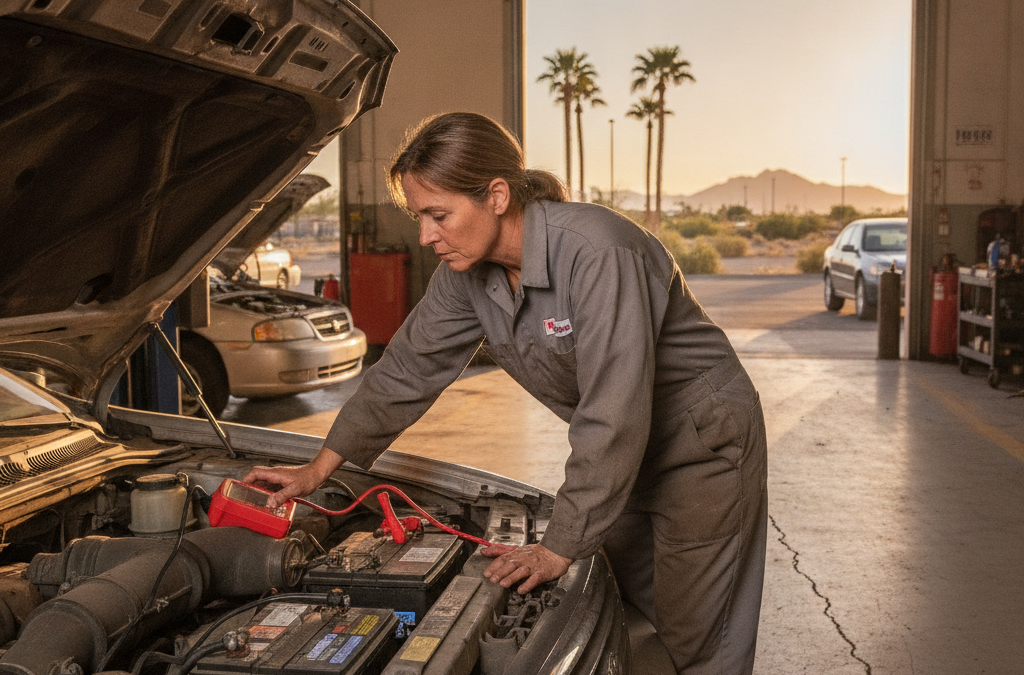
A proper battery test goes beyond just checking voltage. It uses a load tester or conductance tester to measure the battery’s actual capacity — how much power it can deliver when it counts. This takes about five minutes and gives you a real picture of what’s going on.
At All Valley Car Care in Surprise, we test batteries as part of our multi-point inspection process. If yours is weak but not completely dead, we’ll tell you straight — you don’t need to replace it today, but here’s when you probably will. No pressure, no unnecessary repairs. Just honest information so you can make a good decision.
What Most Shops Don’t Tell You About Batteries and Your Alternator
Here’s a gap that a lot of local shops — and some of the national chain quick-lube places — tend to gloss over: your battery and alternator are connected, and a problem with one often looks like a problem with the other.
If your alternator isn’t charging the battery properly while the car is running, the battery drains faster than it should. You might replace the battery, feel better for a few weeks, and then end up right back where you started. On the flip side, a truly dead battery can put extra stress on a healthy alternator and shorten its life.
That’s why when you come in with a battery concern, we check both. It’s a quick scan and a visual inspection — not a big deal — but it’s the kind of thing that prevents you from spending money on a new battery only to need an alternator two months later. We’ve seen that happen to drivers all over Sun City, Goodyear, and Glendale, and it’s completely avoidable.
How to Make Your Battery Last Longer in Arizona
You can’t beat the heat entirely, but a few habits can stretch your battery’s life a little further:
- Park in the shade or a garage whenever possible. Even a covered parking spot makes a meaningful difference in how hot your battery gets during the day.
- Don’t let the car sit unused for long stretches. Batteries drain when vehicles sit idle, and in the heat, a parked car is baking its own battery. If you have a second vehicle or a work truck that doesn’t get used daily, start it and drive it briefly every week or so.
- Get it tested every year after the two-year mark. An annual test costs you nothing and can save you from an unexpected failure.
- Turn off accessories before shutting off the engine. Lights, AC, and electronics left on after the engine is off can drain a battery faster than people realize.
What About Batteries for Commercial Vehicles and Fleets?
If you’re running a small fleet of work trucks or service vehicles out of the West Valley, battery health is something you really can’t afford to ignore. A dead battery on a work vehicle doesn’t just mean one inconvenience — it can mean a missed job, a delayed delivery, or a crew member sitting idle waiting for a jump. Commercial vehicles also tend to cycle on and off more frequently throughout the day, which can shorten battery life even further.
We work with a number of small business owners and fleet operators across the Phoenix area, and battery inspection is a standard part of how we approach fleet maintenance at All Valley Car Care. If your business vehicles haven’t had a battery check recently and they’re in the two-to-three-year range, it’s worth scheduling that before summer peaks.
Frequently Asked Questions About Car Batteries in Surprise, AZ
How long do car batteries really last in Arizona?
Most batteries in the Phoenix area last about two to three years due to extreme heat. Some make it to four years, but testing annually after year two is a smart habit here in the West Valley.
Can I test my own battery at home?
You can buy a basic voltmeter to check voltage, but a voltage reading alone won’t tell you if the battery is actually healthy under load. A proper load test or conductance test at a shop gives you a much more accurate picture.
My battery warning light came on, but the car starts fine. Should I still get it checked?
Yes — don’t wait. The battery warning light often signals an issue with the charging system, not just the battery itself. It can go away on its own temporarily and then come back at a worse time. Get it diagnosed sooner rather than later.
Should I replace my battery even if it’s still working?
If your battery tests healthy, no. We won’t recommend a replacement you don’t need. But if it tests weak or it’s approaching three years old in Arizona, a proactive replacement is worth considering — especially if you rely on the vehicle daily.
What’s the difference between a battery dying and an alternator failing?
A dead battery means the car won’t start. A failing alternator means the battery isn’t getting recharged properly while the car runs — so the car might start but then die shortly after, or the battery will keep draining. Both need attention, and both can cause symptoms that look similar. That’s why we check both when you come in with a battery complaint.
Don’t Wait Until You’re Stranded
A dead battery in July in Surprise isn’t just annoying — it’s a real problem. The heat, the distance between places, and the fact that most of us are in and out of cars all day makes getting stranded genuinely disruptive. The warning signs are usually there if you know what to look for, and a simple test is all it takes to find out where you stand.
If your battery is more than two years old, or if your car is showing any of the signs above, come see us. We’ll test the battery and the charging system honestly, tell you exactly what we find, and let you decide what to do next — no pressure, no invented problems. Schedule a visit at All Valley Car Care and let’s make sure you’re not the person stranded in a Sun City West parking lot when it counts.