How Do You Know If Your Car’s Brake Fluid Needs to Be Changed — and Why It Matters More Than You Think in Surprise, AZ?
If you’ve ever had a mechanic mention brake fluid during a routine visit and thought, “I didn’t even know that needed to be changed” — you’re not alone. Most drivers in Surprise and across the Phoenix West Valley focus on brake pads and rotors when they hear something squeak, and that’s fair. But the fluid that makes your entire braking system work? It quietly degrades over time, and when it gets bad enough, it can actually cost you more than a pad swap — and put your safety at risk in the process.
Here’s what you actually need to know: brake fluid is hygroscopic, which is a fancy way of saying it absorbs moisture from the air over time. As water content builds up in the fluid, the boiling point drops. And when you’re braking hard — merging onto the Loop 303, stopping fast in heavy traffic on Grand Avenue, or hauling the family SUV to a stop from highway speed — that overheated fluid can vaporize and cause a condition called brake fade. Your pedal goes soft. Your stopping distance gets longer. That’s not a situation you want to discover at 65 mph.
Why Brake Fluid Gets Overlooked — and Why That’s a Problem Here
Most quick-lube chains and national franchise shops don’t spend much time explaining brake fluid. They’ll top it off if it’s low, maybe flag it on a checklist, but a proper flush and fill often gets skipped because it’s not on the standard service menu. Local competitors in the West Valley tend to have thin coverage of this service too — most mention brakes only in the context of pads and rotors, leaving drivers with no real guidance on fluid maintenance.
Here in the greater Phoenix area, that gap matters more than it would in, say, Minnesota. Our desert heat is brutal on vehicle fluids across the board. When your engine bay is sitting in 115°F ambient air and your brakes are working hard on hot asphalt, degraded fluid gets pushed closer to its failure point faster than it would in a cooler climate. If your fluid is already moisture-saturated, you have a smaller margin of safety before you’re in fade territory. That’s worth understanding before something goes wrong.
Warning Signs That Your Brake Fluid May Need Attention
Brake fluid doesn’t usually announce itself with a dramatic noise or a dashboard light. It degrades slowly and quietly. But there are signs worth paying attention to:
- A spongy or soft brake pedal. If your pedal feels mushier than it used to — like it’s sinking a little lower before the brakes bite — that’s a red flag. It can mean air or moisture is in the system, and the fluid may be compromised.
- Longer stopping distances. If your car doesn’t stop as crisply as it once did and your pads are still in good shape, old fluid could be part of the equation.
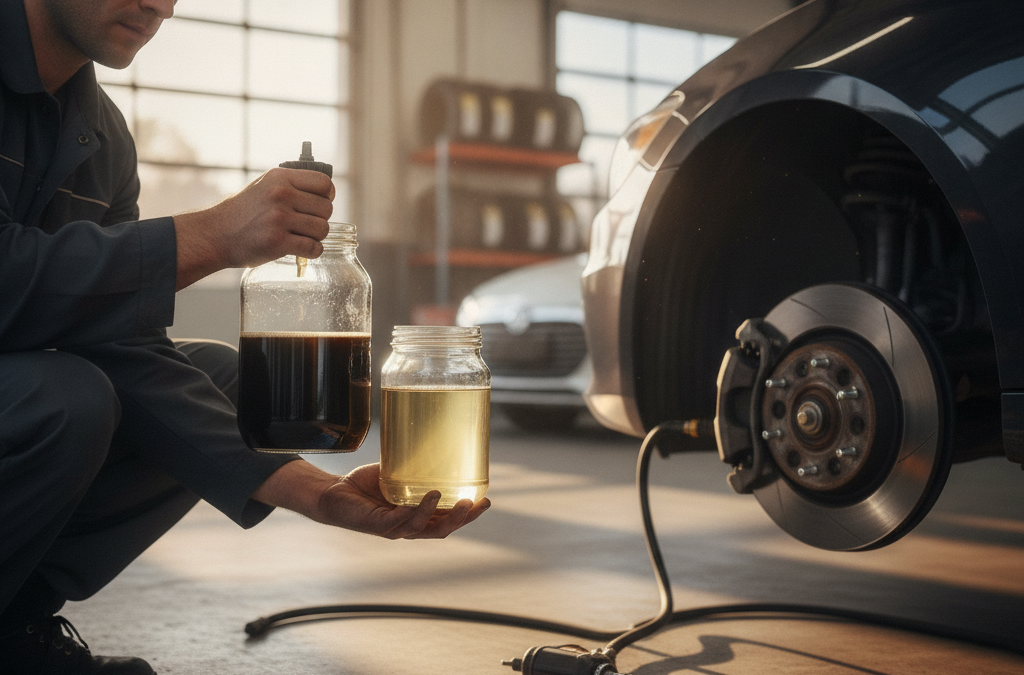
- Dark or murky fluid in the reservoir. Fresh brake fluid is nearly clear or light yellow. If you pop the hood and the fluid in the small plastic reservoir looks brown or black, it’s overdue for a change. You don’t need any special tools to check this — just a clean cloth and a quick look.
- It’s been two or more years since you last had it done. Most manufacturers recommend a brake fluid flush every two years or so, though your specific interval may vary. If you genuinely don’t know when it was last changed — or if it ever was — that’s reason enough to have it tested.
What a Brake Fluid Flush Actually Involves
This isn’t complicated work, but it matters that it’s done correctly. A proper brake fluid flush means removing all the old fluid from the system — reservoir, lines, calipers, the whole circuit — and replacing it with fresh fluid that meets your vehicle’s specifications. Just topping off the reservoir doesn’t accomplish the same thing. Old fluid mixed with new fluid is still old fluid in most of what matters.
At All Valley Car Care in Surprise, the process includes testing the existing fluid’s moisture content with a simple diagnostic tool before making any recommendations. If the fluid tests clean and your mileage is still within interval, we’ll tell you that. No unnecessary services, no invented problems — that’s been our standard since we opened in 2010. You can learn more about our Surprise location here.
The job itself typically takes less than an hour, and the cost is modest compared to the brake components it helps protect. If degraded fluid is left too long, it can corrode brake lines, damage ABS components, and eat away at caliper seals — repairs that cost significantly more than a flush would have.
What About Brake Fluid Type — Does It Matter?
Yes, and this is something a lot of general service guides gloss over. Most passenger vehicles use DOT 3 or DOT 4 fluid, but some European imports and performance vehicles call for DOT 5.1 or a specific OEM specification. Using the wrong type can cause problems — compatibility issues, seal damage, or reduced performance. When you bring your car in, a shop should be verifying what your vehicle actually requires before pouring anything in. If they don’t ask, that’s worth noticing.
Whether you’re driving a domestic pickup, a European sedan, or an SUV for the family out in Marley Park or Sun City Grand, the right fluid matters. We service all makes and models across our locations, and we check manufacturer specs before any fluid service.
Brake Fluid and the Broader Brake System — What Else to Watch For
When a shop checks your brake fluid, it’s also a good opportunity to take a look at the rest of the system — brake lines for corrosion or leaks, caliper condition, and whether the master cylinder is holding pressure. Brake fluid that’s gone very dark sometimes signals that internal seals have been breaking down, which can mean moisture is entering from more than one source.
If your brake pedal pulsates, vibrates, or pulls to one side when you brake, those are separate issues — more likely rotor warping or caliper problems — but they’re worth addressing at the same visit. Catching multiple brake system issues at once saves you time and a second trip to the shop, which matters if you’re commuting from Goodyear or El Mirage and can’t easily leave your car for multiple separate appointments.
Frequently Asked Questions
How often should brake fluid be changed in Arizona?
Most manufacturers recommend every two years or 24,000 miles, whichever comes first. In Arizona, where extreme heat accelerates fluid degradation, sticking closer to the two-year mark is a smart call — especially if you drive frequently in stop-and-go traffic or tow anything.
Can I just add brake fluid myself if the level is low?
You can top it off in a pinch, but low brake fluid usually means either the pads are worn (the level drops as pads wear) or there’s a leak in the system. If it’s a leak, adding more fluid doesn’t fix the problem — it just delays finding the real cause. Have it inspected so you know what’s actually happening.
How much does a brake fluid flush cost in Surprise?
A standard brake fluid flush at an independent shop in the Surprise and Phoenix West Valley area typically runs anywhere from $80 to $150, depending on the vehicle and the fluid type required. It’s one of the more affordable maintenance services relative to what it protects. Contact us directly for an accurate estimate for your specific vehicle.
Will my check engine light come on if brake fluid is bad?
Not typically. Brake system issues sometimes trigger a brake warning light — the one that looks like an exclamation point inside a circle — but brake fluid condition isn’t usually monitored electronically in most vehicles. That’s part of why it’s easy to overlook. Your best bet is to have it checked at your regular service interval.
Is a brake fluid flush the same as bleeding the brakes?
Close but not identical. Bleeding the brakes removes air from the lines — usually done after brake work when air has entered the system. A full fluid flush replaces all the old fluid throughout the system. Some shops do both at the same time. Either way, the goal is clean fluid with no air bubbles interfering with brake pressure.
Get Your Brake Fluid Checked at All Valley Car Care
If you can’t remember the last time your brake fluid was serviced — or if you’ve noticed any of the warning signs above — it’s worth a quick inspection before it becomes a bigger problem. We’ll test the fluid, check the system, and tell you honestly whether it needs attention or whether you’ve got more time. No pressure, no invented repairs.
All Valley Car Care serves drivers across Surprise, Peoria, Glendale, Sun City, Avondale, El Mirage, and the surrounding Phoenix West Valley. Reach out here to schedule a brake inspection or fluid service — we’ll get you in quickly and get you back on the road with a straight answer about what your car actually needs.