
Why Does My Check Engine Light Keep Coming On in Surprise, AZ — and What Should I Do About It?
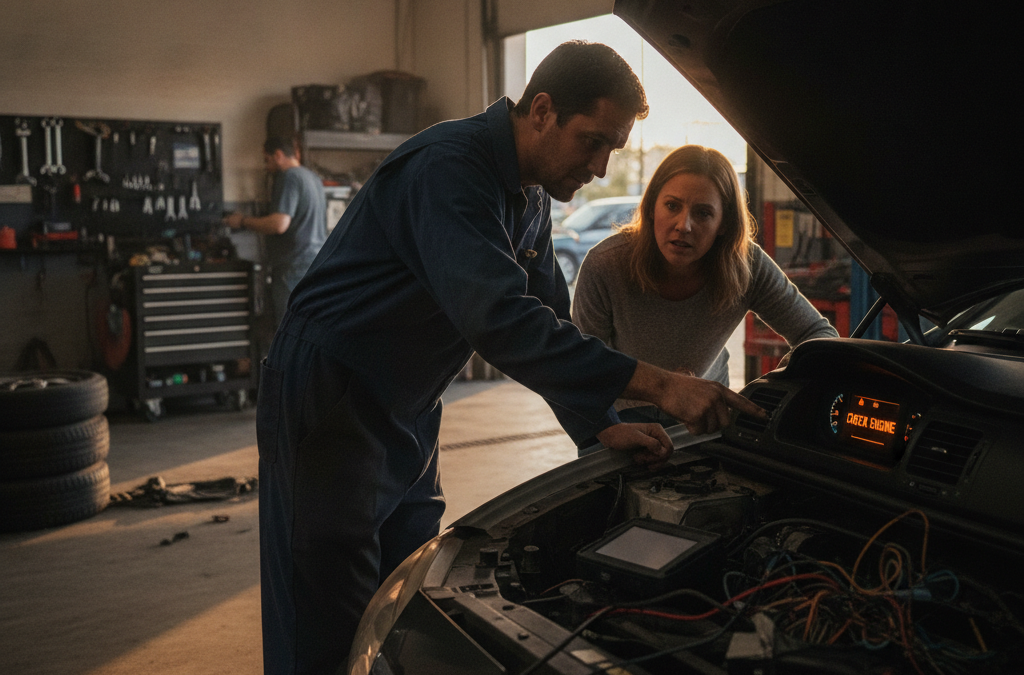
If your check engine light came on, you took it somewhere to get the code cleared, and now it’s back on again — you’re not alone. This is one of the most common frustrations we hear about at our shop in Surprise. The light came back because clearing a code doesn’t fix the underlying problem. It just resets the system temporarily. A real diagnosis figures out why the code was set in the first place, and that’s a very different thing than just erasing it and hoping for the best.
Here’s what you actually need to know.
What the Check Engine Light Is Actually Telling You
Your vehicle’s onboard computer — the OBD2 system — monitors dozens of sensors across your engine, transmission, and emissions system. When something falls outside the expected range, it stores a diagnostic trouble code and turns on that light. The code is a starting point, not a verdict. A code like P0420 tells a technician the catalytic converter efficiency is low — but why it’s low could be anything from a failing oxygen sensor to an exhaust leak to an actual bad converter. That’s why pulling the code at an auto parts store and buying the part it mentions doesn’t always solve the problem.
The light can also mean something urgent. A steady check engine light usually means there’s an issue worth addressing soon. A flashing check engine light is a different story — that typically means your engine is misfiring actively and you should reduce speed, avoid hard acceleration, and get it looked at as soon as possible. Continuing to drive hard on a misfiring engine can damage your catalytic converter, which is an expensive repair that was preventable.
Why the Check Engine Light Keeps Coming Back On After Being Cleared
This is the question most auto shop websites don’t answer directly, and it’s worth explaining clearly. When a shop or an auto parts store clears your code without doing a proper diagnosis, the computer resets — but the condition that triggered the code is still there. Once your car completes enough drive cycles and the monitors run again, the same code comes back. Sometimes it takes a day. Sometimes a week. But it comes back.
A few common reasons the light keeps returning:
- A failing oxygen sensor — one of the most common triggers in the Phoenix area, and heat accelerates their deterioration
- An EVAP system leak — a small leak in the evaporative emission system, sometimes as simple as a cracked hose or a fuel cap that doesn’t seal properly
- A catalytic converter running below efficiency — can be caused by oil burning, coolant intrusion, or just age
- A mass airflow sensor that’s dirty or failing — common in dusty desert driving conditions like those in the West Valley
- A misfire code — which could point to spark plugs, ignition coils, fuel injectors, or a compression problem depending on the vehicle
In every one of these cases, a proper diagnosis matters more than just replacing the part the code mentions. Our ASE-certified technicians use computerized diagnostic equipment and look at live sensor data — not just the stored code — to find out what’s actually happening before recommending any repair.
How Arizona’s Heat Makes Diagnostics More Complicated
Here in the Surprise area and across the Phoenix West Valley, heat isn’t just uncomfortable — it accelerates wear on the exact components most likely to trigger a check engine light. Oxygen sensors fail faster in extreme heat. Rubber hoses and vacuum lines in the EVAP system crack and shrink when they’ve been baking under a hood all summer. Coolant temperature sensors can give erratic readings when coolant system health is declining.
We see a noticeable spike in check engine light visits after the first serious heat wave of summer — especially from drivers in Peoria, El Mirage, Goodyear, and Sun City West who haven’t had their car looked at since fall. If your vehicle sat under the Arizona sun all spring without being serviced, a check engine light showing up in June or July isn’t bad luck. It’s the heat doing what it always does.
The good news is that catching these issues early usually means a straightforward fix. Waiting tends to mean more damage and higher costs.
What a Real Check Engine Light Diagnosis Looks Like
A proper diagnostic appointment isn’t just plugging in a scanner for 30 seconds. Here’s what you should expect from a shop doing it right:
- Reading all stored and pending codes — not just the first one that shows up
- Reviewing freeze frame data, which shows what conditions the engine was under when the fault was triggered
- Checking live sensor data to see if the affected components are performing correctly in real time
- A visual inspection of related components — wiring, hoses, connectors
- A clear written explanation of what was found and what repair is actually needed, with an estimate before any work begins
That last part matters. You should never feel pressured to approve a repair at the moment of diagnosis. At All Valley Car Care, we give you a written estimate and explain what we found in plain language — no scare tactics, no unnecessary add-ons. If it’s something minor, we’ll tell you that too. Our Surprise location has been doing exactly this since 2010.
Should You Keep Driving With the Check Engine Light On?
It depends on the light and how the car is running. If the light is steady, the car drives normally, and there are no strange sounds or smells, you can usually drive it to a shop within a day or two without causing further damage. Don’t ignore it indefinitely — some conditions will worsen over time.
If the light is flashing, or if you notice rough idling, a loss of power, smoke, overheating, or strange smells, pull over safely and have the vehicle towed or driven very gently to a shop. Those are signs that something active is going wrong, not just a sensor reading that’s out of range.
And if your check engine light came on right after you filled up with gas, the first thing to try is pulling over, removing the gas cap completely, and re-tightening it firmly until it clicks. A loose or damaged gas cap is one of the most common EVAP system triggers — and it’s free to check.
For a full overview of diagnostic services and everything else we handle, visit our services page.
Frequently Asked Questions
Does a free code scan at an auto parts store tell me what’s wrong?
It tells you which code was stored — but not why it was stored or what needs to be fixed. A code is a clue, not a diagnosis. Many drivers have replaced parts based on a code read at a parts store only to have the light come back on because the real cause wasn’t identified. A professional diagnostic goes deeper and looks at live data, not just stored faults.
How much does a check engine light diagnosis cost in Surprise or Peoria?
Diagnostic fees vary by shop and vehicle complexity. At All Valley Car Care, we’ll tell you the cost upfront before we start. Some repairs are simple and inexpensive once the real cause is identified — don’t assume a check engine light automatically means a big bill.
Can the heat in Phoenix actually cause a check engine light to come on?
Yes, absolutely. Extreme heat degrades sensors, dries out rubber hoses and seals, stresses wiring insulation, and puts added load on cooling and emissions systems. The Phoenix West Valley’s 115°F+ summers are genuinely hard on vehicles, and we see the results every summer at our shop.
My check engine light went off on its own. Does that mean it’s fixed?
Not necessarily. If the condition was intermittent, the light may turn off if the fault doesn’t occur again over several drive cycles. But the code usually stays stored as a history code, and the underlying issue may return. It’s worth having it checked to understand what happened — especially if it was a misfire or emissions-related code.
What’s the difference between a check engine light and a service engine soon light?
On most modern vehicles they’re the same light — it’s just labeled differently on different makes and models. Both indicate a stored fault in the OBD2 system. The key distinction to watch for is whether the light is steady or flashing, not what it says on the cluster.
Get a Real Answer, Not Just a Reset
If your check engine light keeps coming back on — or if it just came on for the first time and you want to know what’s actually going on — bring it to All Valley Car Care in Surprise. We’ll read the full diagnostic picture, explain what we find in plain English, and give you a written estimate before any work starts. No pressure, no unnecessary repairs. Just honest answers from a shop that’s been serving the West Valley since 2010.
Schedule your diagnostic appointment online or give us a call. We’re here to help you figure out what’s actually wrong — not just clear the light and send you on your way.