
Car Battery Testing & Replacement in Gilbert, AZ
Accurate Load Testing Before Every Recommendation
Conductance-tested battery diagnosis, written findings, and ASE-certified replacement — before any work begins.
- Complete battery and charging system service covering battery load testing, alternator output testing, starter draw testing, and car battery replacement for all vehicle makes and models
- ASE-certified technicians performing conductance load testing on every battery before any car battery replacement recommendation is made
- Car battery replacement near me — same-day battery service appointments available serving Gilbert drivers through our accessible location
Battery Testing & Replacement Gilbert
Battery & Charging System Warning Signs Gilbert, AZ Drivers Should Not Ignore
Your vehicle’s battery and charging system work together to start the engine and power every electrical system on the vehicle — and in Gilbert’s extreme heat, where battery internal resistance increases dramatically as temperatures rise and electrolyte evaporation reduces the active plate area available for chemical reaction, battery failure is more sudden, less predictable, and more frequent than drivers in cooler climates experience. A battery that starts the vehicle reliably today can fail to start it tomorrow with little warning in Arizona’s summer. If any of the following describe your vehicle’s current electrical behaviour, a professional battery test is the correct immediate step.
Your Engine Cranks Slowly or Struggles to Start
An engine that turns over slowly when the starter is engaged — producing a laboured, low-speed cranking sound rather than the rapid cranking of a healthy starting system — is the most direct indication that the battery is not delivering adequate current to the starter motor. In a healthy starting system, the battery delivers a high-current discharge to the starter that spins the engine quickly and consistently regardless of temperature. A battery with depleted capacity, internal plate sulphation, or high internal resistance from heat damage produces a reduced current delivery that becomes most apparent when the battery is cold — in Gilbert’s winter mornings — or when it is very hot and the vehicle has been parked in direct sunlight for several hours. Slow cranking that is intermittent — sometimes adequate, sometimes laboured — is an early warning that a battery is approaching the end of its service life in Gilbert’s climate.
Your Battery Warning Light Is Illuminated
A battery warning light on the dashboard does not exclusively indicate a failed battery — it indicates that the charging system is not maintaining the correct voltage. The most common cause is a failing alternator that is not producing adequate charge voltage to maintain the battery’s state of charge while the vehicle is running. A worn serpentine belt or a belt tensioner that is allowing belt slip can reduce alternator output without the alternator itself being faulty. A battery that has developed an internal short can cause the alternator to work at maximum output continuously, eventually damaging the alternator through sustained overload. All Valley Car Care tests battery condition, alternator output voltage and current, and belt condition together when a battery warning light is the presenting symptom — because replacing only the battery when the alternator is the fault source will result in a repeat failure within days.
Your Vehicle’s Electrical Systems Are Behaving Erratically
Erratic electrical behaviour — lights that flicker, infotainment systems that reset, power windows that operate sluggishly, or warning lights that illuminate and clear without apparent cause — is often a low-voltage symptom from a battery that is no longer holding a stable charge. Modern vehicles with complex electrical architectures and multiple control modules are particularly sensitive to voltage variations: modules that receive insufficient voltage may reset, log fault codes, or enter reduced-function modes that trigger dashboard warnings unrelated to the actual battery fault. In Gilbert’s heat, where battery voltage drop under load is more pronounced, drivers sometimes pursue multiple electrical diagnostic appointments before a failing battery is identified as the root cause of apparently unrelated electrical faults.
Your Battery Is More Than Three Years Old in Gilbert’s Climate
Battery service life in Arizona is significantly shorter than the four-to-six-year life expectancy quoted for batteries in moderate climates — because heat is the primary cause of battery degradation, and Gilbert’s sustained summer temperatures are among the most battery-hostile environments in the United States. The electrochemical reaction inside a lead-acid battery accelerates with heat, consuming electrolyte and degrading the active plate material at a rate that reduces capacity well before the battery shows outward signs of failure. Industry data consistently indicates that batteries in the Desert Southwest fail at an average of two to three years — compared to four to five years in cooler climates. A battery that has been in service for three or more years in Gilbert’s climate is a candidate for load testing regardless of whether it is currently starting the vehicle without difficulty.
Your Vehicle Needed a Jump-Start
A vehicle that required a jump-start has communicated that its battery was insufficient to start the engine under its own capacity — and while a single jump-start does not confirm that the battery requires replacement, it is the correct trigger for a load test that quantifies the battery’s remaining capacity. A battery that recovers fully after a jump-start and holds charge reliably may have been discharged by a parasitic drain or an inadvertently left-on electrical load rather than internal failure. A battery that required a jump-start because of its own degraded capacity will typically show a measurably reduced conductance reading on a load test — providing the data needed to make an informed replacement decision rather than guessing.
Battery Testing & Replacement Gilbert
Battery Testing & Replacement Services
Complete battery testing and car battery replacement in Gilbert, AZ — covering conductance load testing, charging system assessment, and battery replacement for all vehicle makes and models.

Battery Conductance Load Testing
Conductance battery testing measuring cold cranking amp capacity against the battery’s rated specification — providing a quantified assessment of battery condition beyond a resting voltage check.
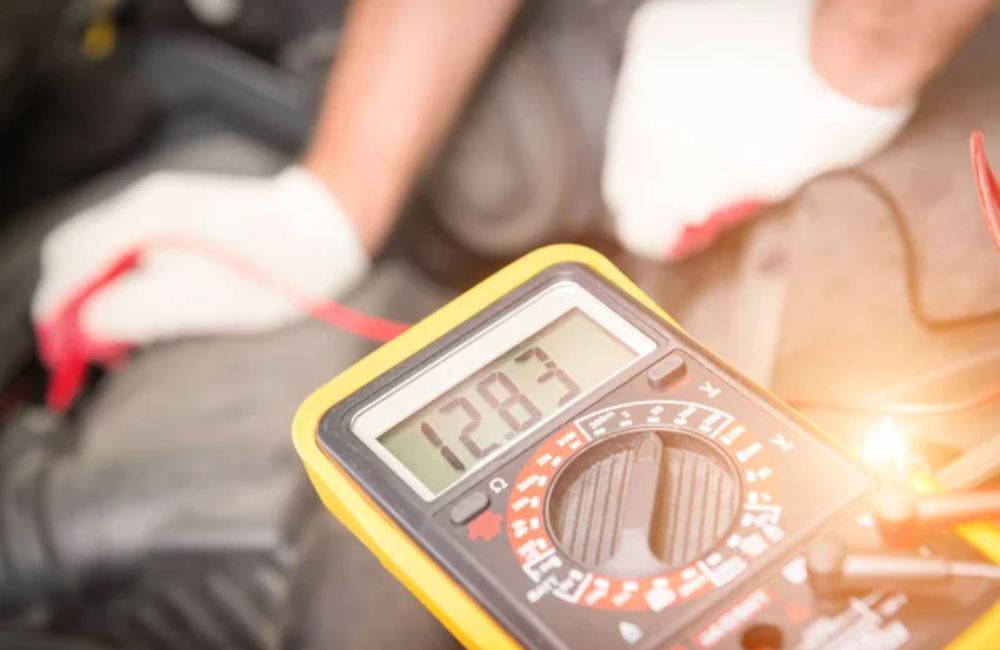
Car Battery Replacement
Car battery replacement with the correct group size, cold cranking amp rating, and terminal configuration for the vehicle — including battery registration where required by the vehicle’s battery management system.
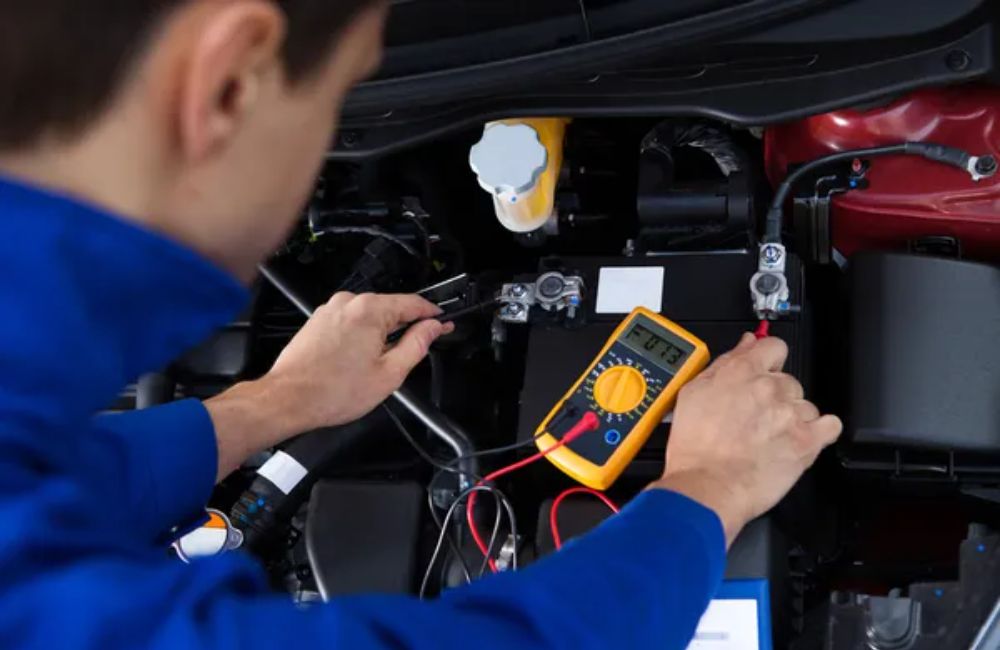
Alternator Testing & Replacement
Alternator output voltage and current testing — identifying the charging system fault that is causing battery discharge, warning lights, or electrical system instability in Gilbert vehicles.
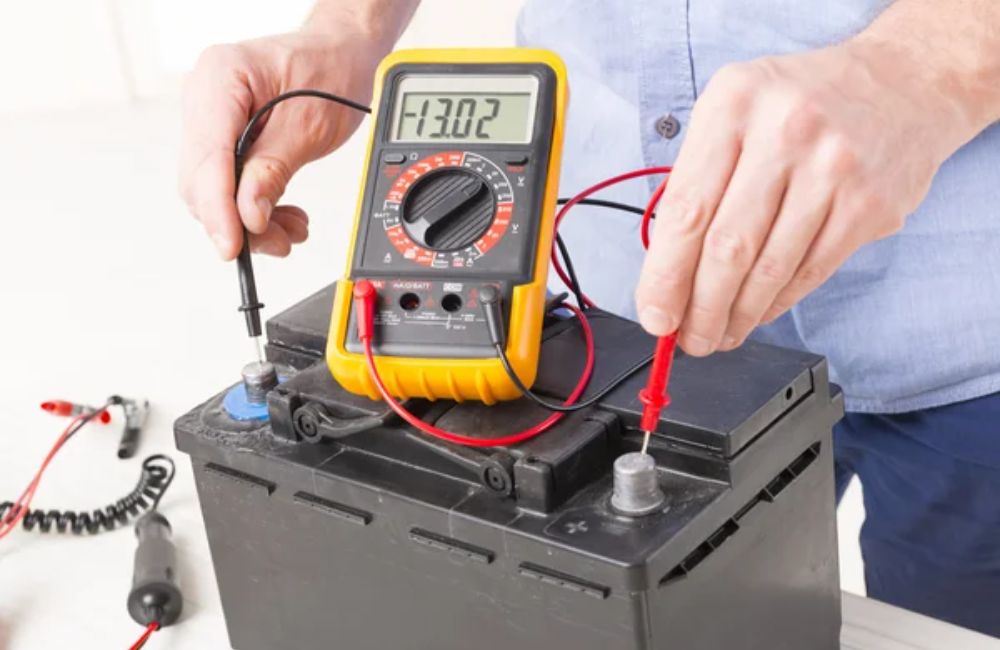
Starter Motor Testing & Replacement
Starter motor current draw testing — distinguishing a battery capacity fault from a starter motor drawing excessive current and identifying starter faults causing slow or failed cranking.

Charging System Diagnosis
Complete charging system assessment covering battery condition, alternator output, belt condition, and voltage regulator function — identifying the source of charging faults before individual components are replaced.
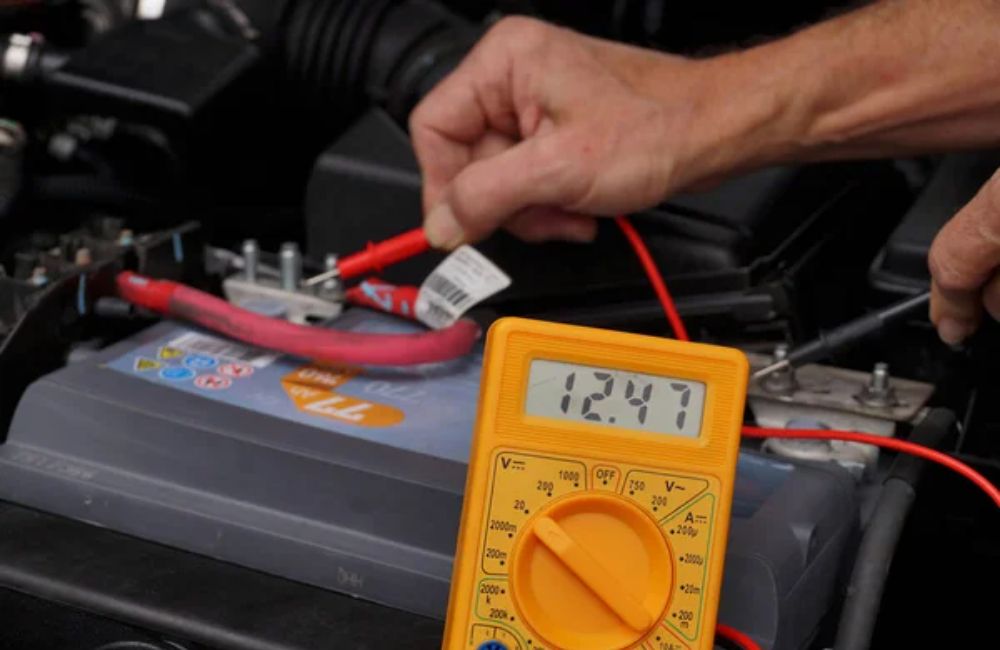
Parasitic Drain Testing
Ignition-off current draw measurement and circuit isolation — identifying the electrical component responsible for excessive battery discharge in vehicles that repeatedly go flat without an apparent cause.
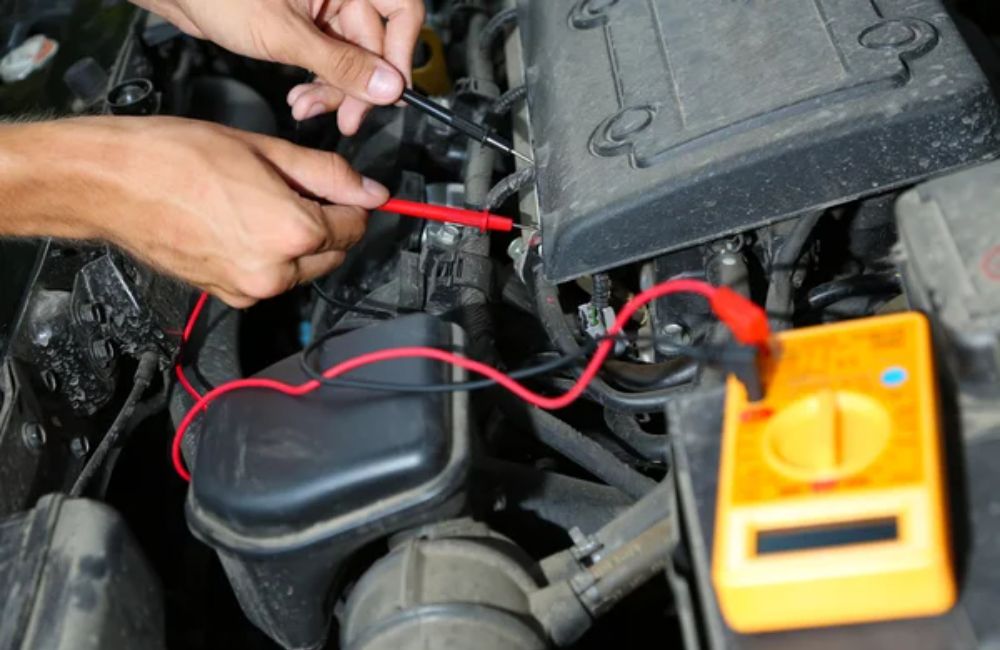
Battery Cable & Terminal Service
Battery cable condition assessment, terminal corrosion cleaning, and cable replacement — addressing the high-resistance connection faults that cause slow cranking and charging system inefficiency independently of battery condition.
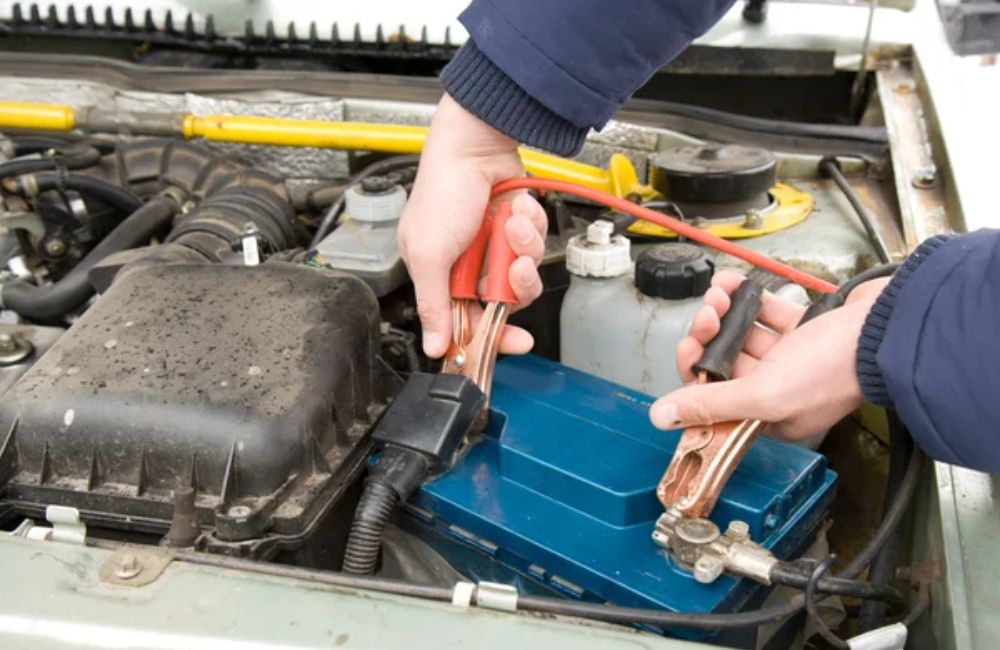
Battery Management System Service
Battery registration and BMS reset for vehicles equipped with a battery management system — ensuring the charging system adapts correctly to a new battery and does not undercharge or overcharge based on the previous battery’s learned parameters.

Hybrid & AGM Battery Service
AGM and EFB battery testing and replacement using the correct conductance testing procedure for absorbed glass mat and enhanced flooded battery technology — addressing the specific battery types used in stop-start systems and hybrid vehicles.
Battery Testing & Replacement Gilbert
Why Choose All Valley Car Care for Battery Testing & Replacement in Gilbert, AZ
All Valley Car Care provides car battery testing and replacement near Gilbert, AZ, combining conductance load testing with charging system assessment and parasitic drain evaluation — not a visual inspection or a resting voltage check that fails to identify a battery with adequate resting voltage but inadequate capacity under cranking load. Our location serves drivers across the Higley Corridor, Power Ranch, Agritopia, Val Vista Lakes, and surrounding East Valley communities with battery conductance testing, alternator output measurement, starter current draw testing, and parasitic drain diagnosis — performed by ASE-certified technicians who understand how Gilbert’s extreme heat creates the specific battery failure patterns and shortened service life that East Valley drivers experience.
- ASE-certified technicians performing conductance load testing on every battery — measuring cold cranking amp capacity against the rated specification for the battery installed, not just resting voltage that does not reflect cranking capacity
- Alternator output voltage and current testing performed alongside every battery test — confirming that a battery that tests marginal is not being undercharged by a failing alternator that would cause the replacement battery to fail prematurely
- Starter motor current draw testing where slow-cranking symptoms are present — distinguishing a battery capacity fault from a starter motor that is drawing excessive current and draining an otherwise serviceable battery
- Charging system ripple voltage testing — identifying alternator diode faults that introduce AC ripple into the DC charging circuit, causing electrical system interference and accelerating battery degradation
- Parasitic drain testing for vehicles with repeated battery discharge complaints — measuring ignition-off current draw and identifying the circuit responsible for excessive drain that is discharging an otherwise serviceable battery
- Written battery test results with conductance reading, cold cranking amp capacity, alternator output voltage, and charging system condition documented before any car battery replacement is approved
- Saturday availability (8 AM–2 PM) for Gilbert drivers who need battery testing or car battery replacement outside standard weekday hours.
Battery Testing & Replacement Gilbert
How We Deliver Consistent Battery Testing & Replacement Quality
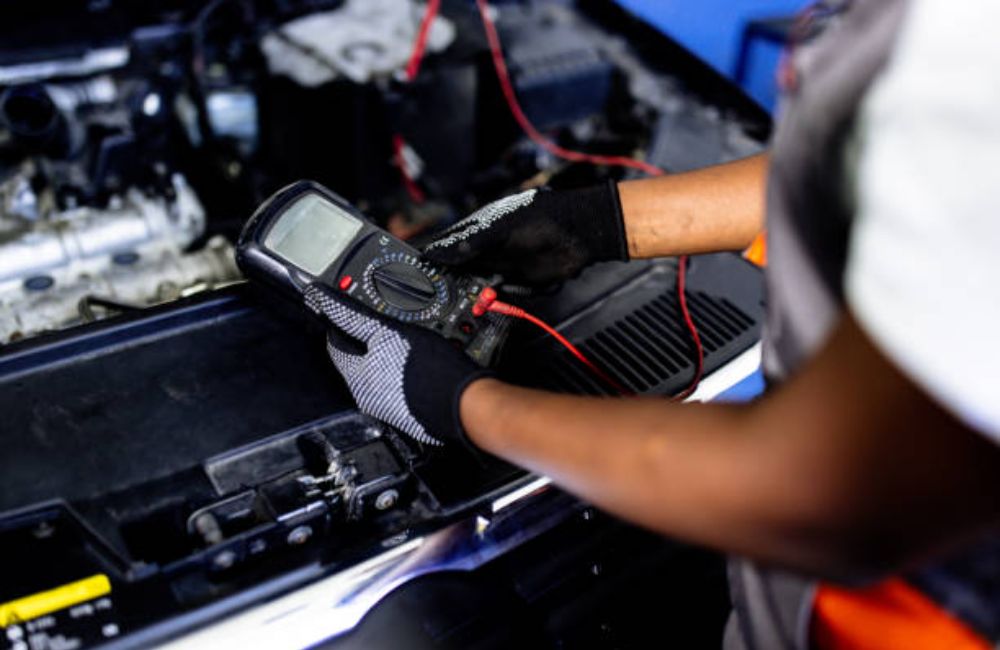
- Battery conductance load testing performed using a calibrated conductance tester — measuring the battery’s actual cold cranking amp capacity against its rated specification and expressing the result as a percentage of rated capacity and a pass, marginal, or replace recommendation
- Alternator output voltage measured at idle and at increased engine speed, and alternator current output confirmed under electrical load — identifying undercharging, overcharging, and current output faults that affect battery life and charging system integrity
- Charging system ripple voltage measured to identify alternator diode faults — a diagnostic step that identifies internal alternator failures that allow AC voltage into the DC charging circuit, causing electrical interference and accelerating battery degradation
- Starter current draw measured with an inductive clamp ammeter during cranking — identifying starter motors drawing excessive current that would drain a healthy battery and confirming that slow cranking is from battery capacity rather than starter load
- Parasitic drain testing performed using a current clamp and circuit isolation procedure — measuring ignition-off current draw against the vehicle’s specified maximum parasitic drain and identifying the responsible circuit through fuse-by-fuse isolation
- Battery cable and terminal resistance measured where high resistance is suspected — confirming that connection quality at the battery terminals and chassis ground points is not contributing to slow cranking or charging inefficiency
- Written battery and charging system test report with conductance reading, alternator voltage and current output, starter draw, and parasitic drain measurement provided before any replacement or repair recommendation is presented
- Post-replacement verification of alternator charge voltage and battery state of charge — confirming the replacement battery is receiving a correct charge before the vehicle is returned.
Battery Testing & Replacement Gilbert
Frequently Asked Questions
How do I know if I need a car battery replacement or a charging system repair in Gilbert?
A conductance load test that shows the battery's cold cranking amp capacity is below its rated specification confirms battery replacement is appropriate — regardless of whether the battery is starting the vehicle currently. A battery warning light or repeat battery discharge in a vehicle with a battery that tests within specification indicates a charging system fault that requires alternator or parasitic drain diagnosis. All Valley Car Care tests the battery and charging system together before recommending either repair — ensuring the correct component is replaced and that the replacement is not compromised by an unresolved charging fault.
How long do car batteries last in Gilbert, AZ?
Battery service life in Gilbert and the broader East Valley averages two to three years — significantly shorter than the four-to-five-year expectancy in cooler climates. Heat is the primary cause of battery degradation: sustained temperatures above 100°F accelerate electrolyte evaporation, increase plate corrosion rates, and accelerate the sulphation that reduces a battery's active plate area. A battery approaching three years in service in Gilbert's climate is a candidate for a load test regardless of whether it is currently starting the vehicle without difficulty.
What is the difference between a battery voltage test and a conductance load test?
A voltage test measures the resting voltage at the battery terminals — typically 12.4 to 12.7 volts in a healthy battery at rest. A battery can show a correct resting voltage while having significantly reduced cold cranking amp capacity due to internal plate sulphation or degradation from heat damage. A conductance load test measures the battery's actual ability to deliver current under load — the condition that matters for starting the engine. All Valley Car Care uses conductance load testing for every battery assessment because resting voltage alone does not identify a battery at risk of cranking failure.
Why does my car battery keep dying in Gilbert?
Repeat battery discharge in Gilbert most commonly results from one of three causes: a parasitic drain — where an electrical component draws current with the ignition off and discharges the battery overnight or over several days; an undercharging alternator that is not restoring the battery to full charge during driving; or a battery that has degraded in capacity to the point where normal overnight self-discharge and parasitic draw reduce it below the starting threshold. All Valley Car Care diagnoses repeat discharge complaints by testing all three potential causes before recommending a repair — confirming which fault is responsible rather than defaulting to battery replacement.
Does car battery replacement require programming in modern vehicles?
Many modern vehicles — particularly European models and an increasing number of domestic and Asian vehicles — use a battery management system that monitors battery condition and adjusts charging strategy based on the battery's age and state of health. When a new battery is installed in these vehicles without resetting the BMS, the charging system continues to apply the strategy learned for the previous battery — potentially undercharging a new AGM battery that requires a different charge profile, or overcharging a standard flooded battery. All Valley Car Care identifies whether the vehicle requires battery registration and performs the BMS reset where required as part of every car battery replacement.
Can Gilbert's heat damage a new battery quickly?
Yes — a new battery installed in Gilbert without addressing an underlying charging fault, or a battery installed that is undersized for the vehicle's electrical demands, can be significantly degraded within one to two summers. A new battery installed in a vehicle with an overcharging alternator will be destroyed by excessive charge voltage within weeks. A new battery installed in a vehicle with a parasitic drain will be repeatedly deep-discharged — each deep discharge cycle permanently reducing capacity. All Valley Car Care tests the charging system and checks for parasitic drain at every car battery replacement to ensure the new battery is not installed into conditions that will shorten its service life.
How long does a battery test or car battery replacement take in Gilbert?
A battery conductance load test and charging system voltage check typically takes fifteen to twenty minutes. A complete charging system assessment including alternator current output testing and starter draw takes thirty to forty-five minutes. Parasitic drain testing is a more involved process — isolating the drain circuit through fuse-by-fuse testing — and takes one to two hours depending on the number of circuits and the accessibility of fuse boxes. Car battery replacement itself takes fifteen to thirty minutes on most vehicles, with additional time for battery registration where the vehicle requires it. All Valley Car Care provides time estimates at scheduling.
Battery Testing & Replacement Gilbert
Our Battery Testing & Replacement Process at a Glance
Vehicle check-in & symptom discussion
Your service advisor discusses the specific battery or electrical symptoms — slow cranking, warning lights, repeat discharge, electrical system erratic behaviour, or a recent jump-start — alongside battery age, current mileage, and any recent electrical work. This directs the testing priorities and ensures the technician evaluates the components most likely connected to the symptoms described.
Battery and charging system testing & documented findings
The battery is conductance load tested with results recorded against the battery’s rated cold cranking amp specification. Alternator output voltage and current are measured at idle and under load. Starter current draw is tested where slow cranking is present. Parasitic drain is measured where repeat discharge is the complaint. All test results are documented before the technician presents a service recommendation.
Written findings, approved service & post-replacement verification
The written battery and charging system test report with conductance reading, alternator output data, and any parasitic drain measurement is presented before any replacement or repair is recommended. Approved battery replacement is completed with the correct battery specification for the vehicle, including BMS registration where required. Post-replacement alternator charge voltage is confirmed before the vehicle is returned with a complete service record.
Battery Testing & Replacement Gilbert
How Our Battery Testing & Replacement Suite Works in Gilbert
Battery Conductance Load Testing
Load-tested battery assessment — not just a voltage check
A conductance load test is the diagnostic standard for battery assessment because it measures the battery’s actual ability to deliver the current required for engine cranking — the condition that determines whether the vehicle will start on a 115°F Gilbert afternoon or fail to start in a parking lot on the way home from SanTan Village. All Valley Car Care tests every battery presenting a complaint or reaching three years of service in Gilbert’s climate using a conductance tester that reports the battery’s measured cold cranking amp capacity as a percentage of its rated specification. A battery measuring below 60% of its rated capacity is at significant failure risk in Gilbert’s heat — even if it is currently starting the vehicle. This data provides Gilbert drivers with an objective, measurable basis for the replacement decision rather than a technician’s opinion.
Car Battery Replacement
Correct specification replacement for Gilbert’s electrical demands
Car battery replacement that installs the correct battery for the vehicle’s group size, cold cranking amp requirement, and battery technology — AGM, EFB, or standard flooded — is the baseline of a replacement service that will perform to its rated life in Gilbert’s climate. All Valley Car Care selects replacement batteries to the vehicle manufacturer’s specification for the model year and trim — confirming that the battery’s reserve capacity and cold cranking amp rating meet the vehicle’s starting and electrical system demand, including the additional draw of high-output audio systems, trailer towing packages, and aftermarket accessories that increase the electrical load above the standard specification. Battery terminal orientation, hold-down configuration, and ventilation requirements are confirmed before installation — ensuring the replacement battery fits correctly and that heat management is not compromised by an incorrectly positioned battery in the engine bay.
Alternator Testing & Replacement
Charging system fault confirmation before alternator replacement
An alternator replacement that is performed without first confirming the alternator is the fault source — rather than a belt tension issue, a voltage regulator fault, or a wiring fault — is one of the most commonly unnecessary repairs in automotive service. All Valley Car Care measures alternator output voltage at idle, at elevated RPM, and under electrical load — and measures alternator current output against the alternator’s rated amperage specification to confirm that the charging system is both producing the correct voltage and delivering adequate current for the vehicle’s electrical demand. Alternator ripple voltage is measured to identify diode faults that allow AC voltage into the DC charging circuit, causing electrical interference that resets modules and accelerates battery degradation without producing the obvious voltage or current output fault that simpler testing would catch.
Starter Motor Testing & Replacement
Current draw testing for accurate starter fault diagnosis
A starter motor that is drawing excessive current produces slow cranking that is frequently misattributed to a weak battery — because the symptom is identical and because battery testing tools that are not combined with a starter draw test cannot distinguish between the two sources. All Valley Car Care measures starter current draw using an inductive clamp ammeter during cranking, comparing the measured draw against the manufacturer’s specification for the vehicle’s engine displacement and starter type. A starter drawing significantly more current than specified indicates internal wear, bearing friction, or armature fault that is placing excessive load on the battery and charging system. Replacing the battery in a vehicle with a high-draw starter will not resolve the slow cranking, and may accelerate the degradation of the replacement battery by subjecting it to discharge events that exceed its design load.
Charging System Diagnosis
Complete charging system assessment before component replacement
The charging system — battery, alternator, voltage regulator, serpentine belt, and connecting cables — functions as an integrated circuit, and a fault anywhere in the system can produce symptoms that appear to originate from any individual component. All Valley Car Care performs a complete charging system assessment as a single diagnostic procedure: battery conductance test, alternator output voltage and current test, belt condition and tension inspection, cable and terminal resistance measurement, and ripple voltage test. This complete assessment ensures that a battery warning light, repeat discharge, or electrical system instability complaint is attributed to the correct component before any part is replaced — and that the replacement component is not installed into conditions that will cause it to fail prematurely.
Parasitic Drain Testing
Identifying the circuit causing repeat battery discharge
A parasitic drain — an electrical component drawing current with the ignition off and the vehicle locked — is the most common cause of repeat battery discharge that battery replacement alone will not resolve. Modern vehicles have a normal parasitic draw from modules that remain active after ignition-off, and this draw is specified by the manufacturer as a maximum acceptable current. A drain that exceeds this specification — from a faulty body control module, a stuck relay, a malfunctioning aftermarket accessory, or a door switch that is not signalling the system to enter sleep mode — will discharge even a new, correctly specified battery within hours or days depending on the magnitude of the draw. All Valley Car Care measures total ignition-off current draw and isolates the responsible circuit through fuse-by-fuse current monitoring — providing a specific circuit identification that directs the correct repair.
Battery Cable & Terminal Service
Connection quality restoration for cranking and charging performance
Battery cable condition and terminal connection quality are often overlooked as contributors to slow cranking and charging system inefficiency — because the voltage drop produced by a corroded terminal or a high-resistance cable junction is not apparent from a visual inspection and is not identified by a battery conductance test or an alternator output voltage test alone. All Valley Car Care measures terminal-to-post resistance and cable junction resistance where high-resistance connections are suspected — identifying the additional voltage drop that reduces effective battery voltage at the starter and reduces the charging voltage reaching the battery from the alternator. Terminal corrosion cleaning restores the low-resistance connection required for full cranking current delivery and correct charging system function. In Gilbert’s heat, where battery terminal corrosion is accelerated by high underhood temperatures and electrolyte vapour, terminal condition is a relevant assessment at every battery service.
Battery Management System Service
BMS registration for correct charging after battery replacement
The battery management system in vehicles equipped with this technology monitors battery state of health over time and adjusts the alternator’s charging strategy to optimise battery life and fuel efficiency — reducing charge current to an aged battery to prevent overcharging, and increasing charge acceptance to a new battery during its initial conditioning period. When a replacement battery is installed without resetting the BMS, the system applies the charging strategy developed for the previous battery, which may systematically undercharge a new AGM battery or overcharge a standard flooded replacement. All Valley Car Care identifies whether the vehicle is equipped with a battery management system before every car battery replacement and performs the BMS registration procedure using a compatible programming interface where required. This step is particularly relevant for Gilbert drivers with European vehicles and newer domestic models where BMS-equipped charging systems are now standard.
Hybrid & AGM Battery Service
Correct testing and replacement for AGM and stop-start batteries
AGM and EFB batteries — used in vehicles with stop-start systems, high electrical demand, and some hybrid auxiliary systems — require a different conductance testing approach and charging procedure than conventional flooded lead-acid batteries, and replacing an AGM battery with a standard flooded battery in a vehicle designed for AGM technology will result in premature failure from the charging strategy mismatch. All Valley Car Care identifies the battery technology specified for each vehicle before testing and replacement — using the correct conductance test parameters for AGM batteries, which have different conductance characteristics than flooded batteries at equivalent states of charge. Replacement AGM batteries are selected to the vehicle’s group size and CCA specification, with BMS registration performed where the vehicle’s charging system requires it. Gilbert drivers with newer vehicles increasingly benefit from AGM battery service knowledge as stop-start technology becomes standard across more vehicle segments.
Ready For Battery Testing & Replacement Service?
Gilbert drivers searching for car battery replacement near me or battery testing in Gilbert, AZ can reach All Valley Car Care Monday through Friday 7:30 AM–5:30 PM and Saturday 8 AM–2 PM. Our ASE-certified technicians serve Gilbert and surrounding East Valley communities with conductance load testing, charging system assessment, documented findings, and battery replacement recommendations based on what each vehicle’s electrical system actually requires — before the next Arizona summer turns a marginal battery into a roadside failure. Contact our team today and get a clear, written picture of exactly where your battery stands.
Proudly Serving in Gilbert, AZ
-
Directions from Chandler, AZ to All Valley Car Care, Gilbert, AZ
-
Directions from Mesa, AZ to All Valley Car Care, Gilbert, AZ
-
Directions from Phoenix, AZ to All Valley Car Care, Gilbert, AZ
-
Directions from Queen Creek, AZ to All Valley Car Care, Gilbert, AZ
-
Directions from Scottsdale, AZ to All Valley Car Care, Gilbert, AZ
-
Directions from Tempe, AZ to All Valley Car Care, Gilbert, AZ
-
Directions from Surprise, AZ to All Valley Car Care, Gilbert, AZ
-
Directions from Glendale, AZ to All Valley Car Care, Gilbert, AZ
Serving Neighborhoods & Districts in Gilbert, AZ
-
Directions from Agritopia to All Valley Car Care, Gilbert, AZ
-
Directions from Ashland Ranch to All Valley Car Care, Gilbert, AZ
-
Apache Junction
Directions from Ashland Ranch to All Valley Car Care, Gilbert, AZ
-
Directions from Cooley Station to All Valley Car Care, Gilbert, AZ
-
Directions from Coronado Ranch to All Valley Car Care, Gilbert, AZ
-
Directions from Finley Farms to All Valley Car Care, Gilbert, AZ
-
Directions from Gilbert Town Square to All Valley Car Care, Gilbert, AZ
-
Directions from Higley Groves to All Valley Car Care, Gilbert, AZ
-
Directions from Islands to All Valley Car Care, Gilbert, AZ
-
Directions from Lyons Gate to All Valley Car Care, Gilbert, AZ
-
Directions from Morrison Ranch to All Valley Car Care, Gilbert, AZ
-
Directions from Neely Farms Disc Golf Course to All Valley Car Care, Gilbert, AZ
-
Directions from Power Ranch to All Valley Car Care, Gilbert, AZ
-
Directions from Rancho Cimarron to All Valley Car Care, Gilbert, AZ
-
Directions from Seville to All Valley Car Care, Gilbert, AZ
-
Directions from Spectrum at Val Vista to All Valley Car Care, Gilbert, AZ
-
Directions from Stonebridge Lakes to All Valley Car Care, Gilbert, AZ
-
Directions from The Groves to All Valley Car Care, Gilbert, AZ
-
Directions from Val Vista Lakes to All Valley Car Care, Gilbert, AZ
-
Directions from Verde at Cooley Station to All Valley Car Care, Gilbert, AZ
What Our Customers Say
Real Reviews from Real Surprise Neighbors

