
Brake Service & Repair in Gilbert, AZ
Safe, Accurate Diagnosis for Every Brake System
Professional brake service and brake repair in Gilbert, AZ — with measured findings, written estimates, and brake pad replacement performed by ASE-certified technicians before every repair begins.
- Complete brake service and repair covering pads, rotors, callipers, brake fluid, and ABS systems for all vehicle makes and models
- Transparent written brake inspection findings before any brake pad replacement or repair is approved
- Brake repair near me — honest brake system assessment with no unnecessary component upselling
- Saturday hours available (8 AM–2 PM) — brake service in Gilbert, AZ on your schedule
Brake Service & Repair Gilbert
Brake Warning Signs Gilbert Drivers Should Not Ignore
Your brake system is the single most important safety system on your vehicle — and in Gilbert’s driving environment, where freeway entry and exit, stop-and-go traffic on Williams Field Road and Higley Road, and sustained summer heat all place elevated demands on brake components, the warning signs of brake wear carry urgency that other vehicle maintenance items do not. If any of the following describe your vehicle’s current braking behaviour, a professional brake inspection is the correct immediate step.
You Hear Squealing, Grinding, or Scraping When Braking
Brake noise is one of the clearest and most time-critical warning signs a vehicle produces. A high-pitched squealing sound during braking is typically the audible wear indicator — a small metal tab built into the brake pad that contacts the rotor when the pad has worn to the minimum acceptable thickness, designed specifically to alert the driver that brake pad replacement is needed. Ignoring this sound and continuing to drive allows the pad material to wear completely through, leaving the metal backing plate of the pad in direct contact with the rotor — producing the grinding sound that indicates the rotor surface is being actively damaged with every brake application. At this point, what would have been a straightforward brake pad replacement near the end of pad life has become a combined pad and rotor replacement. Continuing beyond even this stage risks compromising the braking system’s ability to generate adequate stopping force.
Your Vehicle Pulls to One Side When Braking
A vehicle that pulls noticeably to the left or right during braking is communicating an asymmetric braking force — one side of the axle is generating more braking effort than the other. The most common cause is a stuck or partially seized brake calliper on one side, which holds the pad in contact with the rotor with more force than the opposite side generates, creating the pull toward the side with greater friction. A collapsed flexible brake hose that restricts fluid return can produce the same symptom. Uneven pad wear — where one pad is significantly more worn than the other on the same axle — is both a symptom and a contributing cause. Brake pull during emergency stops is one of the most dangerous handling characteristics a vehicle can develop, as it reduces the driver’s ability to maintain directional control during the highest-demand braking events.
Your Brake Pedal Is Soft, Spongy, or Travels Too Far
A brake pedal that feels soft or spongy under foot, or that travels significantly further toward the floor than normal before generating braking force, indicates air in the hydraulic brake circuit, brake fluid that has absorbed moisture and lost its incompressibility, or a developing fault in the master cylinder or a wheel cylinder. Air in the brake lines — from a leak, a low fluid level, or a brake system that has been opened for service without a proper bleed — compresses under pedal pressure rather than transmitting force directly to the callipers, producing the characteristic spongy feel. Moisture-contaminated brake fluid that approaches its degraded boiling point in Gilbert’s summer heat — when brake components are operating at elevated temperatures — can vapourise under heavy braking, creating the same compressible gas effect at the worst possible moment.
Your Brake Warning Light Is Illuminated
A brake warning light on the dashboard has multiple possible causes — low brake fluid level, an engaged parking brake, an ABS system fault, or a brake pad wear sensor fault — and each represents a different concern requiring a different diagnostic approach. Low brake fluid level in a system that has not been recently serviced often indicates brake pad wear that has advanced to the point where the callipers have extended to their near-maximum position, displacing fluid from the reservoir. An ABS warning light indicates a fault in the anti-lock braking system that may affect emergency braking performance without affecting normal braking feel. Neither condition should be dismissed as a false alarm or deferred without a professional brake inspection that identifies the specific cause.
Your Vehicle Takes Longer to Stop Than It Used to
Increased stopping distance — the feeling that the vehicle is not decelerating as urgently as normal when the same brake pedal pressure is applied — is a safety-critical symptom that develops for several reasons. Glazed brake rotors from overheating reduce the friction coefficient between pad and rotor surface. Brake pads that have worn into their final useful thickness generate less friction than pads at full depth. Degraded brake fluid approaching boiling point under heat stress reduces hydraulic system efficiency. In Gilbert’s stop-and-go traffic on Routes 60 and 202, extended stopping distance directly affects the margin of safety in normal driving conditions — before an emergency event creates the ultimate test.
Brake Service & Repair Gilbert
Brake Service & Repair Services
Complete brake service and repair in Gilbert, AZ covering pad replacement, rotor service, calliper repair, brake fluid service, and ABS diagnosis for all vehicle makes and models.
Brake Pad Replacement
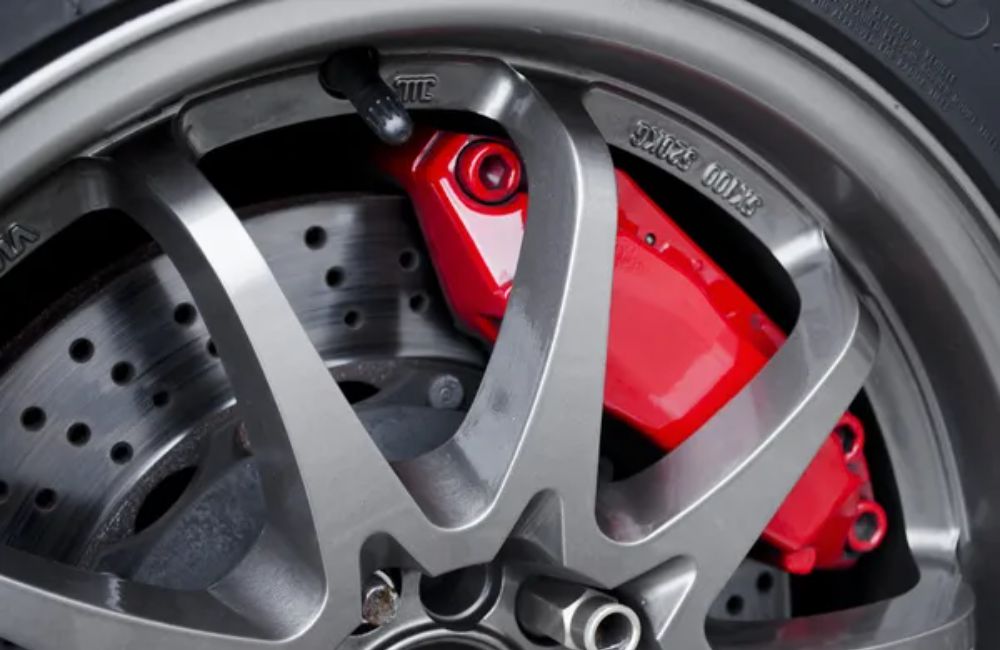
Brake pad replacement with friction material selection appropriate for the vehicle’s use profile — installed with calliper slider service and rotor condition confirmation to ensure even wear from the first application.
Brake Rotor Resurfacing & Replacement
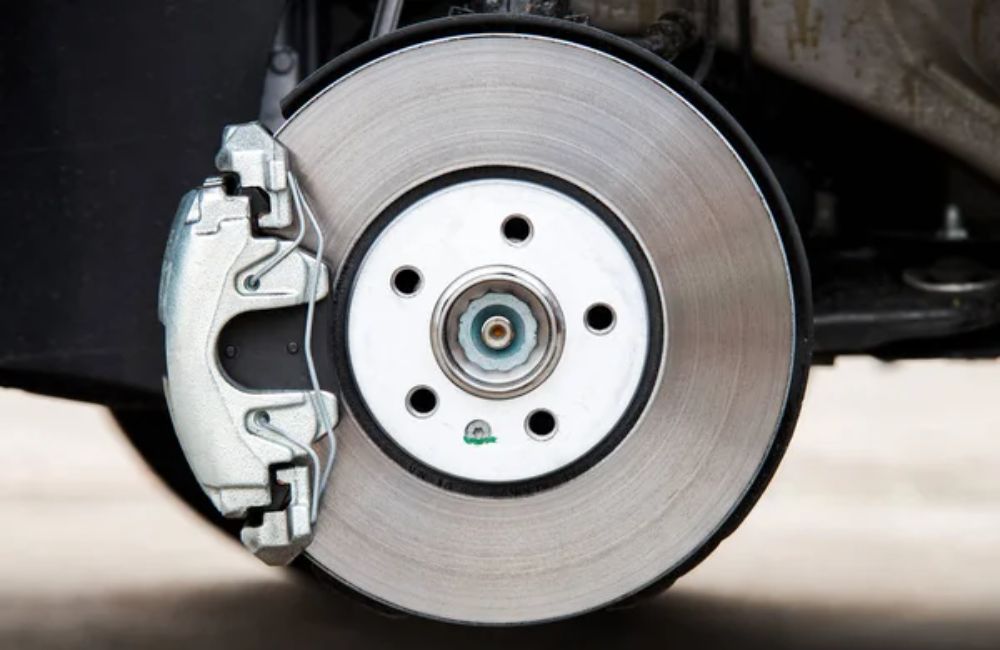
Brake rotor measurement and condition assessment determining whether resurfacing restores a serviceable surface or whether rotor thickness and condition require replacement — with documented measurements provided.

Calliper Service & Replacement
Brake calliper inspection, slider lubrication, and replacement where seized pistons, failed seals, or damaged slider pins are causing uneven pad wear, brake pull, or dragging.
Brake Fluid Service
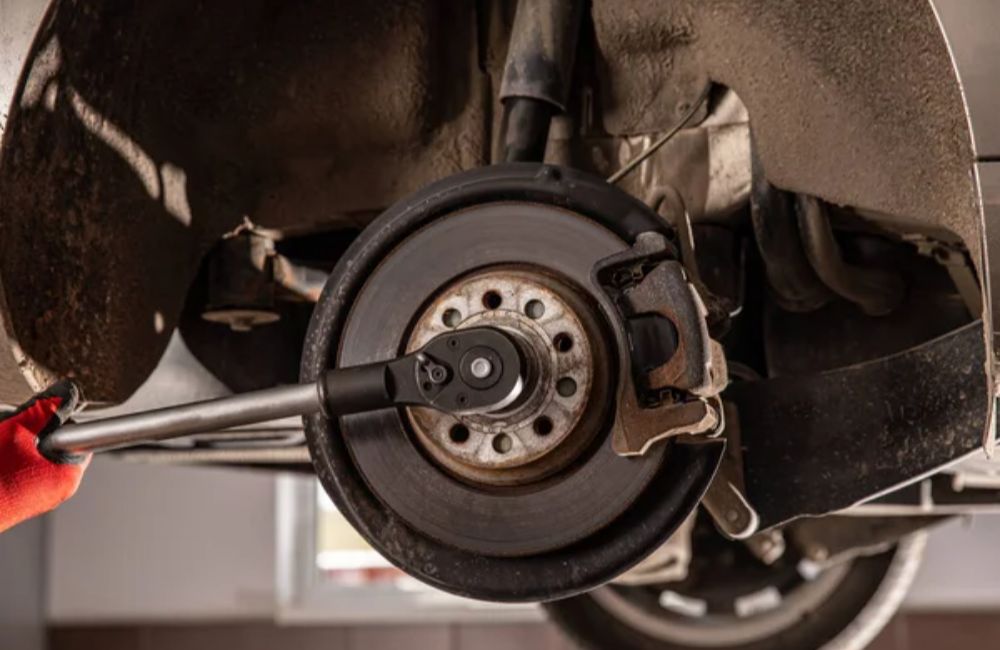
Brake fluid condition testing and replacement service restoring hydraulic system integrity — addressing moisture contamination that reduces boiling point safety margins in Gilbert’s high-temperature driving conditions.
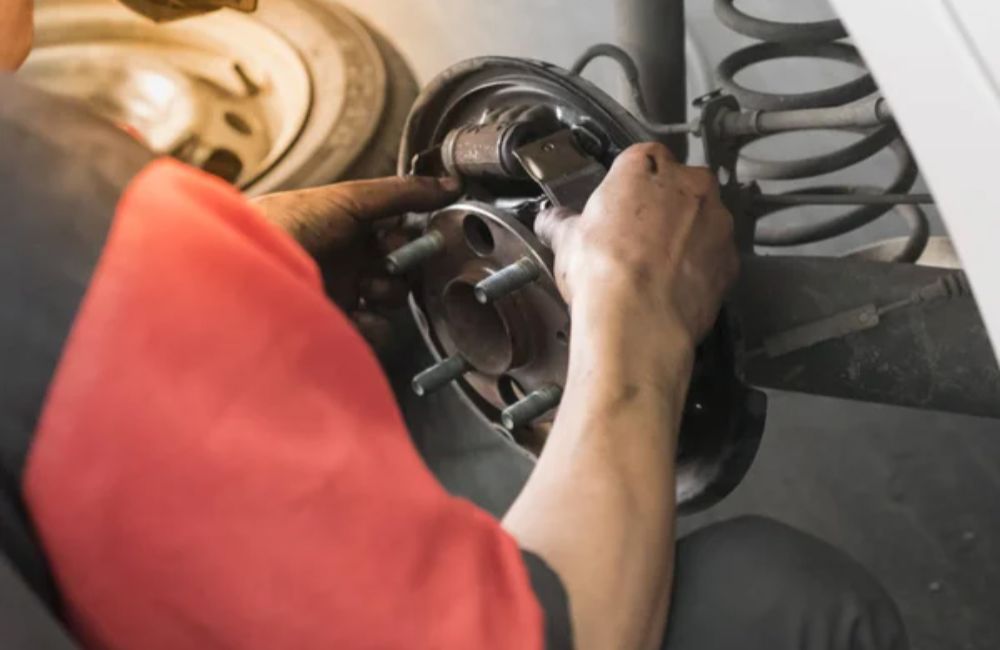
Brake Hose & Line Inspection
Brake hose and hard line inspection identifying flexible hose collapse, cracking, and hard line corrosion that restrict fluid flow, cause uneven braking, or represent a developing hydraulic failure risk.

ABS System Diagnosis & Repair
ABS warning light diagnosis and repair identifying wheel speed sensor faults, ABS module issues, and hydraulic control unit faults that affect anti-lock braking system operation.

Parking Brake Adjustment & Repair
Parking brake inspection, cable adjustment, and mechanical or electronic parking brake repair ensuring reliable hold on inclined surfaces and correct integration with the service brake system.

Brake Inspection & Condition Report
Comprehensive brake system inspection with documented measurements — pad thickness, rotor thickness, calliper condition, and fluid quality — providing Gilbert drivers with an accurate picture of current brake system health.

Brake System Bleeding & Flush
Brake system bleeding and fluid flush removing air from the hydraulic circuit and replacing degraded fluid — restoring firm pedal feel and correct brake response after brake component replacement or fluid service.
Brake Service & Repair Gilbert
Why Choose All Valley Car Care for Brake Service & Repair in Gilbert, AZ
All Valley Car Care provides brake service and brake repair near Gilbert, AZ, combining precise brake system measurement with technician expertise that evaluates the complete brake system — not just the pad thickness that is the quickest and most easily upsold finding. Our location serves drivers across Power Ranch, Val Vista Lakes, Agritopia, and the 85234, 85295, and 85296 ZIP codes with comprehensive brake pad inspection, rotor measurement, calliper evaluation, brake fluid testing, and ABS system assessment — performed by technicians who understand how Gilbert’s stop-and-go traffic, freeway driving, and extreme heat combine to create the specific brake wear and fluid degradation patterns West Valley drivers face.
- ASE-certified technicians measuring brake pad thickness and rotor thickness at multiple points using precision measurement tools — not a visual estimate or a single measurement at one location
- Rotor surface condition evaluation alongside thickness measurement — identifying glazing, heat cracking, deep scoring, and thickness variation that affect braking performance independently of rotor thickness
- Brake fluid condition testing using a moisture content tester — identifying fluid that has absorbed sufficient moisture to reduce its boiling point below a safe threshold for Gilbert’s operating temperatures
- Calliper inspection and slider service assessment — evaluating calliper piston retraction, slider pin lubrication, and rubber boot integrity that determine whether new pads will wear evenly and correctly
- ABS system scan included with brake inspections presenting ABS warning lights — retrieving wheel speed sensor codes and system fault data before recommending ABS-specific repairs
- Written brake inspection findings with specific measurements documented before any brake pad replacement or brake repair is approved — no repairs begin without your knowledge and consent
- Saturday availability (8 AM–2 PM) for Gilbert drivers who need brake service outside standard weekday hours.
Brake Service & Repair Gilbert
How We Deliver Consistent Brake Service & Repair Quality
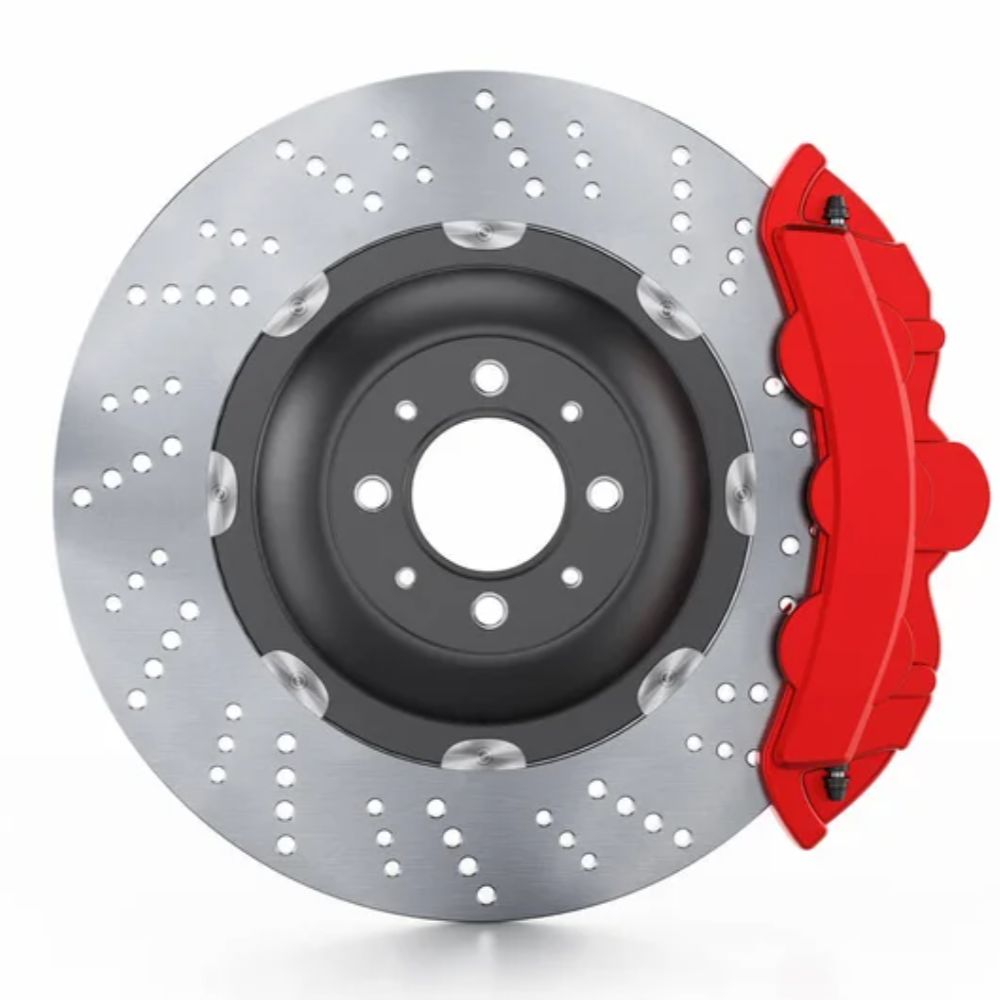
- Brake pad thickness measurement performed at all accessible pad positions on every axle — recording inner and outer pad thickness separately to identify uneven wear caused by calliper or hardware faults that single-point measurement would miss
- Rotor thickness measurement performed at multiple points across the rotor face using a digital micrometer — checking both minimum thickness specification compliance and thickness variation that causes pedal pulsation
- Rotor surface condition evaluation alongside thickness — documenting glazing, heat cracking, scoring depth, and rust ridge height as independent factors that affect braking performance regardless of rotor thickness compliance
- Brake fluid moisture content testing using a refractometer or electronic tester — identifying fluid that has absorbed sufficient moisture to reduce its boiling point below a safe threshold for Arizona’s operating temperatures before a heat-related vapour lock event occurs
- Calliper slider pin and boot condition evaluated at every brake service — confirming that pins move freely and boots are intact, as seized sliders are the most common cause of rapid inner pad wear and uneven braking
- ABS system scan included with any brake inspection presenting a warning light — identifying wheel speed sensor fault codes, hydraulic control unit faults, and ABS module issues before recommending component-specific repairs
- Written brake inspection report with specific pad thickness measurements, rotor measurements, calliper condition notes, and fluid test result provided before any repair recommendation is presented
- Post-repair brake pedal bedding confirmation — confirming correct pedal feel and braking force before the vehicle is returned after pad and rotor replacement.
Brake Service & Repair Gilbert
Frequently Asked Questions
How do I know if I need brake pad replacement or a full brake service in Gilbert?
Brake pad replacement alone is appropriate when the pads have worn to near the minimum thickness, the rotors are within specification and in good surface condition, the callipers are operating correctly, and the brake fluid is in serviceable condition. A full brake service — including rotor replacement or resurfacing, calliper slider service, and fluid change — is appropriate when any of these additional conditions are outside specification. All Valley Car Care measures and documents all brake system components before making a recommendation — ensuring you replace only what your vehicle actually needs in Gilbert's driving conditions.
How long do brake pads typically last in Gilbert, AZ?
Brake pad lifespan in Gilbert depends on driving pattern, vehicle weight, pad friction material, and the stop-and-go frequency of the routes driven. Drivers who regularly use freeway on-ramps and off-ramps, navigate the traffic signal density on major Gilbert corridors, or drive heavier vehicles tend to experience shorter pad life than drivers covering predominantly open highway miles. Gilbert's summer heat also affects brake fade behaviour under repeated stops. As a general indication, most passenger vehicles see front brake pads last between 25,000 and 60,000 miles — but the correct answer is what the measurement shows at each inspection, not a calendar or mileage estimate.
What does brake rotor resurfacing mean and when is it necessary?
Brake rotor resurfacing — also called cutting or turning — removes a thin layer of material from the rotor face to restore a smooth, flat contact surface. It is appropriate when a rotor has surface glazing, minor scoring, or a small rust ridge but retains sufficient thickness above the minimum specification to remain serviceable after the material removal. When a rotor is at or below minimum thickness, has significant heat cracking, or has scoring too deep to resurface within specification, replacement is the correct approach. All Valley Car Care measures rotor thickness before recommending resurfacing or replacement — never resurfacing a rotor that lacks sufficient material to remain above minimum specification after the process.
Why is brake fluid service important in Arizona's climate?
Brake fluid is hygroscopic — it absorbs moisture from the atmosphere over time. As moisture content increases, the fluid's boiling point drops. In Gilbert's summer heat, where brake components operate at elevated temperatures during stop-and-go driving, fluid approaching its degraded boiling point can vapourise inside the hydraulic circuit under sustained braking — creating compressible gas that produces a suddenly soft pedal at precisely the moment full braking force is needed. Most manufacturers recommend brake fluid replacement every two years regardless of mileage, and Arizona's temperatures make this interval a meaningful safety recommendation rather than a conservative one.
What causes a brake pedal to feel spongy or go too far to the floor?
A spongy brake pedal indicates a compressible substance in the hydraulic circuit — either air from a leak, an incomplete bleed after brake work, or moisture-contaminated fluid approaching its boiling point. A pedal that travels unusually far before generating braking force may indicate worn brake pads that have allowed the callipers to extend to near their maximum position, a master cylinder fault, or rear drum brakes requiring adjustment. All Valley Car Care diagnoses pedal feel complaints systematically — identifying the specific hydraulic or mechanical cause before recommending the correct repair.
Does brake pad replacement include rotor resurfacing or replacement?
Not automatically — and that distinction matters. All Valley Car Care assesses rotor condition independently with measurements before recommending resurfacing or replacement alongside pad installation. Installing new brake pads on rotors that are glazed, scored, at minimum thickness, or have significant thickness variation results in reduced braking performance, accelerated new pad wear, and often the pedal pulsation that sends drivers back to the shop shortly after the pad replacement. The correct approach is to assess the rotors and make a recommendation based on their actual measured condition — not a policy of always replacing or never replacing.
How long does a brake service appointment take at All Valley Car Care?
A brake inspection with documented measurements typically takes between thirty and forty-five minutes. A complete brake pad replacement on one axle, including calliper slider service, typically takes between one and one and a half hours. A full four-wheel brake service including pad replacement, rotor replacement, and brake fluid service typically takes two to three hours. We provide time estimates when you describe the service required and your vehicle at the time of scheduling.
Brake Service & Repair Gilbert
Our Brake Service & Repair Process at a Glance
Vehicle check-in & symptom discussion
Your service advisor discusses the specific brake symptoms — noise type and when it occurs, pedal feel changes, warning lights, pulling direction, or vibration under braking — alongside current mileage and relevant service history. This directs the inspection priorities and ensures the technician is specifically evaluating the systems most likely connected to the symptoms described.
Brake inspection & documented measurements
The vehicle is raised and a complete brake inspection is performed — measuring pad thickness at all accessible positions, rotor thickness at multiple points, evaluating rotor surface condition, inspecting calliper slider function and boot integrity, testing brake fluid moisture content, and inspecting hoses and lines for condition. All measurements are recorded on the inspection report before the technician leaves the vehicle.
Written findings, approved repairs & post-service verification
The written brake inspection report with specific measurements and findings is presented before any repair is recommended. Approved repairs are completed with calliper slider service performed alongside pad replacement and brake fluid replacement where fluid condition warrants it. After repair, the brake pedal feel is confirmed under controlled conditions before the vehicle is returned with a complete service record.
Brake Service & Repair Gilbert
How Our Brake Service & Repair Suite Works in Gilbert
Brake Pad Replacement
Measured, correctly installed brake pad replacement in Gilbert
Brake pad replacement is the most frequently performed brake service — but the quality of the outcome depends entirely on what is done alongside the pad installation, not just the pads themselves. Calliper slider pins must be cleaned and lubricated at every pad replacement to ensure the calliper moves freely and applies equal pressure across the pad surface — a seized slider is the most common cause of rapid inner pad wear and the premature return visit for brake work that could have been avoided. Rotor condition must be assessed with measurements rather than a visual glance before new pads are installed — new pads bedded onto a rotor with significant scoring, glazing, or thickness variation will not achieve the full contact and friction performance the pads are rated for. All Valley Car Care performs calliper slider service and rotor condition assessment at every brake pad replacement, and documents the rotor measurements on the service record to provide a baseline for future inspections.
Brake Rotor Resurfacing & Replacement
Accurate rotor assessment before resurfacing or replacement in Gilbert
Brake rotor decisions should be based on measurements, not policy — and the correct measurement is rotor thickness at multiple points across the rotor face, compared against the minimum thickness specification cast into the rotor itself. A rotor that retains sufficient thickness above minimum after resurfacing — accounting for the material the cutting process removes — is a candidate for resurfacing where its surface condition warrants it. A rotor already at or below minimum thickness, or one with heat cracking or scoring too deep to resurface within specification, requires replacement regardless of how it appears visually. Thickness variation across the rotor face — where the rotor is thicker in some areas than others from uneven wear — is the primary cause of brake pedal pulsation and should be assessed alongside absolute thickness. All Valley Car Care documents rotor measurements before and after service, providing Gilbert drivers with a concrete record of rotor condition at each brake service visit.
Calliper Service & Replacement
Diagnosing calliper faults causing uneven wear and brake pull in Gilbert
Brake callipers are the hydraulic actuators that clamp the brake pads against the rotor — and their correct operation determines not only braking force but the even distribution of that force across the pad surface. A calliper with a seized piston cannot fully release after braking, holding the pad against the rotor and generating continuous drag that overheats the brake components, wears the inner pad faster than the outer, and reduces fuel economy through continuous friction. A calliper with corroded or dry slider pins generates uneven clamping force across the pad width — producing tapered pad wear where one edge of the pad wears faster than the other. Both conditions progress gradually and are often not noticed until the resulting noise or brake pull becomes significant. All Valley Car Care inspects calliper piston travel, slider pin condition, and rubber boot integrity at every brake service — replacing callipers where hydraulic fault or physical damage is confirmed.
Brake Fluid Service
Restoring hydraulic safety margins with brake fluid service in Gilbert
Brake fluid service is one of the most safety-relevant and most deferred maintenance items in Gilbert’s market — because the symptom of degraded brake fluid is not detectable through feel or observation until a heat-related vapour lock event reduces pedal effectiveness at the worst possible moment. All Valley Car Care tests brake fluid moisture content at every brake inspection using a refractometer or electronic tester — providing a specific percentage moisture reading that indicates whether the fluid’s boiling point has dropped into a range where normal operating temperatures in Gilbert’s summer traffic create a safety risk. Where fluid condition warrants service, a complete brake system flush replaces the degraded fluid throughout the entire hydraulic circuit — master cylinder, lines, callipers, and wheel cylinders — not just a partial top-up that dilutes rather than replaces the contaminated fluid.
Brake Hose & Line Inspection
Identifying hydraulic circuit integrity risks in Gilbert vehicles
Brake hoses and hard lines carry hydraulic pressure from the master cylinder to each wheel calliper — and their condition is a safety-critical factor that is often not evaluated unless it produces a visible leak or a total hydraulic failure. Flexible brake hoses deteriorate internally as well as externally — internal rubber breakdown creates flaps that act as one-way valves, allowing pressure to build at the calliper but restricting fluid return when the pedal is released. The result is a dragging brake on one corner that generates heat and wears the pad rapidly, often mistaken for a calliper fault until the hose is identified as the restriction. Hard brake lines are susceptible to corrosion at their connections and mounting points — a developing fault that can progress to a sudden hydraulic failure with little warning. All Valley Car Care inspects all accessible brake hoses and hard line connections during every brake service and brake inspection.
ABS System Diagnosis & Repair
Diagnosing ABS warning lights and system faults in Gilbert
The anti-lock braking system is the safety feature that prevents wheel lockup under emergency braking — allowing the driver to maintain steering control while applying maximum braking force. An ABS warning light indicates a fault in the system that may affect its availability in the emergency scenario it exists to handle, even if normal braking feel is unchanged. The most common ABS fault source is a wheel speed sensor — a sensor at each wheel that communicates rotational speed to the ABS control module, allowing the system to detect and respond to an impending wheel lockup. Wheel speed sensor faults from corrosion, physical damage, or toothed tone ring damage are retrievable through an ABS-specific diagnostic scan that provides the sensor location and fault type. All Valley Car Care includes ABS diagnostic scanning in every brake inspection that presents an ABS warning light — identifying the specific fault source before recommending component replacement.
Parking Brake Adjustment & Repair
Ensuring reliable parking brake function in Gilbert
The parking brake — whether a traditional cable-operated mechanical system or an electronic parking brake on newer vehicles — must hold the vehicle stationary on an incline and release completely during normal driving. A cable-operated parking brake that has stretched or has corroded linkage may not hold reliably on steep driveways or inclined parking areas common in Gilbert’s newer residential developments. An electronic parking brake with a fault may generate a dashboard warning, apply automatically in conditions where it is not intended, or fail to release correctly. All Valley Car Care adjusts cable-operated parking brakes to the correct tension at every brake service where adjustment is accessible, and diagnoses electronic parking brake faults through the relevant control module scan before recommending actuator or switch replacement.
Brake Inspection & Condition Report
Documented brake measurements for informed decisions in Gilbert
A brake inspection without measurements is an opinion — a brake inspection with documented measurements is a record. All Valley Car Care provides a written brake condition report with specific pad thickness readings at every inspected position, rotor thickness measurements, rotor surface condition notes, calliper condition assessment, and brake fluid moisture test result at every brake inspection. This report serves multiple purposes: it provides the Gilbert driver with the information needed to make an informed repair decision, it establishes a documented baseline for future inspections, and it provides a concrete record for vehicles approaching a service interval where brake attention will be needed. Drivers who receive a brake inspection and choose to defer service based on measurements showing adequate remaining pad life leave with documented baseline readings that make the next inspection conversation specific and factual rather than general.
Brake System Bleeding & Flush
Restoring firm pedal feel with correct brake bleeding in Gilbert
Brake system bleeding — the process of removing air from the hydraulic circuit — is required after any brake component replacement that opens the hydraulic system, and is a fundamental part of a complete brake fluid service. Air in the brake lines compresses under pedal pressure rather than transmitting force, producing the spongy pedal feel that reduces brake response and pedal confidence. The correct bleeding procedure varies by vehicle — some require a specific sequence at each wheel to maintain system pressure, others require scan tool actuation of the ABS hydraulic control unit to purge air from ABS circuit passages that gravity or pressure bleeding cannot reach. All Valley Car Care performs the correct bleeding procedure for each vehicle platform after every brake service that opens the hydraulic circuit, confirming firm pedal feel and correct brake response before the vehicle is returned.
Ready For Brake Service & Repair Service?
Gilbert drivers searching for brake service near me, brake repair near me, or brake pad replacement in Gilbert, AZ can reach All Valley Car Care Monday through Friday 7:30 AM–5:30 PM and Saturday 8 AM–2 PM. Our ASE-certified technicians serve Gilbert and surrounding East Valley communities with measured brake inspections, documented findings, and repair recommendations based on what each vehicle’s brake system actually needs. Contact our team today and get a clear, written picture of exactly where your brakes stand.
Proudly Serving in Gilbert, AZ
-
Directions from Chandler, AZ to All Valley Car Care, Gilbert, AZ
-
Directions from Mesa, AZ to All Valley Car Care, Gilbert, AZ
-
Directions from Phoenix, AZ to All Valley Car Care, Gilbert, AZ
-
Directions from Queen Creek, AZ to All Valley Car Care, Gilbert, AZ
-
Directions from Scottsdale, AZ to All Valley Car Care, Gilbert, AZ
-
Directions from Tempe, AZ to All Valley Car Care, Gilbert, AZ
-
Directions from Surprise, AZ to All Valley Car Care, Gilbert, AZ
-
Directions from Glendale, AZ to All Valley Car Care, Gilbert, AZ
Serving Neighborhoods & Districts in Gilbert, AZ
-
Directions from Agritopia to All Valley Car Care, Gilbert, AZ
-
Directions from Ashland Ranch to All Valley Car Care, Gilbert, AZ
-
Apache Junction
Directions from Ashland Ranch to All Valley Car Care, Gilbert, AZ
-
Directions from Cooley Station to All Valley Car Care, Gilbert, AZ
-
Directions from Coronado Ranch to All Valley Car Care, Gilbert, AZ
-
Directions from Finley Farms to All Valley Car Care, Gilbert, AZ
-
Directions from Gilbert Town Square to All Valley Car Care, Gilbert, AZ
-
Directions from Higley Groves to All Valley Car Care, Gilbert, AZ
-
Directions from Islands to All Valley Car Care, Gilbert, AZ
-
Directions from Lyons Gate to All Valley Car Care, Gilbert, AZ
-
Directions from Morrison Ranch to All Valley Car Care, Gilbert, AZ
-
Directions from Neely Farms Disc Golf Course to All Valley Car Care, Gilbert, AZ
-
Directions from Power Ranch to All Valley Car Care, Gilbert, AZ
-
Directions from Rancho Cimarron to All Valley Car Care, Gilbert, AZ
-
Directions from Seville to All Valley Car Care, Gilbert, AZ
-
Directions from Spectrum at Val Vista to All Valley Car Care, Gilbert, AZ
-
Directions from Stonebridge Lakes to All Valley Car Care, Gilbert, AZ
-
Directions from The Groves to All Valley Car Care, Gilbert, AZ
-
Directions from Val Vista Lakes to All Valley Car Care, Gilbert, AZ
-
Directions from Verde at Cooley Station to All Valley Car Care, Gilbert, AZ
What Our Customers Say
Real Reviews from Real Surprise Neighbors

