
Radiator Repair & Cooling System Service in Gilbert, AZ
Accurate Diagnosis Before Every Repair
Pressure-tested cooling system diagnosis, written findings, and ASE-certified radiator repair — before any work begins.
- Complete cooling system service covering radiator repair, coolant flush, thermostat replacement, water pump service, and hose inspection for all vehicle makes and models
- ASE-certified technicians performing cooling system pressure testing and temperature analysis before any radiator repair or coolant service recommendation is made
- Transparent written cooling system findings before any radiator repair or component replacement is approved
- Saturday hours available (8 AM–2 PM) — car service in Gilbert, AZ on your schedule
Cooling System & Radiator Service Gilbert
Cooling System Warning Signs Gilbert, AZ Drivers Should Not Ignore
The cooling system is the primary defence against the engine damage that results from sustained operation above safe temperature — and in Gilbert’s driving environment, where extreme ambient heat, stop-and-go traffic, and long freeway commutes all compound the thermal load on cooling components, the margin between a functional cooling system and an overheating one is narrower than in almost any other driving climate in the country. When your vehicle begins showing cooling system warning signs, early diagnosis is the difference between a thermostat replacement and a head gasket repair. If any of the following describe your vehicle’s current behaviour, a professional cooling system inspection is the correct immediate step.
Your Temperature Gauge Is Running High or in the Red
An engine temperature gauge that climbs consistently higher than normal — or that reaches the red zone during stop-and-go traffic or while idling with the AC running — is communicating a cooling system fault that requires immediate attention. Operating an engine above its design temperature for sustained periods causes progressive damage: head gaskets begin to fail under the combination of heat and pressure differential, cylinder head surfaces can warp, and aluminium engine components that are particularly common in modern vehicles are especially susceptible to heat distortion. In Gilbert’s summer, an engine that runs at the upper edge of normal temperature in March may regularly reach the danger zone by July — because the reduction in temperature differential between the coolant and the ambient air reduces the radiator’s ability to reject heat at the same rate. A cooling system inspection that identifies the marginal component before the first overheating event is the most cost-effective outcome available.
Your Engine Is Overheating in Traffic or at Idle
An engine that reaches normal operating temperature on the road but begins to overheat when stationary in traffic — or when sitting at idle with the air conditioning running — typically points to a cooling fan fault rather than a fundamental coolant flow problem. At road speed, airflow through the radiator core provides the majority of heat rejection. At idle and in slow traffic, the electric cooling fan or mechanical fan clutch is responsible for maintaining airflow. A failed electric fan relay, a faulty fan temperature sensor, or a worn fan clutch that slips at idle allows coolant temperature to rise unchecked in exactly the conditions that Gilbert drivers encounter most frequently — stop-and-go traffic on Higley Road, Williams Field Road, and the corridors approaching the SanTan Village area. Early diagnosis of fan system faults prevents the overheating events that lead to head gasket damage.
You See Coolant Leaking or Notice a Sweet Smell
Coolant leaking from under the vehicle — whether a visible puddle or a coolant stain on the driveway — and a sweet, slightly syrupy smell from the engine bay or from the HVAC vents are both signs of an external coolant leak that requires prompt attention. Coolant leaks can originate from radiator seams, hose connections, the water pump seal, the thermostat housing gasket, or heater core fittings — each location requiring a different repair approach. A slow coolant leak that reduces the system’s fluid level gradually is dangerous because the temperature gauge may not reflect the early stages of coolant loss — the engine can begin operating with reduced cooling capacity before the gauge climbs significantly. All Valley Car Care uses cooling system pressure testing to identify external leak locations before recommending the correct component repair.
Your Heater Stopped Working or Produces Lukewarm Air
A vehicle heater that produces lukewarm air instead of hot air — or that blows cold air even after the engine has fully warmed up — is frequently a cooling system symptom rather than a heater-specific fault. Low coolant level from a slow leak prevents hot coolant from circulating through the heater core at adequate volume, reducing heat output. A thermostat stuck open — which prevents the engine from reaching full operating temperature — produces the same symptom, as the coolant entering the heater core never reaches the temperature needed to heat cabin air effectively. Air pockets in the cooling system following a recent coolant service or a developing head gasket fault can also displace coolant from the heater circuit. Each cause requires a different repair approach, and cooling system testing distinguishes between them.
Your Coolant Is Discoloured, Rusty, or Oil-Contaminated
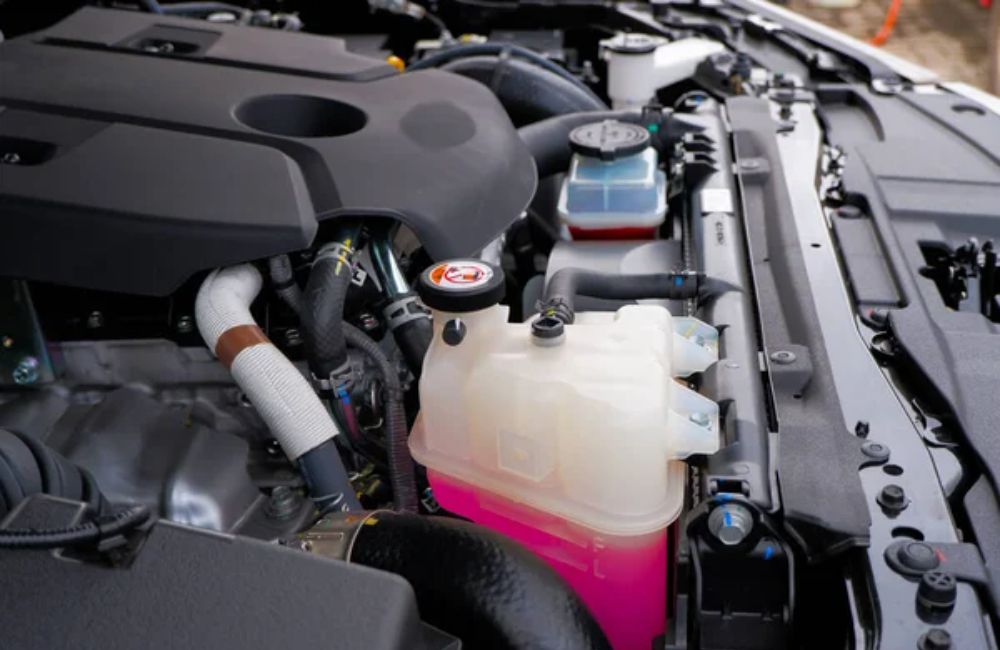
Coolant that has turned brown, rusty, or murky — rather than the bright green, orange, or pink of fresh antifreeze — has exceeded its service life and lost the corrosion inhibitors that protect the aluminium, iron, and copper alloy components inside the cooling circuit. Degraded coolant allows corrosion to develop on radiator tubes, water pump impeller blades, and heater core passages — progressively reducing flow and heat transfer efficiency. Coolant that appears milky or has a foamy consistency in the reservoir indicates oil or combustion gas contamination — a head gasket symptom that requires urgent diagnosis. In Gilbert’s heat, where cooling system components are consistently operating near their design limits, coolant condition maintenance is a component preservation measure as much as a fluid service.
Cooling System & Radiator Service Gilbert
Cooling System & Radiator Services
Complete cooling system service and radiator repair in Gilbert, AZ — covering coolant flush, thermostat replacement, water pump service, and overheating diagnosis for all vehicle makes and models.
Radiator Repair & Replacement
Radiator inspection, pressure testing, and repair or replacement — addressing coolant leaks, fin corrosion, and internal blockage reducing cooling capacity for Gilbert vehicles.

Coolant Flush & Replacement
Coolant flush service removing degraded antifreeze and corrosion deposits throughout the cooling circuit — restoring boil-over protection and corrosion inhibitor performance for Gilbert’s extreme heat.

Thermostat Replacement
Thermostat function testing and replacement — correcting overheating caused by a stuck-closed thermostat and poor fuel economy or heater performance caused by a stuck-open thermostat.
Water Pump Service & Replacement
Water pump seal condition assessment, impeller wear evaluation, and replacement where pump failure is causing reduced coolant flow or imminent coolant loss.
Cooling Fan Diagnosis & Repair
Electric cooling fan relay testing, fan motor evaluation, and temperature sensor diagnosis — correcting the idle and low-speed overheating that results from cooling fan system faults.

Radiator Hose Inspection & Replacement
Upper and lower radiator hose condition assessment — identifying hose swelling, cracking, and connection softness that indicate hose failure risk before a sudden coolant loss occurs.
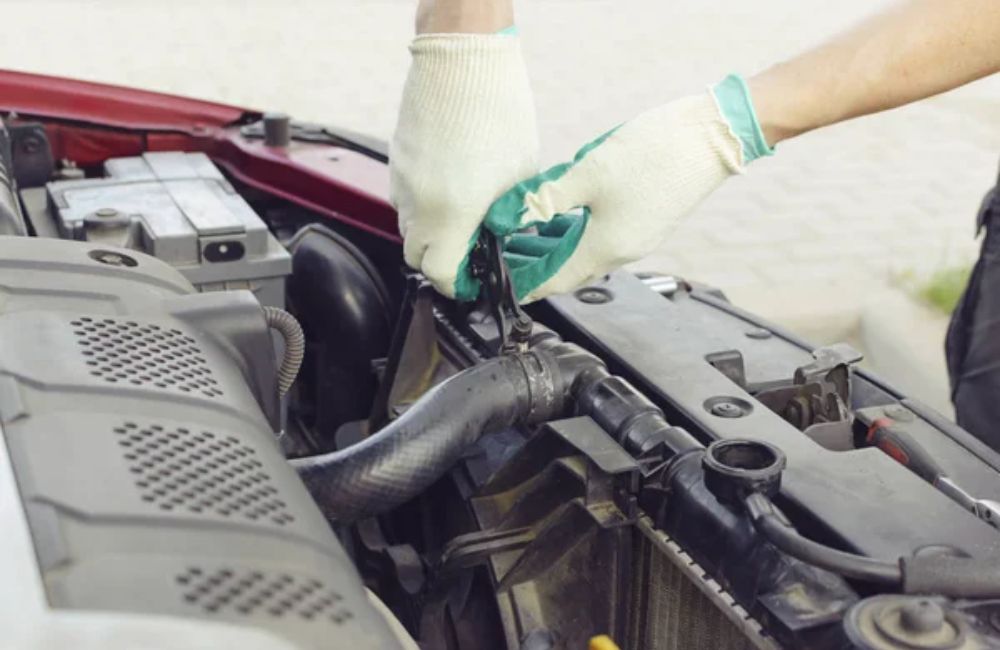
Head Gasket Diagnosis
Combustion gas testing of coolant and compression leak-down evaluation — identifying head gasket involvement before continued driving causes irreversible internal engine damage.
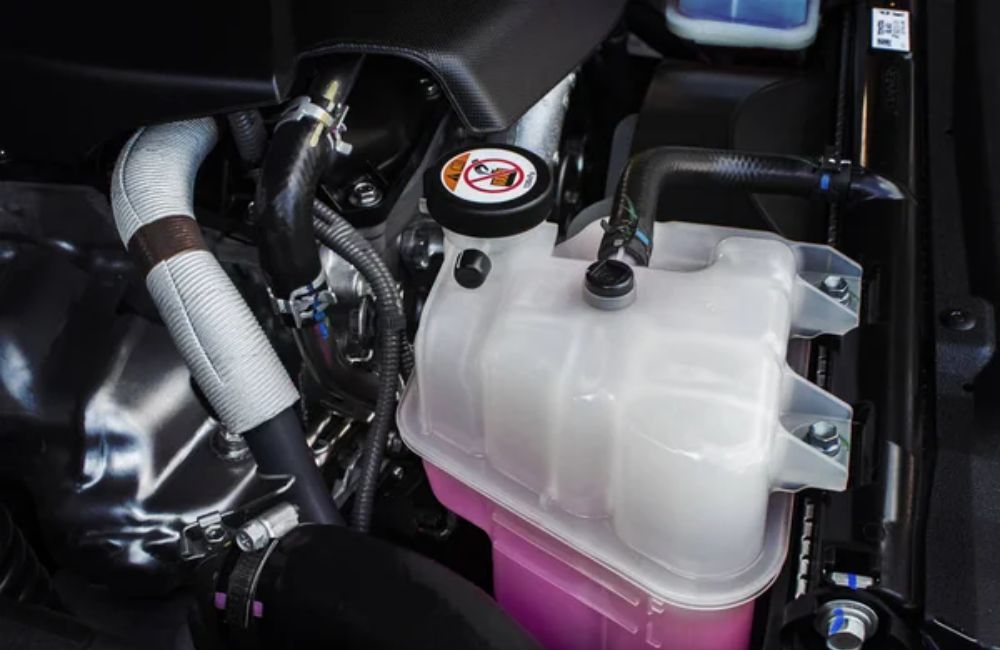
Coolant Reservoir & Cap Service
Coolant reservoir condition assessment and pressure cap testing — confirming the cap holds the correct system pressure and that the reservoir is not contaminated or cracked.

Heater Core & Cabin Heat Diagnosis
Heater core flow assessment and cabin heat fault diagnosis — addressing the cooling system causes of poor heater output, including low coolant level, thermostat faults, and air-locked heater circuits.
Cooling System & Radiator Service Gilbert
Why Choose All Valley Car Care for Cooling System & Radiator Repair in Gilbert, AZ
All Valley Car Care provides radiator repair and cooling system service near Gilbert, AZ, combining pressure-tested system diagnosis with technician expertise that evaluates the complete cooling circuit — not a visual inspection that misses internal corrosion, thermostat faults, and fan system failures that a pressure test and temperature analysis would identify. Our location serves drivers across the Higley Corridor, Power Ranch, Agritopia, Val Vista Lakes, and surrounding East Valley communities with comprehensive radiator inspection, coolant condition testing, thermostat evaluation, water pump assessment, and cooling fan diagnosis — performed by ASE-certified technicians who understand how Gilbert’s extreme summer heat, stop-and-go traffic, and AC load create the specific cooling system stress patterns East Valley drivers experience.
- ASE-certified technicians performing cooling system pressure testing at the correct specification for the vehicle — identifying external leaks at all hose connections, radiator seams, water pump seals, and thermostat housings
- Coolant condition assessment using a refractometer and pH testing — evaluating freeze point, boil-over protection, and corrosion inhibitor depletion before recommending a coolant flush
- Thermostat function evaluation under operating conditions — confirming opening temperature, full-open flow, and correct temperature gauge behaviour rather than assuming thermostat fault from gauge reading alone
- Cooling fan operation testing at correct temperature thresholds — confirming electric fan relay function, fan motor current draw, and temperature sensor accuracy for vehicles that overheat at idle
- Water pump flow and seal condition assessment — identifying impeller wear and seal weeping that reduce coolant circulation before pump failure causes an overheating event
- Written cooling system findings with pressure test results, coolant condition readings, and component condition notes documented before any radiator repair or coolant flush is approved
- Saturday availability (8 AM–2 PM) for Gilbert drivers who need cooling system or radiator repair service outside standard weekday hours.
Cooling System & Radiator Service Gilbert
How We Deliver Consistent Cooling System & Radiator Service Quality
- Cooling system pressure testing performed at the manufacturer-specified system pressure — holding the test for a timed period to identify slow external leaks that do not produce visible drips under ambient conditions
- Coolant condition testing using a refractometer for freeze and boil-over protection measurement and a pH test strip or electronic tester for corrosion inhibitor depletion — providing quantified coolant condition data before a coolant flush is recommended
- Thermostat opening temperature verified under operating conditions using an infrared thermometer or scan tool coolant temperature data — confirming actual thermostat behaviour rather than assuming fault from gauge readings alone
- Cooling fan activation temperature confirmed against manufacturer specification — testing fan relay, fan motor current draw, and coolant temperature sensor accuracy for vehicles with electric fan systems
- Water pump external seal condition and belt tension assessed at every cooling system service — identifying seal weeping and drive belt wear that indicate developing pump failure
- Combustion gas test performed on coolant where head gasket involvement is suspected — providing early confirmation of exhaust gas in the cooling system before white smoke or foam in the reservoir provides the later-stage indicator
- Written cooling system inspection report with pressure test results, coolant condition readings, thermostat behaviour, and component condition notes provided before any repair recommendation is presented
- Post-service coolant level and temperature gauge behaviour confirmation — verifying the system holds pressure and the engine reaches and maintains correct operating temperature after coolant flush or component replacement.
Cooling System & Radiator Service Gilbert
Frequently Asked Questions
How do I know if I need a coolant flush or just a coolant top-up in Gilbert?
A coolant top-up is the appropriate response when the system is slightly low and the existing coolant is in serviceable condition — correct pH, adequate boil-over protection, and no contamination. A coolant flush is the correct service when the coolant has degraded beyond its corrosion inhibitor service life, is discoloured or contaminated, or when the vehicle has reached the manufacturer's coolant service interval. All Valley Car Care tests coolant condition before recommending a flush — so the service is based on what the coolant's actual condition requires, not a mileage estimate alone.
How often should I have a coolant flush in Gilbert, AZ?
Most manufacturers specify coolant replacement on a mileage or time interval — commonly every 30,000 miles or two to three years for conventional green antifreeze, and every 50,000 miles or five years for extended-life OAT or HOAT coolants. In Gilbert's heat, where the cooling system operates consistently near its upper temperature limits, corrosion inhibitor depletion can reach a service-required level before the mileage interval is reached. All Valley Car Care tests coolant condition at every service visit and recommends a coolant flush when the measured pH or boil-over protection indicates degradation — regardless of mileage.
What causes a car to overheat in Gilbert's summer heat?
Overheating in Gilbert's summer most commonly results from one or more of the following: low coolant level from an external leak, a thermostat stuck in the closed position restricting coolant flow, a cooling fan that is not activating correctly at idle or in slow traffic, a water pump with reduced flow from impeller wear or a slipping belt, or a radiator with reduced capacity from internal corrosion deposits or fin damage. Degraded coolant that has lost its corrosion inhibitors accelerates internal radiator corrosion over time, progressively reducing cooling capacity. All Valley Car Care diagnoses overheating faults by testing each of these systems rather than replacing components based on the most common cause.
Can I drive my car if it's running hot in Gilbert?
No — if the temperature gauge is approaching or in the red zone, the vehicle should be stopped as soon as it is safe to do so. Continuing to drive an overheating engine risks warping the cylinder head, damaging head gaskets, and causing internal engine damage that far exceeds the cost of the cooling system fault responsible. Allow the engine to cool completely before adding coolant or opening the cooling system. All Valley Car Care recommends having the vehicle inspected before driving it again following an overheating event — to confirm the root cause and assess whether any damage occurred during the overheating episode.
What is the difference between radiator repair and radiator replacement?
Radiator repair is appropriate where the fault is a minor external leak at a seam, a fitting, or a hose connection that can be corrected without replacing the entire radiator — and where the radiator's core and tank condition otherwise remain serviceable. Radiator replacement is appropriate where internal blockage has significantly reduced flow, where the core has extensive corrosion damage, where a tank has cracked, or where the leak is at a location that cannot be reliably sealed without replacement. All Valley Car Care pressure tests the radiator before recommending repair or replacement — ensuring the decision is based on the radiator's actual condition and the leak location, not a policy of automatic replacement.
Why is my heater blowing cold air even though the engine is warm?
Cold air from the heater when the engine is at operating temperature points to one of several cooling system conditions: low coolant level preventing adequate flow through the heater core, a thermostat stuck open that prevents the engine from reaching the temperature needed to heat the coolant entering the heater core, an air pocket in the cooling circuit that has displaced coolant from the heater core passages, or a restricted heater core with reduced flow from internal corrosion deposits. All Valley Car Care diagnoses heater output complaints by evaluating coolant level, thermostat operation, and heater circuit flow before recommending the correct cooling system repair.
How long does a cooling system service or radiator repair take in Gilbert?
A cooling system inspection including pressure testing and coolant condition assessment typically takes thirty to forty-five minutes. A coolant flush service typically takes forty-five minutes to one hour. Thermostat replacement takes one to two hours depending on the vehicle's thermostat location and accessibility. Water pump replacement ranges from two to four hours. All Valley Car Care provides time estimates at scheduling based on the vehicle and the service required.
Cooling System & Radiator Service Gilbert
Our Cooling System & Radiator Service Process at a Glance
Vehicle check-in & symptom discussion
Your service advisor discusses the specific cooling system symptoms — whether the temperature gauge is running high, where coolant loss has been noticed, whether the heater output has changed, and any recent overheating events — alongside current mileage and relevant service history. This directs the inspection priorities and ensures the technician evaluates the components most likely connected to the symptoms described.
Cooling system inspection & documented findings
The cooling system is pressure tested at the correct specification for the vehicle. Coolant condition is measured for pH and boil-over protection. Thermostat operation is evaluated under running conditions. Cooling fan activation is confirmed. Hose condition, radiator external condition, and water pump seal are inspected. All findings are documented before the technician presents a repair recommendation.
Written findings, approved repairs & post-service verification
The written cooling system inspection report with pressure test results, coolant condition measurements, and component condition notes is presented before any repair is recommended. Approved repairs are completed with OEM-equivalent components. After service, coolant level is confirmed, the system is bled of air, and temperature gauge behaviour is verified under operating conditions before the vehicle is returned with a complete service record.
Cooling System & Radiator Service Gilbert
How Our Cooling System & Radiator Service Suite Works in Gilbert
Radiator Repair & Replacement
Pressure-tested radiator assessment before repair or replacement
The radiator is the primary heat exchanger in the vehicle’s cooling system — and the decision to repair or replace it should follow a pressure test that confirms the leak location and an evaluation of the radiator’s overall condition, not a default recommendation to replace on the basis of visible external corrosion alone. All Valley Car Care pressure tests every radiator presenting a suspected leak, identifies the specific leak location, and assesses whether the core and tank condition supports repair or indicates replacement. In Gilbert’s heat, a radiator operating with reduced fin efficiency from insect debris, road dust accumulation, or corrosion deposits provides measurably less cooling capacity — and these conditions are evaluated alongside leak detection as part of every radiator inspection. Gilbert drivers in the 85234, 85295, and 85296 ZIP codes who suspect a radiator leak receive a written finding before any radiator repair near me recommendation is confirmed.
Coolant Flush & Replacement
Condition-confirmed coolant flush for Gilbert’s extreme heat
A coolant flush that is based on measured coolant condition rather than a mileage sticker restores the boil-over protection and corrosion inhibitor chemistry the cooling system requires — while avoiding the unnecessary cost of flushing coolant that still has service life remaining. All Valley Car Care tests coolant pH and boil-over protection before every flush recommendation — providing Gilbert drivers with the specific readings that justify the service. The flush procedure removes degraded coolant from the entire cooling circuit including the heater core, engine block passages, and radiator — not just a partial drain and refill that leaves a proportion of the old coolant mixed with the new. The correct coolant type for the vehicle’s cooling system metals and manufacturer specification is used for the refill, as mixing incompatible coolant types accelerates the corrosion the flush was intended to prevent.
Thermostat Replacement
Thermostat function testing before replacement in Gilbert
The thermostat is a thermostatic valve that regulates coolant flow between the engine and the radiator — holding coolant in the engine block until operating temperature is reached, then opening to allow circulation through the radiator for cooling. A thermostat stuck in the closed position blocks coolant flow to the radiator entirely, causing rapid overheating that can damage head gaskets within minutes. A thermostat stuck in the open position allows coolant to circulate through the radiator continuously, preventing the engine from reaching full operating temperature — reducing fuel efficiency, increasing emissions, and causing the poor heater output that is often the first symptom noticed. All Valley Car Care confirms thermostat behaviour using coolant temperature data before recommending replacement — distinguishing a thermostat fault from a cooling fan or water pump fault that produces a similar symptom pattern.
Water Pump Service & Replacement
Water pump assessment before failure causes an overheating event
The water pump circulates coolant through the entire cooling circuit at a rate sufficient to maintain engine temperature within the operating range — and its failure produces an overheating event that, in Gilbert’s summer heat, can cause head gasket damage within a short driving period. All Valley Car Care inspects the water pump’s external seal for weeping or active coolant loss at every cooling system service, and evaluates belt tension and pulley bearing condition on belt-driven pumps. Where a pump is producing noise, showing seal weeping, or is accompanied by coolant loss that cannot be attributed to another source, replacement before failure is the correct approach. On timing belt-driven water pumps — where the pump is accessed during timing belt replacement — All Valley Car Care advises on whether simultaneous water pump replacement is appropriate given the pump’s age and condition relative to the timing belt service interval.
Cooling Fan Diagnosis & Repair
Fan system testing for idle and traffic overheating in Gilbert
The cooling fan system is the component most directly responsible for preventing overheating in the stop-and-go traffic conditions that Gilbert drivers experience daily on Higley Road, Williams Field Road, and the corridors approaching the US-60. At road speeds, forward airflow through the radiator provides adequate heat rejection without fan assistance. At idle and in slow traffic — where ambient temperatures in Gilbert’s summer can reach 115°F and the AC compressor adds thermal load to the system — the cooling fan is the only source of airflow through the radiator. All Valley Car Care tests electric cooling fan activation against the manufacturer’s temperature threshold, measures fan motor current draw to identify motors approaching failure, and tests the fan relay and coolant temperature sensor that control fan engagement. Mechanical fan clutch slip is evaluated on vehicles with engine-driven fans.
Radiator Hose Inspection & Replacement
Hose condition assessment before a sudden coolant loss
Radiator hoses carry coolant under pressure between the engine and the radiator — and their failure mode is typically a sudden burst or split that empties the cooling system rapidly, producing an immediate overheating event. The internal deterioration that precedes hose failure is not visible from the outside: the inner rubber layer breaks down and softens, while the outer surface may still appear intact. All Valley Car Care inspects radiator hoses by palpating the hose body and connection points for softness, swelling, and hardening — signs of internal degradation that indicate imminent failure risk. Hose connection condition at both the radiator and engine fittings is evaluated for corrosion and clamp integrity. In Gilbert’s heat, where hoses are consistently operating at the upper end of their temperature range, hose condition at cooling system service intervals is a meaningful safety check rather than a routine visual.
Head Gasket Diagnosis
Early head gasket detection before irreversible engine damage
Head gasket failure is one of the most expensive outcomes of a neglected cooling system fault — and the most valuable aspect of head gasket diagnosis is identifying it early, before continued driving causes the progressive damage that escalates a head gasket replacement into a cylinder head resurfacing, a head bolt replacement, or a full engine rebuild. All Valley Car Care performs a combustion gas test on the coolant — using a chemical reaction that changes colour in the presence of exhaust combustion gases in the cooling system — as the most reliable early indicator of head gasket compromise. This test can identify head gasket involvement before the more visible symptoms of white exhaust smoke, coolant loss without a visible external leak, or oil-contaminated coolant develop. Gilbert drivers who have experienced an overheating event, or who notice unexplained coolant loss without a visible external leak, benefit from this test as a first step.
Coolant Reservoir & Cap Service
Pressure cap and reservoir condition — the overlooked cooling system components
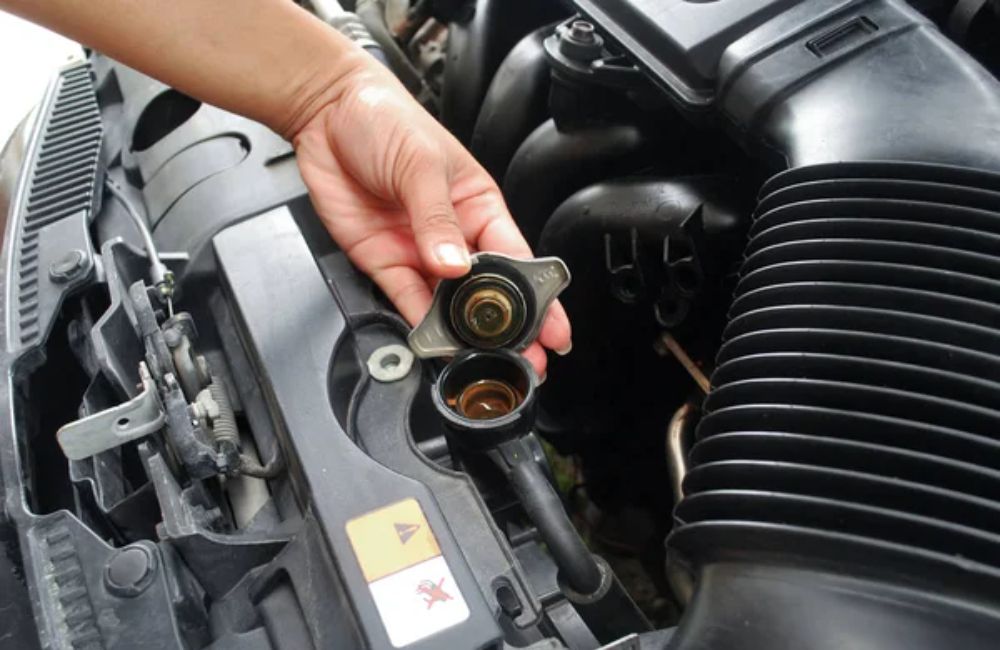
The cooling system pressure cap and coolant reservoir are two of the most consistently overlooked components in cooling system maintenance — and both play direct roles in the system’s ability to maintain the correct operating pressure and coolant level. The pressure cap maintains the system at the manufacturer-specified pressure, which raises the boiling point of the coolant above what it would achieve at atmospheric pressure. A cap that has lost its pressure-holding ability allows the system to operate at a lower pressure, reducing the effective boiling point and increasing the risk of coolant boiling under sustained high-temperature conditions — exactly the conditions Gilbert drivers experience in summer traffic. A cracked or contaminated coolant reservoir allows coolant to be lost rather than recovered as the system cools, progressively reducing the coolant level. All Valley Car Care tests the pressure cap with a cap tester at every cooling system service.
Heater Core & Cabin Heat Diagnosis
Cooling system causes of poor cabin heat in Gilbert vehicles
Poor heater output — particularly the lukewarm or cold air from the vents that Gilbert drivers notice as morning temperatures drop in winter — is frequently a cooling system fault rather than a heater-specific one, and diagnosing it correctly avoids replacing heater components that are functioning correctly. All Valley Car Care evaluates coolant level, thermostat operation, and heater circuit flow as the first steps in any cabin heat complaint — because low coolant from a slow external leak, a thermostat stuck open, and air trapped in the heater core passages are all more common causes of poor heater output than a failed heater core in a vehicle that has not shown external coolant leak symptoms. Where heater core restriction or internal failure is confirmed, the repair involves accessing the heater core within the vehicle’s HVAC box — a more involved repair that All Valley Car Care diagnoses specifically before recommending to ensure it is the confirmed fault source.
Ready For Cooling System & Radiator Services?
Gilbert drivers searching for radiator repair near me, coolant flush near me, or cooling system service in Gilbert, AZ can reach All Valley Car Care Monday through Friday 7:30 AM–5:30 PM and Saturday 8 AM–2 PM. Our ASE-certified technicians serve Gilbert and surrounding East Valley communities with pressure-tested cooling system inspections, documented findings, and repair recommendations based on what each vehicle’s cooling circuit actually requires — before the summer heat makes a marginal system a major repair. Contact our team today and get a clear, written picture of exactly where your cooling system stands.
Proudly Serving in Gilbert, AZ
-
Directions from Chandler, AZ to All Valley Car Care, Gilbert, AZ
-
Directions from Mesa, AZ to All Valley Car Care, Gilbert, AZ
-
Directions from Phoenix, AZ to All Valley Car Care, Gilbert, AZ
-
Directions from Queen Creek, AZ to All Valley Car Care, Gilbert, AZ
-
Directions from Scottsdale, AZ to All Valley Car Care, Gilbert, AZ
-
Directions from Tempe, AZ to All Valley Car Care, Gilbert, AZ
-
Directions from Surprise, AZ to All Valley Car Care, Gilbert, AZ
-
Directions from Glendale, AZ to All Valley Car Care, Gilbert, AZ
Serving Neighborhoods & Districts in Gilbert, AZ
-
Directions from Agritopia to All Valley Car Care, Gilbert, AZ
-
Directions from Ashland Ranch to All Valley Car Care, Gilbert, AZ
-
Apache Junction
Directions from Ashland Ranch to All Valley Car Care, Gilbert, AZ
-
Directions from Cooley Station to All Valley Car Care, Gilbert, AZ
-
Directions from Coronado Ranch to All Valley Car Care, Gilbert, AZ
-
Directions from Finley Farms to All Valley Car Care, Gilbert, AZ
-
Directions from Gilbert Town Square to All Valley Car Care, Gilbert, AZ
-
Directions from Higley Groves to All Valley Car Care, Gilbert, AZ
-
Directions from Islands to All Valley Car Care, Gilbert, AZ
-
Directions from Lyons Gate to All Valley Car Care, Gilbert, AZ
-
Directions from Morrison Ranch to All Valley Car Care, Gilbert, AZ
-
Directions from Neely Farms Disc Golf Course to All Valley Car Care, Gilbert, AZ
-
Directions from Power Ranch to All Valley Car Care, Gilbert, AZ
-
Directions from Rancho Cimarron to All Valley Car Care, Gilbert, AZ
-
Directions from Seville to All Valley Car Care, Gilbert, AZ
-
Directions from Spectrum at Val Vista to All Valley Car Care, Gilbert, AZ
-
Directions from Stonebridge Lakes to All Valley Car Care, Gilbert, AZ
-
Directions from The Groves to All Valley Car Care, Gilbert, AZ
-
Directions from Val Vista Lakes to All Valley Car Care, Gilbert, AZ
-
Directions from Verde at Cooley Station to All Valley Car Care, Gilbert, AZ
What Our Customers Say
Real Reviews from Real Surprise Neighbors

