
Suspension & Steering Repair in Gilbert, AZ
Precise Inspection Before Every Recommendation
Measured suspension and steering diagnosis, written findings, and ASE-certified repair — before any work begins.
- Complete suspension and steering repair covering shock and strut replacement, wheel balancing, ball joint service, tie rod assessment, and alignment for all vehicle makes and models
- ASE-certified technicians performing a systematic suspension and steering inspection — including wheel balancing near me and ride height measurement — before any repair recommendation is made
- Same-day diagnostic appointments available serving Gilbert drivers through our accessible location
- Saturday hours available (8 AM–2 PM) — car service in Gilbert, AZ on your schedule
Suspension & Steering Repair Gilbert
Suspension & Steering Warning Signs Gilbert, AZ Drivers Should Not Ignore
Your vehicle’s suspension and steering systems work together to keep the tyres in consistent contact with the road surface, maintain directional stability under braking and cornering, and absorb the road surface variations that would otherwise be transmitted directly to the cabin. In Gilbert’s driving environment — where freeway expansion joints, newly developed roads with variable surface quality, and the thermal expansion and contraction cycles of Arizona’s extreme temperature range all create a demanding ride environment — suspension component wear develops more noticeably than in smoother, more temperate driving climates. When warning signs appear, early inspection is the difference between a worn shock absorber and a failed ball joint that has compromised steering control. If any of the following describe your vehicle’s current handling behaviour, a professional suspension inspection is the correct immediate step.
Your Vehicle Pulls to One Side While Driving
A vehicle that drifts or pulls consistently to one side — requiring constant steering correction to maintain a straight path on Gilbert’s freeways and city streets — is communicating an asymmetric handling condition that can originate from the suspension, the steering system, the tyres, or the braking system. A tyre with significantly different inflation pressure on one side will cause a pull toward the lower-pressure side. Uneven tyre wear from a suspension or alignment fault produces a similar pull as the worn tyre generates less rolling resistance than the unworn one. A collapsed or seized suspension component on one side — a broken spring, a seized strut, or a worn control arm bushing — can alter the vehicle’s ride height and camber angle enough to create a persistent pull. Brake drag from a seized calliper will also create a pull toward the dragging side. All Valley Car Care inspects the complete system — not just the most obvious component — before attributing a pull to a single cause.
Your Steering Wheel Vibrates or Shakes
Steering wheel vibration is one of the most speed-sensitive suspension symptoms — and its specific speed range provides important diagnostic information. Vibration that begins at a consistent highway speed, typically between 55 and 70 mph on the US-60 or San Tan Freeway, and diminishes above or below that speed is a classic wheel balance symptom: an out-of-balance wheel and tyre assembly creates a rotating imbalance that resonates at a specific road speed. Wheel balancing near me resolves this specific symptom when the balance is confirmed as the cause. Vibration that is present at all speeds and worsens with acceleration or on specific road surfaces points to a worn tyre, a damaged wheel, or a worn CV joint or driveshaft rather than a balance issue. Steering wheel vibration that occurs specifically under braking — where the wheel shakes when the brake pedal is applied — indicates brake rotor thickness variation, not a suspension or balance fault.
Your Vehicle Bounces Excessively or Rides Harshly
A vehicle that continues to bounce after hitting a road surface irregularity — rather than returning to its normal ride height within one or two oscillations — has shock absorbers or struts that have lost their ability to dampen the spring’s rebound motion. Each undamped oscillation extends the period during which the tyre is not in firm contact with the road surface, reducing both braking effectiveness and cornering stability. Conversely, a vehicle that rides excessively harshly — transmitting every road surface imperfection into the cabin — on a vehicle that previously rode smoothly may have a broken spring or a seized shock absorber that is preventing normal suspension travel. In Gilbert’s heat, where rubber suspension bushings degrade faster than in cooler climates, shock absorber and strut performance decline is often accompanied by progressive bushing wear that compounds the handling degradation.
You Hear Clunking, Knocking, or Squeaking Over Bumps
Suspension noise over road surface irregularities — clunking on the first impact, rattling from one corner, or squeaking from the front end during slow-speed steering — pinpoints specific worn suspension components more precisely than almost any other symptom. A clunk from the front suspension over bumps typically indicates a worn strut mount, a loose strut, a failed ball joint, or a worn sway bar end link — each producing a clunk at the end of its available travel. A metallic squeak or creak from the front suspension during steering input at parking speeds typically indicates dry or worn ball joints, steering rack bushings, or tie rod ends that require lubrication or replacement. All Valley Car Care uses a systematic physical inspection process — with the vehicle elevated and suspension components loaded and unloaded — to identify the specific component producing noise before recommending any replacement.
Your Steering Feels Loose, Heavy, or Imprecise
Changes in steering feel — where the steering wheel requires more effort than normal, feels vague or imprecise around the straight-ahead position, or develops play that was not previously present — indicate a fault in the steering system that affects both driving confidence and vehicle safety. Power steering systems that require significantly more effort than normal point to low power steering fluid, a failing power steering pump, or a rack and pinion seal fault that is allowing internal fluid bypass. A steering wheel that feels loose — where the wheel moves several degrees in either direction before the vehicle responds — indicates worn tie rod ends, worn rack and pinion inner or outer components, or worn steering shaft universal joints. Electronic power steering systems that produce a sudden change in assistance level or generate a warning light indicate a fault in the EPAS motor, sensor, or control module rather than a hydraulic system fault.
Suspension & Steering Repair Gilbert
Suspension & Steering Repair Services
Complete suspension and steering repair in Gilbert, AZ — covering shock and strut service, wheel balancing, ball joint replacement, tie rod service, and power steering repair for all vehicle makes and models.
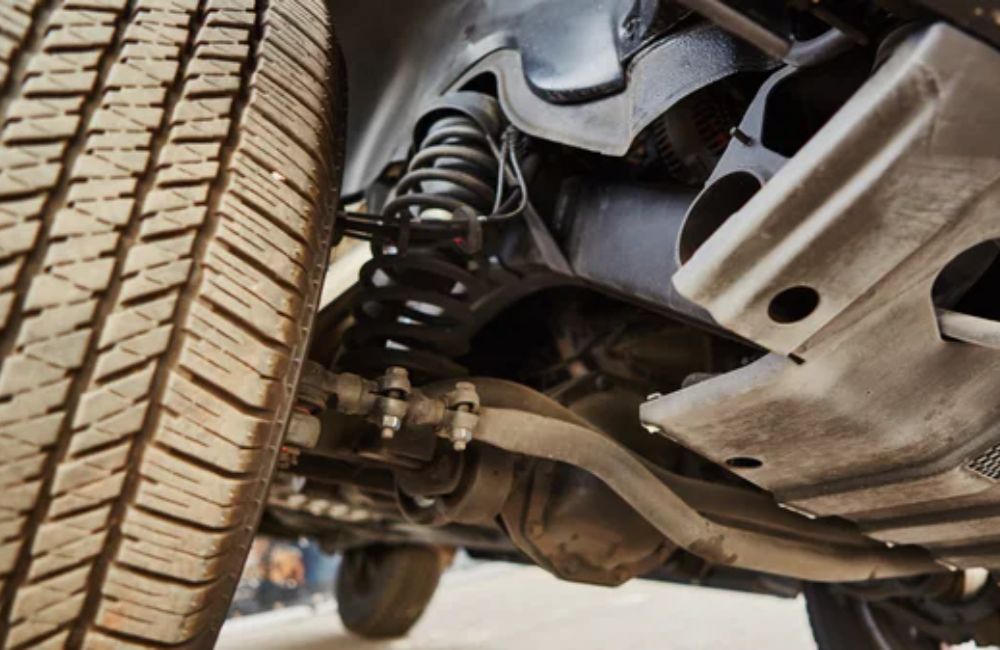
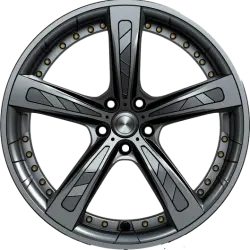
Shock Absorber & Strut Replacement
Shock absorber and strut condition assessment with replacement — restoring ride control, tyre contact, and braking stability for Gilbert vehicles with worn or failed dampers.
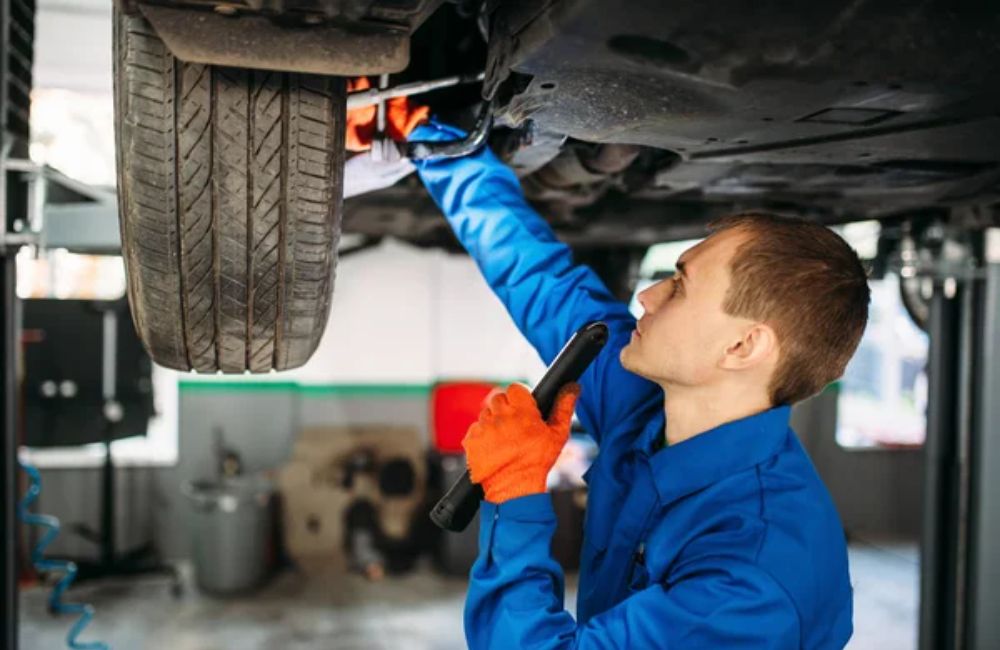
Wheel Balancing
Dynamic wheel balancing correcting the speed-sensitive steering wheel vibration and uneven tyre wear caused by out-of-balance wheel and tyre assemblies on Gilbert vehicles.
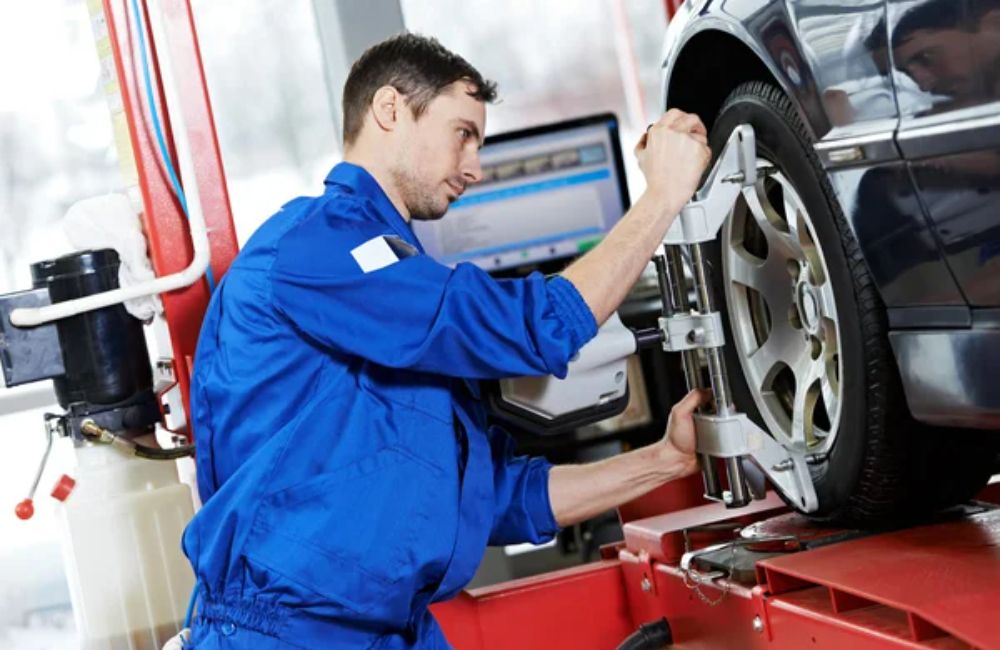
Ball Joint Inspection & Replacement
Ball joint play measurement and replacement — addressing the suspension noise, tyre wear, and steering imprecision caused by worn ball joint pivot points on Gilbert vehicles.
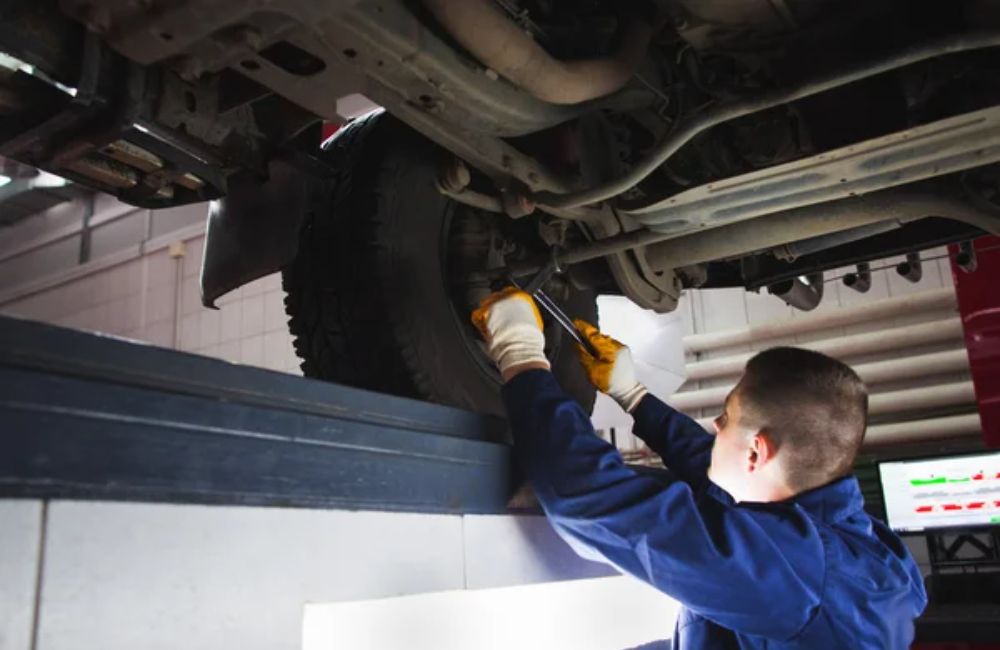
Tie Rod End Service
Tie rod end movement assessment and replacement — correcting the steering looseness, vehicle pull, and uneven tyre wear caused by worn inner and outer tie rod components.
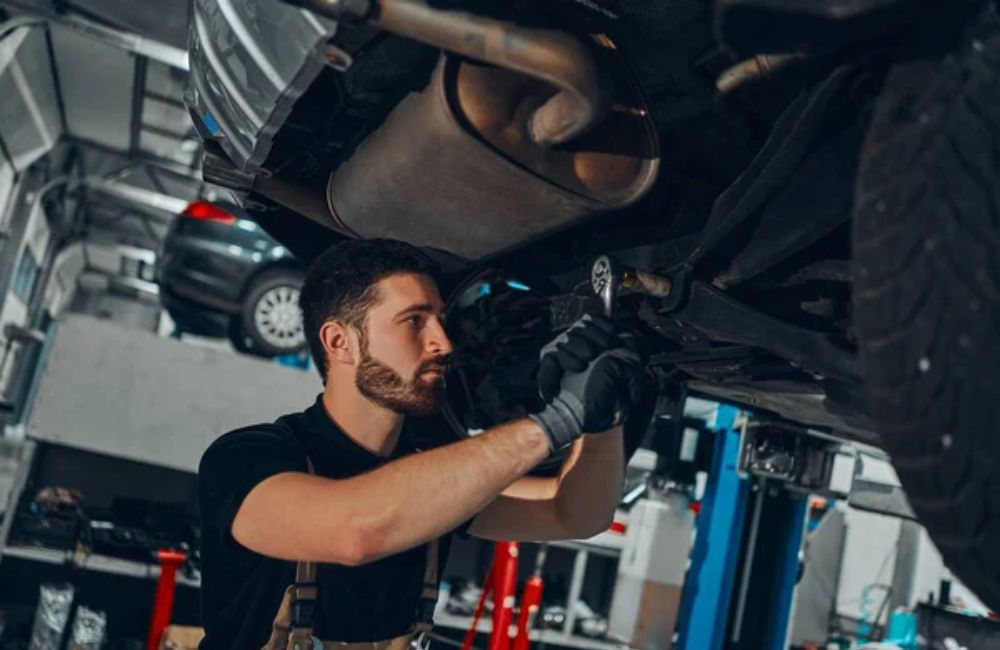
Control Arm & Bushing Service
Control arm bushing condition assessment and replacement — restoring suspension geometry precision and eliminating the clunking and handling vagueness caused by worn bushings.
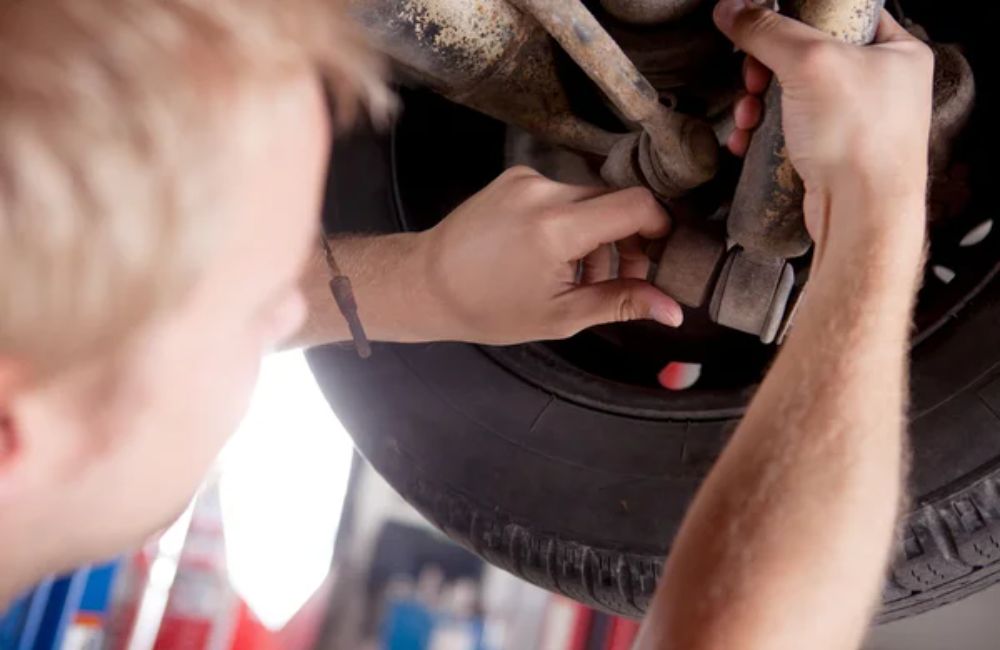
Sway Bar Link & Bushing Replacement
Sway bar end link and bushing inspection and replacement — eliminating the rattling noise and body roll increase caused by worn anti-roll bar components on Gilbert vehicles.
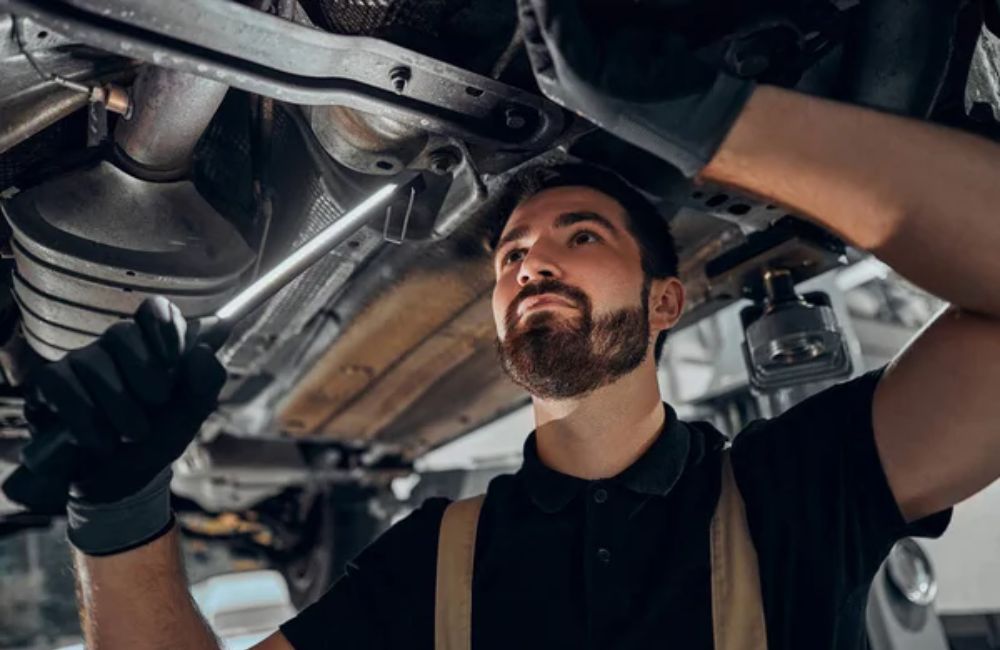
Power Steering Service & Repair
Power steering fluid condition assessment, pump pressure testing, and rack and pinion evaluation — diagnosing the source of heavy, imprecise, or noisy steering before individual components are replaced.
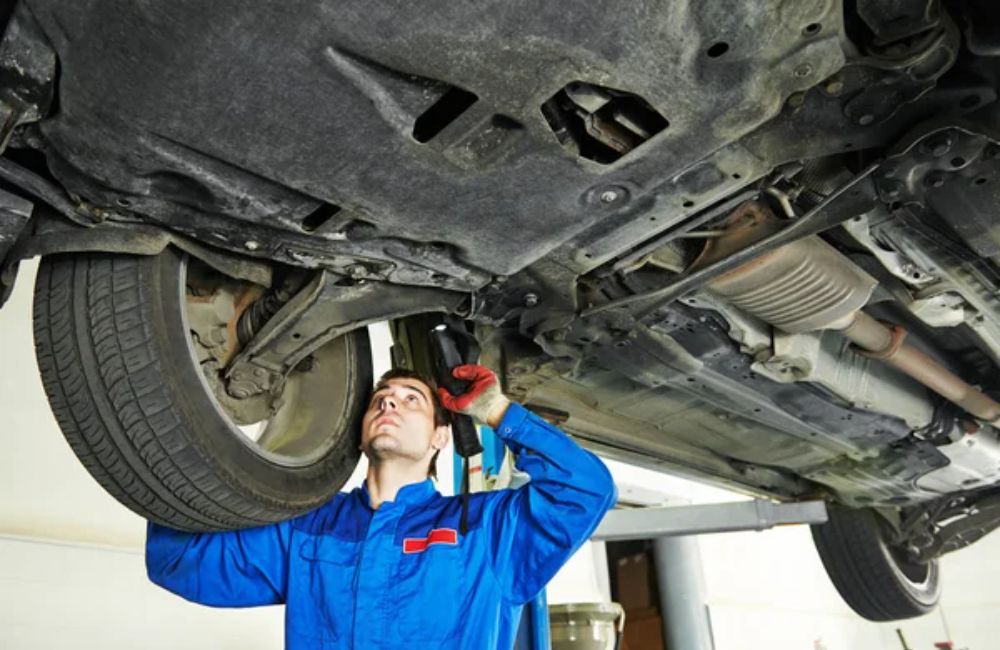
Steering Rack & Pinion Repair
Rack and pinion play assessment, seal condition evaluation, and replacement where internal wear or seal failure is causing steering looseness, fluid loss, or imprecise steering response.
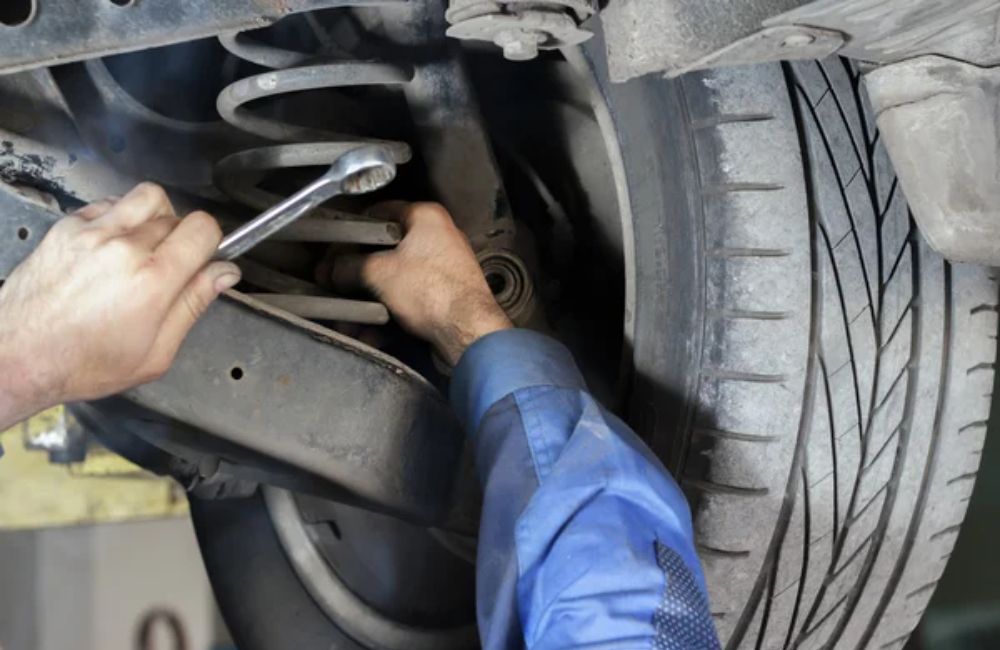
CV Axle & Driveshaft Service
CV joint condition assessment, axle boot inspection, and CV axle replacement — addressing the clicking on turns and vibration under acceleration caused by worn constant velocity joints.
Suspension & Steering Repair Gilbert
Why Choose All Valley Car Care for Suspension & Steering Repair in Gilbert, AZ
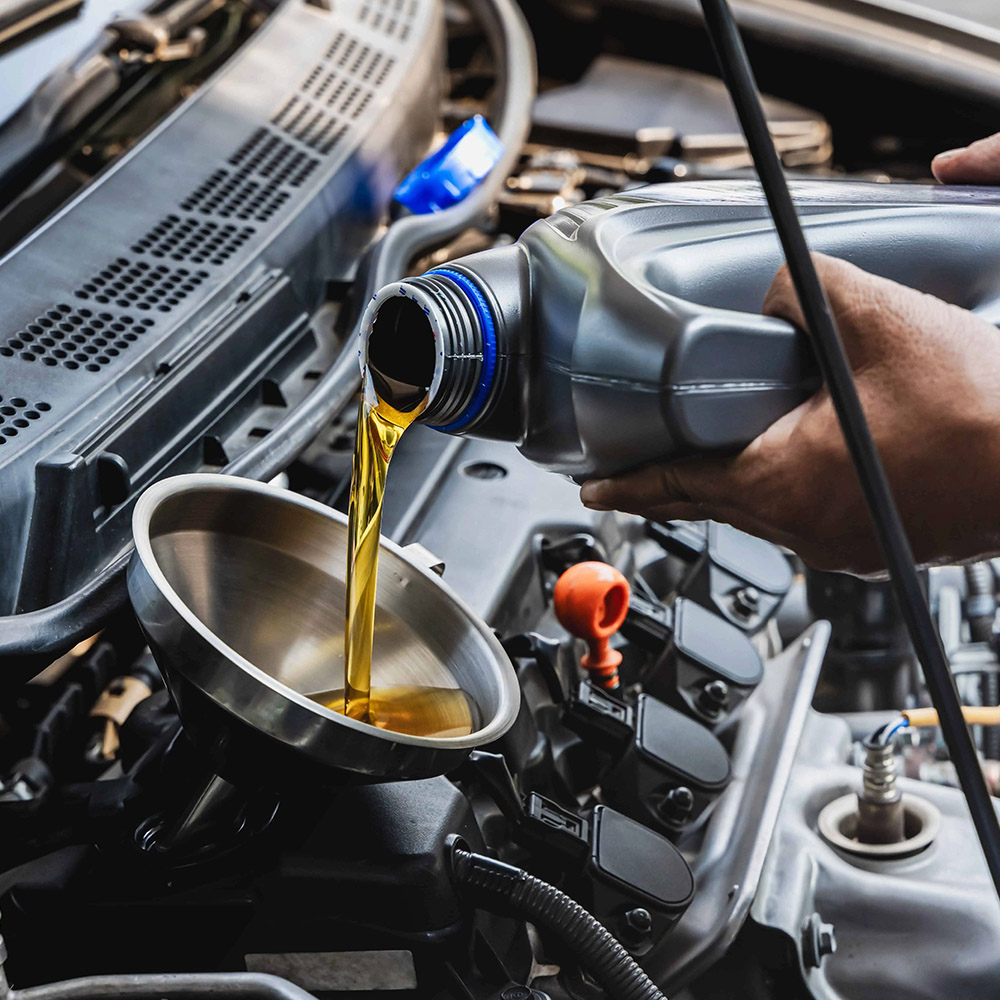
All Valley Car Care provides suspension and steering repair near Gilbert, AZ, combining physical component inspection under vehicle load with ride height measurement, steering system assessment, and wheel balancing evaluation — not a visual inspection from ground level that misses the worn ball joint movement and failed bushing compliance that only loaded inspection reveals. Our location serves drivers across the Higley Corridor, Power Ranch, Agritopia, Val Vista Lakes, and surrounding East Valley communities with comprehensive shock and strut evaluation, ball joint and tie rod assessment, power steering system diagnosis, sway bar component inspection, and wheel balancing service — performed by ASE-certified technicians who understand how Gilbert’s road surfaces, temperature extremes, and driving patterns create the specific suspension wear and steering fault patterns East Valley drivers experience.
- ASE-certified technicians performing suspension inspection with the vehicle elevated and suspension components loaded and unloaded — identifying ball joint play, tie rod movement, bushing compliance, and strut mount condition that cannot be assessed from a visual inspection at ground level
- Ride height measurement at all four corners — identifying spring sag, broken springs, and asymmetric ride height that indicate suspension faults affecting tyre contact, alignment, and handling balance independently of component wear
- Wheel balancing performed using a dynamic spin balancer — measuring static and dynamic imbalance at each wheel and tyre assembly and correcting with precision weight placement at the rim
- Steering system assessment covering power steering fluid condition, pump pressure, rack and pinion play, and tie rod end movement — identifying the steering fault source before individual components are replaced
- Sway bar link and bushing inspection at every suspension service — identifying the worn sway bar components responsible for body roll, corner handling degradation, and suspension noise that are frequently overlooked in a component-focused inspection
- Written suspension and steering inspection findings with component condition notes, ride height measurements, and wheel balance results documented before any repair is approved
- Saturday availability (8 AM–2 PM) for Gilbert drivers who need suspension or steering repair outside standard weekday hours.
Suspension & Steering Repair Gilbert
How We Deliver Consistent Suspension & Steering Repair Quality
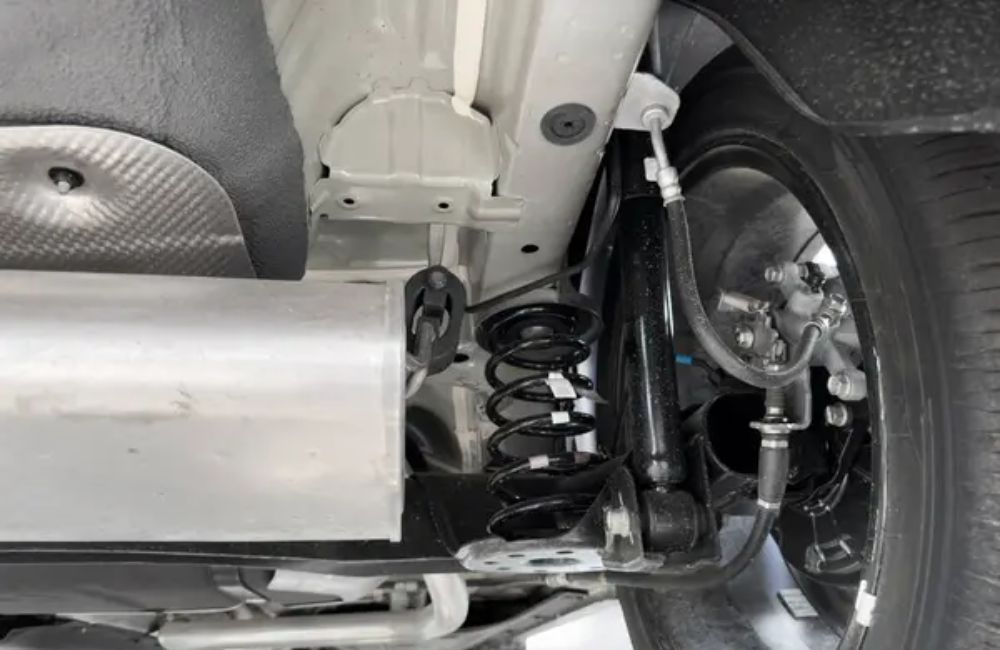
- Suspension inspection performed with the vehicle elevated and each suspension corner loaded and unloaded — applying force to ball joints, tie rod ends, and bushings in the directions they experience under driving conditions to reveal play and compliance that a static visual inspection cannot identify
- Ride height measured at all four corners using a tape measure or ride height gauge — recording the actual ride height against the manufacturer’s specification range and identifying asymmetric sag, broken springs, and height-related alignment consequences
- Wheel balancing performed on a dynamic spin balancer — measuring both static imbalance (wobble) and dynamic imbalance (shimmy) at each wheel and applying corrective weights at the rim positions that counteract the measured imbalance
- Shock absorber and strut damping evaluated by bounce test and physical inspection — assessing fluid leakage, body corrosion, and bump stop condition alongside functional damping to identify struts that are failing progressively rather than obviously
- Steering system fluid condition, pump pressure, and rack play evaluated together — preventing the scenario where a worn rack is replaced while a failing pump that caused the fault remains, or where pump replacement is recommended before a low fluid level from a rack seal leak is identified as the root cause
- Sway bar link and bushing condition assessed at every suspension inspection — a component category that is consistently overlooked in routine inspections and that produces noise and handling degradation disproportionate to its replacement cost
- Written suspension inspection report with ride height measurements, component condition notes, wheel balance results, and steering system findings provided before any repair recommendation is presented
- Post-repair verification road test performed after every suspension and steering repair — confirming ride quality, steering feel, and the absence of the symptom that prompted the inspection before the vehicle is returned.
Suspension & Steering Repair Gilbert
Frequently Asked Questions
How do I know if my steering wheel vibration is a wheel balancing issue or a suspension fault in Gilbert?
Steering wheel vibration caused by an out-of-balance wheel and tyre assembly is characteristically speed-sensitive — it appears at a specific highway speed range, typically between 55 and 70 mph, and diminishes above and below that range. Wheel balancing near me resolves this pattern when balance is confirmed as the cause. Vibration that is present at lower speeds, that worsens on specific road surfaces, or that is felt through the seat and floor as much as the steering wheel is more likely to be a tyre condition fault, a worn CV joint, or a driveshaft issue rather than a balance problem. All Valley Car Care assesses both possibilities before recommending a service.
How often should wheel balancing be performed on Gilbert vehicles?
Wheel balancing is typically recommended every 5,000 to 7,500 miles, when new tyres are installed, after a significant kerb strike or pothole impact, and whenever steering wheel vibration at highway speed develops. In Gilbert's driving environment — where freeway expansion joints on the US-60 and San Tan Freeway create repetitive impact loads on wheel and tyre assemblies — wheel weights can shift more frequently than in smoother driving environments. All Valley Car Care checks wheel balance condition at every tyre rotation and recommends rebalancing when measured imbalance exceeds the acceptable threshold for the vehicle's speed range.
What causes a vehicle to pull to one side in Gilbert?
Vehicle pull in Gilbert most commonly results from uneven tyre pressure, uneven tyre wear, an alignment fault that has altered the vehicle's steering axis angle, or a suspension component fault that has changed one side's ride height or geometry relative to the other. Brake drag from a seized calliper will also cause a pull toward the dragging side that is most pronounced during deceleration. All Valley Car Care diagnoses vehicle pull by evaluating tyre condition and pressure, suspension ride height, wheel alignment angles, and brake system function together — identifying the correct cause before a repair recommendation is made.
What is the difference between a ball joint fault and a tie rod fault?
Ball joints connect the wheel hub and spindle assembly to the control arm — they are suspension pivot points that allow the suspension to move up and down while the wheel is steered. Tie rods connect the steering rack to the wheel hub — they are the components that transmit the steering input from the rack to the wheel. A worn ball joint produces suspension noise, tyre wear from altered camber and caster, and in severe cases a sudden loss of steering control if the joint separates. A worn tie rod end produces steering looseness, vehicle pull, and uneven tyre wear from altered toe angle. Both components are assessed as part of every suspension inspection.
Can Gilbert's heat damage a car AC system even when it appears to be working?
Extended operation in extreme heat places sustained demand on every AC component — particularly the compressor, condenser, and refrigerant circuit pressure levels. A system operating at the edge of acceptable performance in moderate temperatures may cross into fault conditions under sustained 110°F+ ambient heat, as the condenser's ability to reject heat to the outside air decreases as the ambient temperature rises. Drivers who notice their AC performing adequately in the morning but losing effectiveness by midday are often experiencing this heat-load effect. The Car Care Council recommends having vehicle AC systems inspected annually in high-heat climates.
What is the difference between the AC condenser and the evaporator?
The condenser is located at the front of the vehicle, typically just behind the grille, and rejects heat from the refrigerant to the outside air — operating at high pressure and high temperature. The evaporator is located inside the vehicle's HVAC box behind the dashboard and absorbs heat from the cabin air — operating at low pressure and low temperature, producing the cold air that reaches the vents. Both are sealed refrigerant-side components, and a leak at either requires refrigerant recovery, component replacement, system evacuation, and recharge.
How long does a suspension inspection or repair take in Gilbert?
A complete suspension and steering inspection including ride height measurement, ball joint and tie rod assessment, shock and strut evaluation, sway bar inspection, and steering system check typically takes forty-five minutes to one hour. Wheel balancing on all four wheels takes thirty to forty-five minutes. Shock absorber or strut replacement on one axle typically takes one and a half to two and a half hours. Ball joint or tie rod replacement takes one to two hours per side depending on the component and its accessibility. All Valley Car Care provides time estimates at scheduling based on the vehicle and service required.
Suspension & Steering Repair Gilbert
Our Suspension & Steering Repair Process at a Glance
Vehicle check-in & symptom discussion
Your service advisor discusses the specific suspension or steering symptoms — what noise is present and under what conditions, whether pulling or vibration is speed-dependent, whether ride quality has changed gradually or suddenly, and any recent impacts or kerb strikes — alongside current mileage and relevant service history. This directs the inspection priorities and ensures the technician evaluates the components most likely connected to the symptoms described.
Suspension inspection & documented findings
The vehicle is elevated and a systematic suspension inspection is performed — measuring ride height at all four corners, loading and unloading ball joints and tie rod ends to assess play, evaluating shock absorber and strut condition by bounce test and physical inspection, assessing sway bar links and bushings, and evaluating the steering system for play and fluid condition. Wheel balance condition is assessed where speed-sensitive vibration is a complaint. All findings are documented before the technician presents a repair recommendation.
Written findings, approved repairs & post-repair verification
The written suspension inspection report with ride height measurements, component condition notes, and any wheel balance results is presented before any repair is recommended. Approved repairs are completed with OEM-equivalent or better components. A post-repair road test verifies ride quality, steering feel, absence of noise, and resolution of the presenting symptom before the vehicle is returned with a complete service record.
Suspension & Steering Repair Gilbert
How Our Suspension & Steering Repair Suite Works in Gilbert
Shock Absorber & Strut Replacement
Ride control restoration based on confirmed damper assessment
Shock absorbers and struts are the components that control the rate at which the suspension spring extends and compresses — and their correct function is the difference between a vehicle that returns to its normal ride height after a bump and one that continues to oscillate, reducing tyre contact, braking performance, and handling stability. All Valley Car Care evaluates shock and strut condition through a bounce test, visual inspection for fluid leakage, and assessment of bump stop and mount condition — providing a documented condition assessment rather than a mileage-based replacement recommendation. In Gilbert’s heat, where the fluid inside shock absorbers and struts is subject to higher operating temperatures than in cooler climates, damper wear can progress to the point of significantly reduced damping before the obvious external fluid leak that drivers associate with strut failure appears. Replacement is recommended where measured damping performance, physical condition, and mileage together indicate the component is no longer performing its designed function.
Wheel Balancing
Dynamic wheel balancing for vibration-free highway driving
Wheel balancing is the process of measuring the mass distribution of each wheel and tyre assembly as it rotates and applying corrective weights at the rim to eliminate the imbalance that causes speed-sensitive steering wheel vibration and accelerated tyre wear. All Valley Car Care performs dynamic wheel balancing on a spin balancer — measuring both static imbalance, which causes the wheel to wobble, and dynamic imbalance, which causes it to shimmy — and applying corrective weight at the precise rim location that counteracts the measured imbalance. This process is distinct from wheel alignment, which adjusts the suspension angles rather than the wheel’s mass distribution. Gilbert drivers who travel regularly on the US-60 and San Tan Freeway at highway speeds experience the speed-sensitive vibration of an out-of-balance assembly more acutely than city drivers, making wheel balancing near me a directly relevant comfort and tyre wear maintenance service.
Ball Joint Inspection & Replacement
Load-tested ball joint assessment before replacement
Ball joints are the pivot points that allow the wheel hub to move through its suspension travel while remaining connected to the control arm — and their condition is most accurately assessed by measuring play under load rather than by visual inspection alone. All Valley Car Care applies a vertical and horizontal load to each ball joint during the suspension inspection — measuring the play in the joint’s pivot range against the manufacturer’s allowable specification using a dial indicator or physical assessment of movement. A ball joint that shows measurable play beyond specification is producing altered wheel geometry at every driving cycle, accelerating tyre wear and potentially affecting steering control in the extreme case of joint separation. In Gilbert’s heat, where the grease inside sealed ball joints degrades faster and the rubber boots that retain it dry and crack more quickly than in cooler climates, ball joint condition assessment at suspension service intervals is a meaningful safety check.
Tie Rod End Service
Steering precision restored through confirmed tie rod assessment
Tie rod ends are the steering linkage components that translate the rack and pinion’s lateral movement into the wheel turn angle at each front wheel — and their condition directly determines the precision and responsiveness of the steering feel. All Valley Car Care assesses inner and outer tie rod end condition by applying lateral force to the steering linkage with the wheels in the straight-ahead position — measuring the movement at the tie rod joint against the allowable specification. A worn outer tie rod end produces both steering looseness and a toe angle deviation that accelerates inner or outer tyre edge wear — a pattern that is visible on tyre inspection and that can be mistakenly attributed to an alignment fault rather than the worn component causing the misalignment. Tie rod replacement at All Valley Car Care is followed by a wheel alignment to restore the correct toe angle that the worn component had altered.
Control Arm & Bushing Service
Suspension geometry precision restored through bushing assessment
Control arm bushings are the rubber-to-metal interface that allow the control arm to pivot smoothly through its suspension travel while isolating road surface vibration from the vehicle’s chassis — and their degradation is one of the most gradual and least obvious sources of suspension handling decline. All Valley Car Care assesses control arm bushing condition by physically loading the control arm in multiple directions — identifying bushings that have cracked, separated, or lost compliance to the point where they allow the control arm to shift under driving loads, altering wheel alignment angles dynamically during cornering and braking. In Gilbert’s heat, where rubber bushing material degrades significantly faster than in cooler climates, bushing service life is shortened beyond what the vehicle’s mileage alone would suggest — making bushing condition a relevant assessment for Gilbert vehicles with more than four years of service regardless of mileage.
Sway Bar Link & Bushing Replacement
Noise elimination and handling restoration through sway bar service
The sway bar — or anti-roll bar — connects the left and right suspension corners through a torsional spring that resists body roll during cornering, and its end links and frame bushings are the components that most commonly develop noise and compliance faults long before the bar itself is affected. All Valley Car Care inspects sway bar end links for play and bushing deterioration, and assesses frame bushings for cracking and separation at every suspension service — because worn sway bar components produce noise and handling changes disproportionate to their replacement cost and are among the most consistently overlooked components in routine suspension inspections. A sway bar end link with a failed bushing produces a rattling or clunking noise specifically when the suspension moves through a transition — entering a driveway, cresting a rise, or negotiating a roundabout — that is often misattributed to a strut mount or ball joint fault.
Power Steering Service & Repair
Hydraulic and electronic power steering fault diagnosis in Gilbert
Power steering systems — whether hydraulic or the increasingly common electronic power-assisted steering — affect the effort and precision of every steering input, and their fault diagnosis requires distinguishing between the system type, the fault source, and the severity before any component replacement is recommended. All Valley Car Care evaluates hydraulic power steering systems by testing fluid condition and level, measuring pump pressure output against the specification for the vehicle’s rack and pinion design, and assessing rack and pinion internal condition for bypass that would cause heavy steering even with correct pump pressure. Electronic power steering fault diagnosis begins with a scan tool retrieval of EPAS fault codes and live torque sensor data — identifying whether the fault is in the EPAS motor, the torque sensor, or the control module before a repair recommendation is made.
Steering Rack & Pinion Repair
Rack and pinion assessment before repair or replacement
The steering rack and pinion is the central steering component that converts the rotational input from the steering wheel into the lateral movement that steers the wheels — and its internal condition, end play, and seal integrity determine the precision and effort of the entire steering system. All Valley Car Care assesses rack and pinion condition by measuring steering wheel free play at the straight-ahead position, evaluating the rack’s response to steering input for any binding or looseness, and inspecting the rack boots for tearing or collapse that indicates internal seal failure and fluid loss. A rack with internal wear that causes a consistent vague zone around the straight-ahead position — where steering input produces no vehicle response — is a safety concern for Gilbert drivers on high-speed freeway sections where precision lane tracking requires a responsive steering response.
CV Axle & Driveshaft Service
CV joint assessment for clicking turns and acceleration vibration
The CV axles transmit engine torque to the front wheels through constant velocity joints that allow the driveshaft to deliver power through the changing angles of a steered and sprung front wheel — and the failure progression of a CV joint from early wear to complete failure is distinctly symptomatic and audible before it causes a drivability crisis. All Valley Car Care assesses CV joint condition by listening for the characteristic clicking or popping sound during tight-radius turns — the sound of a worn outer CV joint whose ball bearings have lost their grease retention and are now generating metal-to-metal contact at the extremes of their articulation angle. CV axle boot condition is assessed at every suspension inspection — identifying torn or collapsed boots that are allowing the grease that lubricates the joint to be expelled, progressing an otherwise intact joint toward wear failure.
Ready For Suspension & Steering Repair Service?
Gilbert drivers searching for suspension repair near me, wheel balancing near me, or steering repair in Gilbert, AZ can reach All Valley Car Care Monday through Friday 7:30 AM–5:30 PM and Saturday 8 AM–2 PM. Our ASE-certified technicians serve Gilbert and surrounding East Valley communities with systematic suspension inspections, ride height measurement, wheel balancing, documented findings, and repair recommendations based on what each vehicle’s handling and ride quality actually requires. Contact our team today and get a clear, written picture of exactly where your suspension and steering stand.
Proudly Serving in Gilbert, AZ
-
Directions from Chandler, AZ to All Valley Car Care, Gilbert, AZ
-
Directions from Mesa, AZ to All Valley Car Care, Gilbert, AZ
-
Directions from Phoenix, AZ to All Valley Car Care, Gilbert, AZ
-
Directions from Queen Creek, AZ to All Valley Car Care, Gilbert, AZ
-
Directions from Scottsdale, AZ to All Valley Car Care, Gilbert, AZ
-
Directions from Tempe, AZ to All Valley Car Care, Gilbert, AZ
-
Directions from Surprise, AZ to All Valley Car Care, Gilbert, AZ
-
Directions from Glendale, AZ to All Valley Car Care, Gilbert, AZ
Serving Neighborhoods & Districts in Gilbert, AZ
-
Directions from Agritopia to All Valley Car Care, Gilbert, AZ
-
Directions from Ashland Ranch to All Valley Car Care, Gilbert, AZ
-
Apache Junction
Directions from Ashland Ranch to All Valley Car Care, Gilbert, AZ
-
Directions from Cooley Station to All Valley Car Care, Gilbert, AZ
-
Directions from Coronado Ranch to All Valley Car Care, Gilbert, AZ
-
Directions from Finley Farms to All Valley Car Care, Gilbert, AZ
-
Directions from Gilbert Town Square to All Valley Car Care, Gilbert, AZ
-
Directions from Higley Groves to All Valley Car Care, Gilbert, AZ
-
Directions from Islands to All Valley Car Care, Gilbert, AZ
-
Directions from Lyons Gate to All Valley Car Care, Gilbert, AZ
-
Directions from Morrison Ranch to All Valley Car Care, Gilbert, AZ
-
Directions from Neely Farms Disc Golf Course to All Valley Car Care, Gilbert, AZ
-
Directions from Power Ranch to All Valley Car Care, Gilbert, AZ
-
Directions from Rancho Cimarron to All Valley Car Care, Gilbert, AZ
-
Directions from Seville to All Valley Car Care, Gilbert, AZ
-
Directions from Spectrum at Val Vista to All Valley Car Care, Gilbert, AZ
-
Directions from Stonebridge Lakes to All Valley Car Care, Gilbert, AZ
-
Directions from The Groves to All Valley Car Care, Gilbert, AZ
-
Directions from Val Vista Lakes to All Valley Car Care, Gilbert, AZ
-
Directions from Verde at Cooley Station to All Valley Car Care, Gilbert, AZ
What Our Customers Say
Real Reviews from Real Surprise Neighbors

