
Battery Testing & Replacement In Glendale, AZ
Don’t Let Arizona’s Heat Leave You Stranded
Expert car battery replacement and testing from ASE-certified technicians who know exactly what Glendale’s extreme heat does to your vehicle’s electrical starting system.
- Accurate battery load testing confirming true battery health — not just surface voltage — before any replacement is recommended
- Car battery replacement near me — same-day and Saturday appointments to get you back on the road fast
- ASE-certified technicians experienced with standard flooded, AGM, EFB, and hybrid auxiliary battery systems across all vehicle makes
Battery Testing & Replacement Glendale
Why Battery Problems Hit Glendale Drivers Harder Than Most
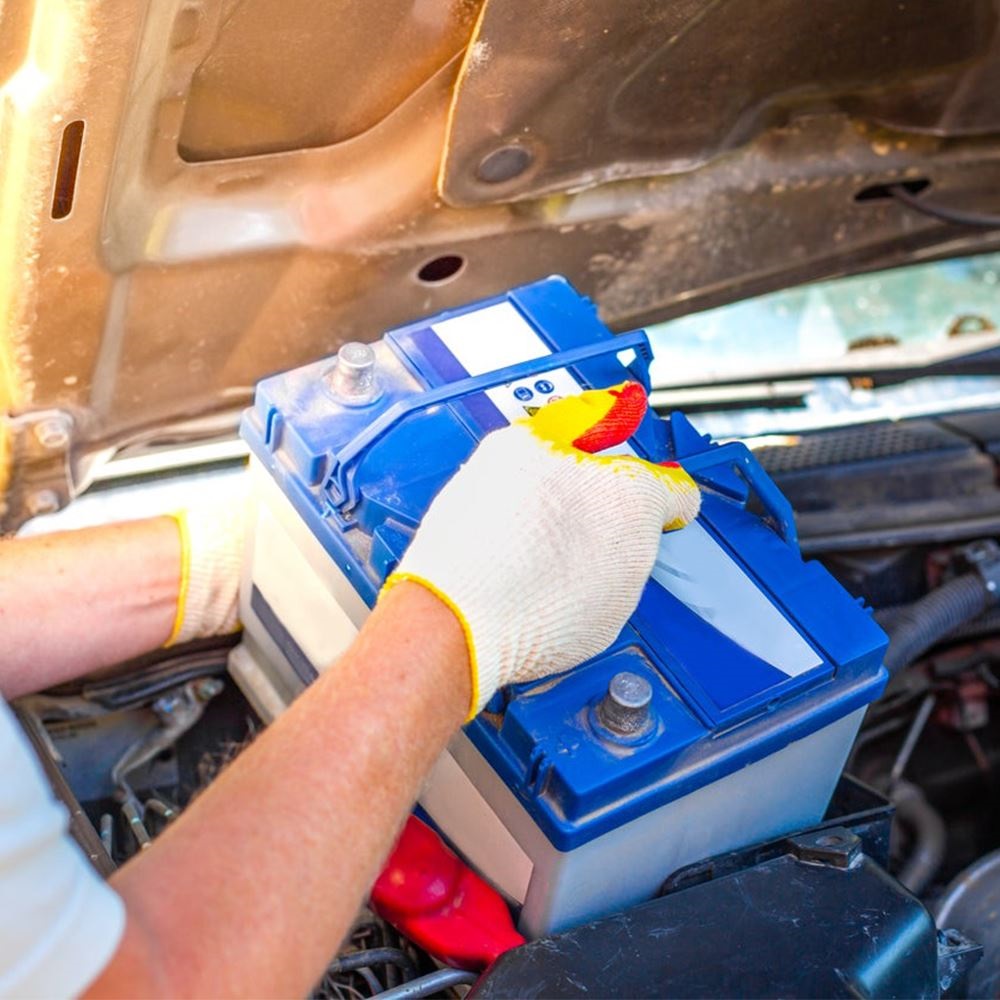
Arizona’s heat is the single biggest enemy of car battery life
Most drivers think cold weather kills car batteries — and while extreme cold does reduce starting power temporarily, it’s sustained heat that permanently destroys battery capacity. Arizona’s triple-digit summers subject vehicle batteries to under-hood temperatures that regularly exceed 140°F to 160°F — far beyond what lead-acid battery chemistry is designed to tolerate long-term. This heat accelerates the internal chemical degradation that reduces a battery’s capacity to hold charge, shortens the battery’s service life significantly compared to vehicles in cooler climates, and creates the conditions for sudden failure that leaves Glendale drivers stranded in parking lots and driveways without warning.
What heat actually does to a battery — and why failure comes without warning in Glendale
Battery heat damage is insidious because it builds invisibly over months and seasons. Under sustained high under-hood temperatures, battery plates corrode internally, electrolyte evaporates through the cell vents, and the separator material that prevents internal short circuits degrades. A battery losing capacity this way may still start the vehicle reliably through the cooler winter months — the reduced cranking demand of mild temperatures masks the underlying capacity loss. Then, as Glendale’s summer temperatures climb in May and June, the combination of elevated under-hood heat, higher electrical demand from the AC system, and the battery’s reduced capacity creates the conditions for sudden failure. The battery that started the car fine in February may not make it through July.
Slow cranking and electrical gremlins: the warning signs Glendale drivers dismiss
A battery in the early stages of heat-related failure communicates clearly before it leaves a driver stranded — but the signals are easy to rationalize. The engine that takes a moment longer to catch than it used to. The interior lights that dim briefly when the AC compressor cycles. The radio that resets after a hot afternoon park. These are not random electrical quirks — they are early indicators of a battery losing its ability to deliver amperage under load. Catching a failing battery at this stage means a planned replacement on your schedule. Missing these signals means a jump-start in a Glendale parking lot on a 110°F afternoon.
The charging system connection most Glendale drivers don’t know about
A car battery doesn’t operate in isolation — it’s part of a complete charging system that includes the alternator, voltage regulator, and the wiring connecting them. A battery that fails repeatedly isn’t always a battery problem — it may be a charging system fault that is undercharging the battery on every drive, slowly draining its capacity each time the vehicle operates. Replacing a battery without testing the alternator output and charging circuit in a vehicle with a history of battery problems is one of the most common mistakes in car battery replacement — and one that leads to the same failure repeating within months on a new battery.
Why battery testing matters as much as battery replacement
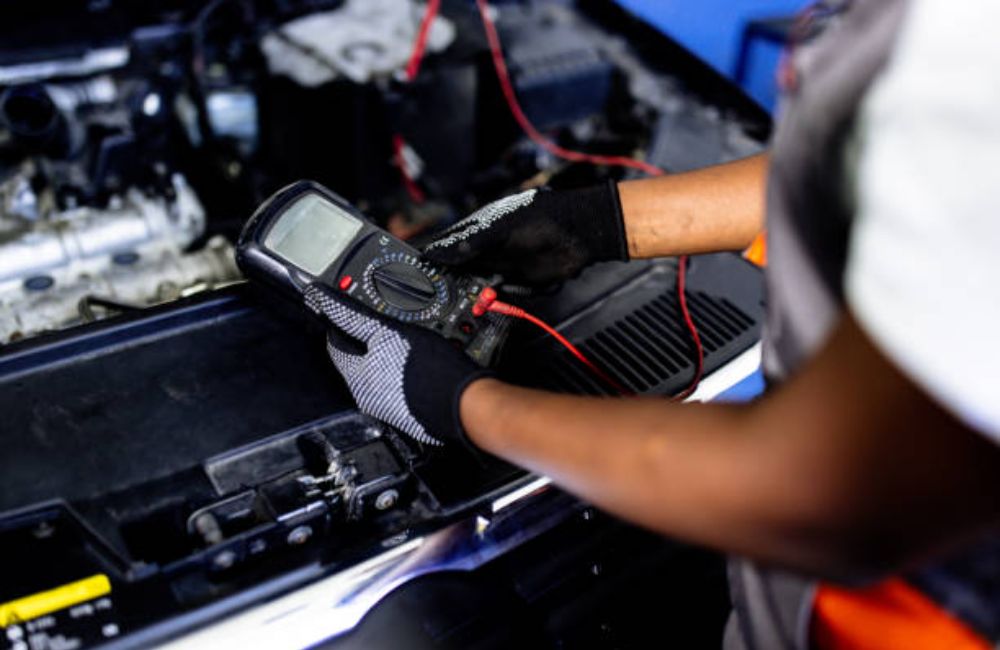
Not every battery that produces a symptom needs immediate replacement, and not every battery that starts the car reliably is in good health. Surface voltage testing, which shows only resting voltage rather than capacity under load, misses the most important dimension of battery health: how much current the battery can deliver when the starter demands it on a hot Glendale morning. Professional load testing applies a controlled current draw while measuring voltage drop — revealing whether a battery has the reserve capacity its label claims or whether internal degradation has quietly reduced its effective output. This test is the difference between an accurate replacement recommendation and a guessing game.
Battery Testing & Replacement Glendale
Our Battery Testing & Replacement Services
Complete car battery testing and replacement in Glendale, AZ — covering load testing, battery replacement, charging system evaluation, and electrical circuit inspection for all vehicle makes and battery technologies in Maricopa County’s extreme heat.


Battery Load Testing And Health Assessment
Professional conductance-based battery load testing measuring cold cranking amp delivery against rated capacity — accurately identifying failing batteries in Glendale vehicles before heat-related failure produces a roadside breakdown.
Car Battery Replacement
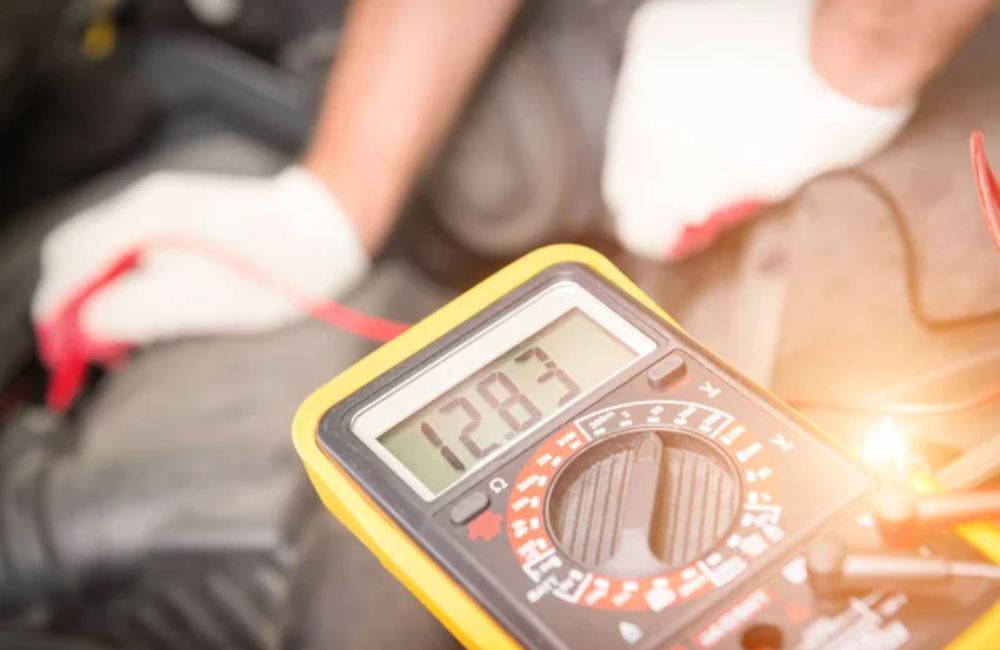
Same-day car battery replacement with a quality battery matched to your vehicle’s group size, CCA rating, and chemistry requirements — installed with terminal cleaning, connection verification, and charging system confirmation before the vehicle leaves our bay.
Alternator Testing And Replacement
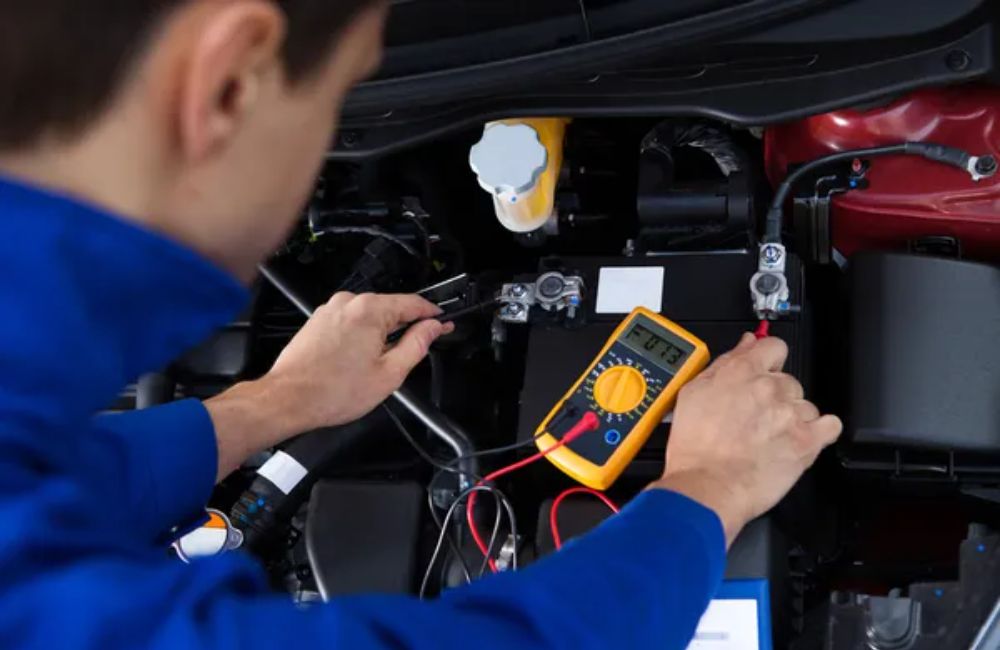
Alternator output testing measuring charging voltage and current delivery across the operating RPM range — diagnosing the charging system faults that cause battery drain, repeated battery failure, and electrical underperformance in Glendale vehicles.
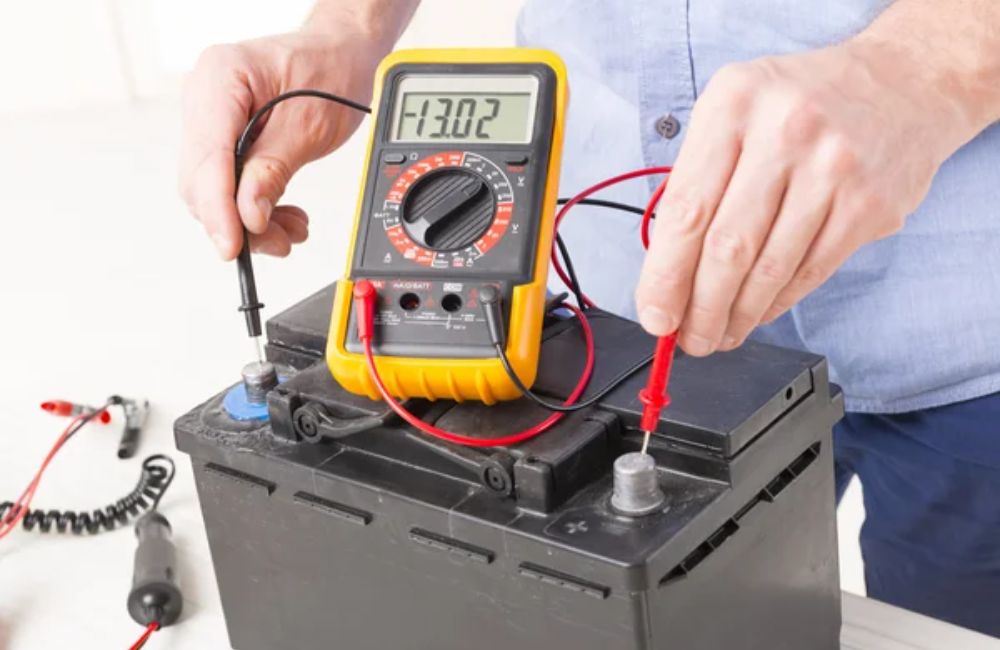
Starter Motor Testing And Replacement
Starter current draw testing identifying high-draw or failing starter motors that place excessive load on the battery during every start cycle — resolving slow cranking complaints and preventing the premature battery failure that a high-draw starter causes.

Charging System Diagnosis And Repair
Complete charging circuit evaluation covering alternator output, voltage regulator function, battery cables, ground strap continuity, and fusible link integrity — identifying the electrical system faults that prevent a healthy battery from staying charged.
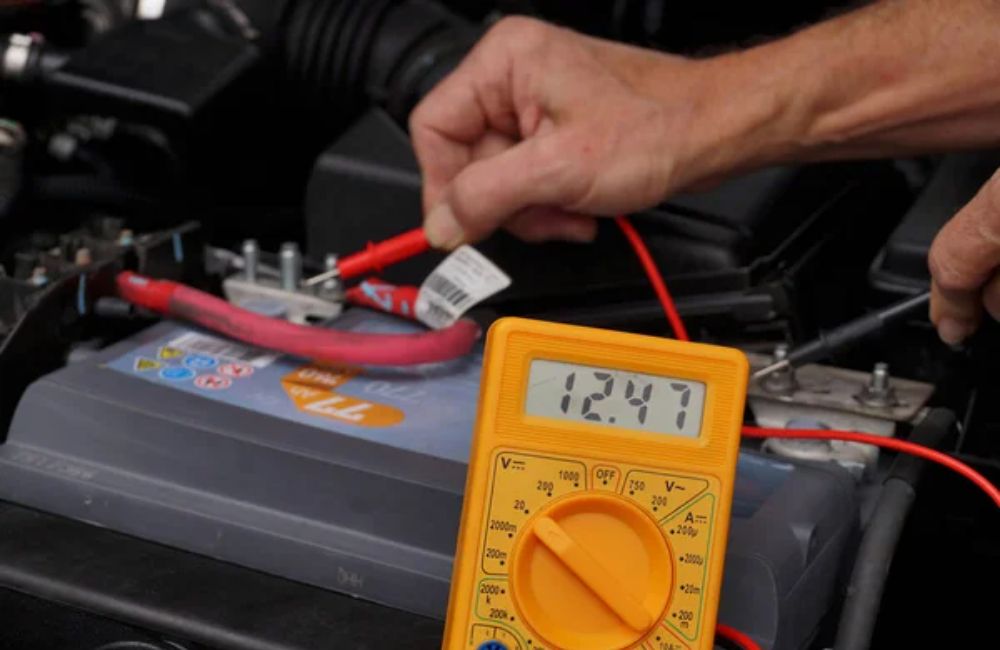
Battery Cable And Terminal Service
Battery cable inspection, terminal cleaning, and replacement service addressing the corrosion, loose connections, and cable deterioration that cause starting problems, electrical gremlins, and voltage drop independent of battery and alternator condition.
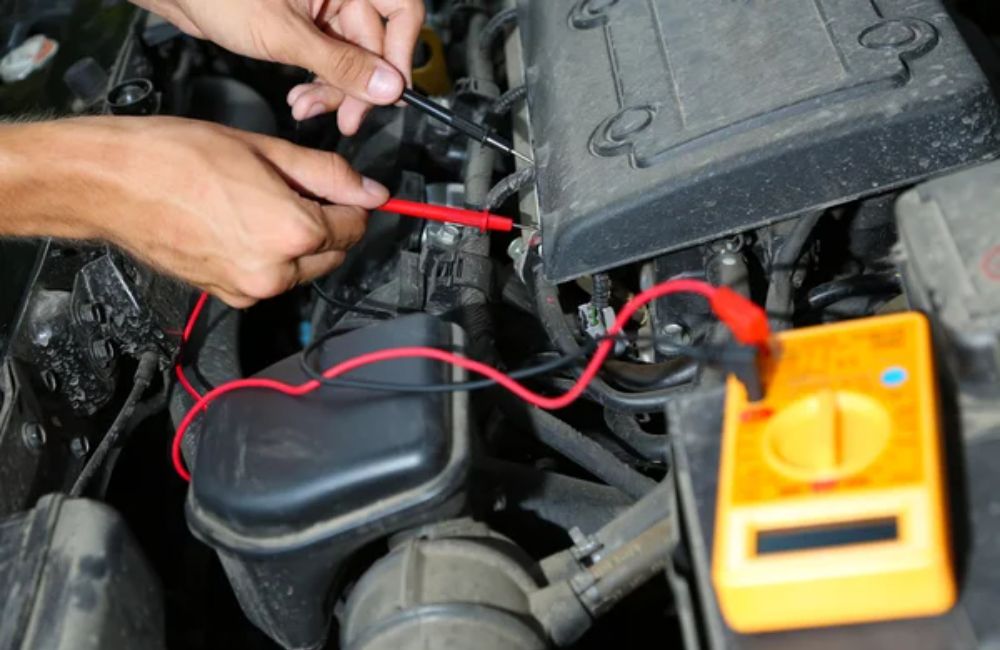
AGM And Specialty Battery Service
Specialized testing and replacement service for AGM (Absorbent Glass Mat), EFB (Enhanced Flooded Battery), and hybrid auxiliary battery systems — ensuring the correct battery technology and charging protocol for vehicles with start-stop systems, regenerative braking, and advanced electrical architectures.
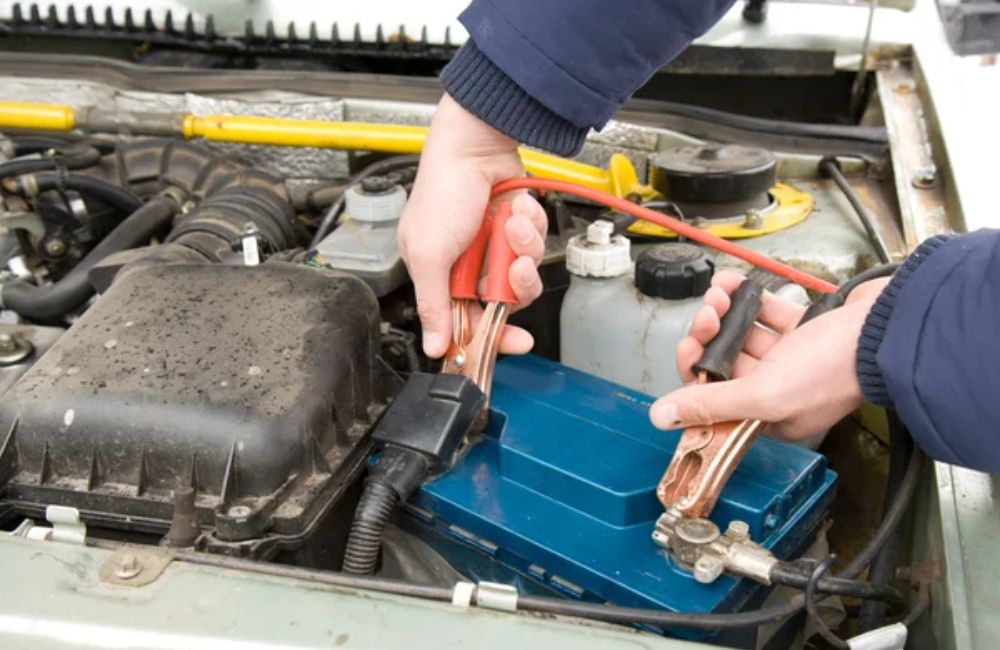
Battery Registration And Control Module Programming
Battery registration and BMS (Battery Management System) programming service for vehicles requiring control module adaptation after battery replacement — preventing charging system errors, premature battery wear, and electrical fault codes that result from installing a new battery without proper system registration.

Parasitic Drain Diagnosis
Electrical parasitic drain testing identifying the components drawing current from the battery while the vehicle is parked — diagnosing the root cause of dead batteries in Glendale vehicles that sit overnight fully charged but won’t start in the morning.
Battery Testing & Replacement Glendale
Why Choose All Valley Car Care For Battery Testing & Replacement
All Valley Car Care brings professional battery diagnostic capability and genuine Arizona climate expertise to every car battery replacement and electrical system evaluation in Glendale. Our technicians work with the full range of battery technologies — standard flooded, AGM, EFB, and hybrid auxiliary systems — using conductance-based battery testers that deliver accurate capacity readings rather than simple voltage checks that miss failing batteries still showing surface charge.
- Professional conductance battery tester providing accurate cold cranking amp (CCA) capacity reading against rated CCA — not surface voltage alone
- Alternator output testing confirming charging voltage and current delivery across the operating RPM range — identifying charging faults that cause repeated battery failure
- Starter current draw testing identifying high-draw starter motors that discharge batteries faster than the charging system can recover
- Complete charging circuit inspection covering battery cables, terminal connections, ground straps, and fusible links — the connection points that cause electrical problems independent of battery and alternator condition
- Battery technology matching service confirming correct group size, CCA rating, and chemistry type for your vehicle’s starting system requirements and any start-stop or regenerative braking features
- Transparent load test results documented before any replacement is recommended — no battery sales without confirmed test failure
- Digital service records tracking battery installation date, test results, and upcoming battery inspection milestones for every vehicle.


Battery Testing & Replacement Glendale
How We Deliver Consistent Quality
- Vehicle-specific battery specification research confirming correct group size, cold cranking amp rating, reserve capacity, and battery chemistry for every vehicle make, model, and year before any replacement is performed
- Conductance-based battery tester readings interpreted against rated CCA specifications — not surface voltage checks that miss batteries with degraded internal capacity
- Alternator output verification at idle and operating RPM confirming charging voltage within the correct range for the vehicle’s electrical system requirements
- Starter current draw measurement identifying high-draw starters that create excessive battery discharge loads independent of battery or alternator condition
- Charging circuit inspection covering terminal corrosion, cable resistance, ground strap continuity, and fusible link integrity before battery replacement is completed
- Battery registration and BMS programming performed for all vehicles requiring control module adaptation after battery replacement — preventing post-installation charging errors and fault codes
- Photo documentation of load test results, terminal condition, and charging system readings compiled before any replacement recommendation is presented
- Digital service records tracking battery installation date, brand, rating, test results, and upcoming battery inspection intervals for every vehicle in our care.
Battery Testing & Replacement Glendale
Frequently Asked Questions
How much does car battery replacement cost in Glendale, AZ?
Car battery replacement pricing varies based on the battery technology required for your specific vehicle. Standard flooded batteries are the most accessible price point, while AGM batteries required for vehicles with start-stop systems, advanced electrical architectures, or high electrical demand carry a higher cost that reflects their significantly greater capacity and cycle life. We provide a specific battery recommendation and pricing after load testing your current battery and confirming the correct specification for your vehicle. Contact us at (623) 303-9225 to discuss your vehicle and schedule a battery test.
How long do car batteries last in Glendale's heat?
Battery service life in Arizona is significantly shorter than the national average of four to six years. Glendale's extreme under-hood temperatures accelerate the internal chemical degradation that reduces battery capacity, and many Glendale drivers find their batteries require replacement in the two-to-four-year range — particularly vehicles parked outdoors in direct sun. An annual battery load test before summer heat peaks is the most reliable way to catch a battery losing capacity before it fails unexpectedly.
What's the difference between a battery test and a battery check?
A battery check using a simple voltmeter or basic tester measures surface voltage — the resting charge present in the battery without any load applied. This reading does not reveal whether the battery can deliver adequate cranking amperage under the load demand of starting the engine. A professional load test applies a controlled current draw while measuring voltage drop, revealing the battery's actual capacity against its rated cold cranking amps. Many batteries that show adequate surface voltage fail load testing — which is why surface-voltage-only checks at parts stores frequently miss batteries that are already failing.
Why does my new battery keep dying in Glendale?
A new battery that drains repeatedly almost always indicates either a charging system fault — an alternator that isn't delivering adequate charging current to replenish the battery after each start cycle — or a parasitic drain from a component drawing current while the vehicle is parked. In some vehicles, it can also indicate an incorrectly specified battery that doesn't match the vehicle's electrical system demands. Our charging system evaluation and parasitic drain diagnosis identify the root cause so the correct repair resolves the problem rather than simply replacing the battery again.
Do all car batteries need to be registered after replacement in Glendale vehicles?
Not all vehicles require battery registration, but many modern vehicles — particularly European makes and vehicles with start-stop systems, regenerative braking, or advanced battery management systems — do require control module programming after battery replacement. Without registration, the vehicle's BMS continues managing charging based on the old battery's parameters, which can result in improper charging, premature battery wear, and electrical fault codes. Our technicians identify whether your vehicle requires registration before installation and perform the programming as part of the replacement service.
How do I know if my problem is the battery or the alternator?
Both battery failure and alternator failure can produce similar symptoms — slow cranking, dashboard warning lights, and electrical underperformance. The key diagnostic distinction is in the test data: a load test reveals whether the battery has adequate capacity, and alternator output testing reveals whether the charging system is delivering the correct voltage and current to replenish it. A battery that fails load testing with a healthy alternator output points to battery replacement. A battery that passes load testing with low alternator output points to alternator service. Our electrical system evaluation tests both before any repair is recommended.
How often should I have my battery tested in Arizona?
An annual battery load test — ideally in early spring before Glendale's summer heat peaks — is the most practical approach for West Valley drivers. This timing allows a battery showing reduced capacity to be replaced on your schedule rather than failing during the hottest weeks of the year when the combination of heat and electrical demand is highest. Vehicles over two years old, those parked outdoors regularly, or those that have shown any starting hesitation benefit most from proactive annual testing. For additional battery care guidance, the Battery Council International provides consumer resources at batterycouncil.org.
Battery Testing & Replacement Glendale
Our Process At A Glance
Discovery & Assessment
Your service advisor discusses your starting symptoms in detail — how the engine cranks, whether warning lights have appeared, how long you’ve had the current battery, and whether the vehicle has needed a jump-start recently. We confirm your vehicle’s battery specification and electrical system requirements before testing begins.
Diagnostic Execution And Repair
Our ASE-certified technicians perform a conductance load test on the current battery, alternator output testing, starter current draw measurement, and a complete inspection of battery cables, terminals, and ground connections. Findings are documented and reviewed with you before any replacement is authorized. Approved replacements are completed with battery technology matched to your vehicle’s specifications, and battery registration is performed where required.
Performance Verification & Communication
We verify charging voltage after replacement confirms the alternator is delivering correct output to the new battery, update your digital service record with battery brand, rating, and installation date, and advise on the next recommended battery inspection interval before returning your vehicle.
Battery Testing & Replacement Glendale
How Our Battery Testing & Replacement Suite Works In Glendale
Battery Load Testing And Health Assessment
Know your battery’s true condition before Glendale’s summer reveals it
Battery load testing at All Valley Car Care uses a conductance-based tester that measures the battery’s actual cold cranking amp delivery against its rated specification — not the surface voltage reading that tells you only whether the battery holds a charge, not whether it can deliver one under starting demand. This distinction matters enormously in Glendale’s heat, where batteries can hold adequate surface voltage while their internal capacity has been quietly reduced by heat-related plate corrosion and electrolyte loss to a fraction of their rated output. A battery at 50% of rated capacity may start the vehicle on a mild morning but fail to crank the engine on a 110°F afternoon when under-hood temperatures peak and AC electrical demand is highest. Our load test gives you the actual capacity number — and an honest recommendation based on it.
Car Battery Replacement
Same-day car battery replacement, matched correctly to your vehicle
Car battery replacement at All Valley Car Care begins with confirming the correct battery specification for your vehicle — group size, cold cranking amp rating, reserve capacity, and chemistry type — rather than defaulting to a generic equivalent that may not meet your vehicle’s electrical demands. Battery technology selection matters particularly for Glendale drivers: AGM batteries, while more expensive than standard flooded batteries, offer significantly greater heat tolerance, deeper cycle capability, and longer service life in Arizona’s operating conditions, making them the better long-term investment for many vehicles. Once the correct battery is confirmed and installed, we clean the terminals, verify connection integrity, test charging voltage, and perform battery registration for vehicles that require it — completing a replacement that’s done right rather than just done quickly.
Alternator Testing And Replacement
The charging system fault behind most repeated battery failures
An alternator that isn’t delivering adequate charging voltage is the most common cause of repeated battery drain in Glendale vehicles — and the most commonly missed step in a car battery replacement near me when the shop replaces the battery without testing the system that’s supposed to keep it charged. Our alternator testing measures output voltage and current delivery at idle and operating RPM, comparing readings against the correct specification for your vehicle’s electrical system. A healthy alternator produces consistent charging voltage within the correct operating range across the RPM band. An alternator with failing diodes, a worn brush pack, or a deteriorating voltage regulator produces inconsistent or insufficient output that drains a new battery over weeks and months. Testing before replacement confirmation — and testing after new battery installation — is standard practice in our electrical service process.
Starter Motor Testing And Replacement
A high-draw starter drains your battery one start at a time
The starter motor draws more current in a single start cycle than almost any other component in your vehicle’s electrical system — typically 80 to 200 amps depending on engine size and condition. A starter motor with worn brushes, a failing solenoid, or internal resistance draws significantly more current than this — placing a load on the battery at every start that the alternator must then recover over the following drive cycle. In Glendale’s summer heat, where batteries are already operating closer to their capacity limits, a high-draw starter can be the tipping point that turns a marginal battery into a dead one. Our starter current draw test measures amperage during the cranking cycle and compares it against specification — identifying high-draw starters that are silently wearing down batteries and electrical system components before they fail completely.
Charging System Diagnosis And Repair
When the battery is fine but the electrical system still isn’t working
A complete charging system diagnosis goes beyond the battery and alternator to evaluate the entire circuit that carries current between them and throughout the vehicle’s electrical system. Corroded battery terminals add resistance that reduces charging efficiency and produces voltage drop during cranking. Deteriorated ground straps create return path resistance that causes electrical gremlins, sensor errors, and intermittent faults that are difficult to trace without circuit testing. Fusible links and main fuses that have partially degraded restrict current flow in ways that affect multiple electrical systems simultaneously. Our charging system evaluation traces the complete circuit — from alternator output terminal through cables, connections, and grounds — identifying resistance faults that battery and alternator testing alone would miss.
Battery Cable And Terminal Service
The connection issues that cause starting problems without any battery fault
Battery terminal corrosion is one of the most common causes of starting complaints in Glendale vehicles — and one of the most frequently overlooked when the focus goes immediately to the battery itself. The white, blue-green, or gray powder that accumulates on battery terminals is conductive oxide that adds resistance to the connection between the battery and the vehicle’s electrical system. Enough corrosion buildup produces voltage drop during cranking that mimics a failing battery, causes charging inefficiency that mimics a failing alternator, and produces electrical gremlins that send technicians chasing the wrong diagnosis. Terminal cleaning and cable inspection are standard steps in our battery service process — and cable replacement is recommended when corrosion has migrated into the cable strands themselves, where cleaning cannot restore full conductivity.
AGM And Specialty Battery Service
The right battery technology for Glendale’s most demanding vehicles
Modern vehicles — particularly those with start-stop systems, regenerative braking, high-output audio systems, or extensive accessory loads — require battery technologies specifically engineered for deeper discharge cycles, faster recharge rates, and greater heat tolerance than standard flooded batteries provide. AGM batteries use a glass mat separator that holds electrolyte in suspension rather than free liquid, producing a battery that tolerates deeper discharge cycles, recharges faster, and handles the repeated partial-state-of-charge cycling that start-stop systems demand. EFB batteries offer improved cycle performance over standard flooded batteries at a lower cost point than AGM. Our battery technology selection process confirms the correct chemistry and specification for your vehicle’s electrical architecture — ensuring the replacement battery is engineered for what your vehicle actually asks of it in Glendale’s demanding operating environment.
Battery Registration And Control Module Programming
The step most shops skip — and why it matters for your new battery
Many Glendale drivers are surprised to learn that their vehicle requires more than a physical battery installation after replacement. Vehicles equipped with a Battery Management System — a category that includes most European makes, many domestic trucks and SUVs, and virtually all vehicles with start-stop or regenerative braking systems — require the new battery to be registered to the vehicle’s control module after installation. Without registration, the BMS continues managing charging based on the aging parameters of the old battery, resulting in overcharging that shortens the new battery’s service life, undercharging that leaves the battery chronically depleted, and in some cases active fault codes and warning lights. Our technicians identify battery registration requirements before installation and perform the programming using professional scan tools as a standard step in the replacement process — not an afterthought.
Parasitic Drain Diagnosis
Find what’s draining your battery while your car sits overnight
A vehicle that starts fine in the morning but won’t start after sitting for a day or two almost always has a parasitic electrical drain — a component or circuit drawing current from the battery while the vehicle is parked and the ignition is off. Every vehicle draws a small amount of current in sleep mode to maintain memory functions, alarm systems, and control module standby — but a drain beyond the normal range depletes even a healthy battery within days. Common sources of excessive parasitic drain in Glendale vehicles include failing relay contacts that remain energized, aftermarket accessories installed without proper circuit isolation, and control modules that fail to enter sleep mode correctly. Our parasitic drain diagnosis uses a digital multimeter and circuit isolation procedure to identify the specific source of excess draw before any repair is recommended.
Ready For Expert Battery Testing & Car Battery Replacement In Glendale?
All Valley Car Care serves Glendale and the broader West Valley with professional battery diagnostic capability, correctly matched replacement batteries, and a complete electrical system evaluation process that makes sure the replacement holds. We’re available Monday through Friday from 7:30 AM to 5:30 PM and Saturday mornings from 8 AM to 2 PM — because in Glendale’s summer, a battery that won’t start is an urgent problem that deserves same-day attention.
Proudly Serving in Glendale, AZ
-
Directions from Avondale, AZ to All Valley Car Care, Glendale, AZ
-
Directions from El Mirage, AZ to All Valley Car Care, Glendale, AZ
-
Directions from Litchfield Park, AZ to All Valley Car Care, Glendale, AZ
-
Directions from Peoria, AZ to All Valley Car Care, Glendale, AZ
-
Directions from Phoenix, AZ to All Valley Car Care, Glendale, AZ
-
Directions from Surprise, AZ to All Valley Car Care, Glendale, AZ
-
Directions from Tolleson, AZ to All Valley Car Care, Glendale, AZ
-
Directions from Youngtown, AZ to All Valley Car Care, Glendale, AZ
Serving Neighborhoods & Districts in Glendale, AZ
-
Directions from Arrowhead Ranch to All Valley Car Care, Glendale, AZ
-
Directions from Catlin Court Historic District to All Valley Car Care, Glendale, AZ
-
Directions from Cholla District to All Valley Car Care, Glendale, AZ
-
Directions from Downtown Glendale to All Valley Car Care, Glendale, AZ
-
Directions from Glendale Sports & Entertainment District to All Valley Car Care, Glendale, AZ
-
Directions from La Buena Vida to All Valley Car Care, Glendale, AZ
-
Directions from Maryvale to All Valley Car Care, Glendale, AZ
-
Directions from Ocotillo District to All Valley Car Care, Glendale, AZ
-
Directions from Rovey Farm Estates to All Valley Car Care, Glendale, AZ
-
Directions from Sahuaro Ranch to All Valley Car Care, Glendale, AZ
-
Directions from Thunderbird Palms to All Valley Car Care, Glendale, AZ
-
Directions from West Plaza to All Valley Car Care, Glendale, AZ
-
Directions from Yucca District to All Valley Car Care, Glendale, AZ
What Our Customers Say
Real Reviews from Real Surprise Neighbors

