
Check Engine Light Diagnostics In Glendale, AZ
Accurate Answers, Not Guesswork
Expert car diagnostic service from ASE-certified technicians who go beyond pulling codes to find the real reason your check engine light is on.
- Accurate OBD-II and advanced scan tool diagnosis identifying root cause — not just fault code retrieval
- Car diagnostic near me — same-day and Saturday appointments to stop the guessing and get a clear answer fast
- ASE-certified technicians experienced with domestic, imported, hybrid, and diesel vehicle diagnostic systems across all model years
Check Engine Light Diagnostics Glendale
Why Check Engine Light Problems Frustrate Glendale Drivers
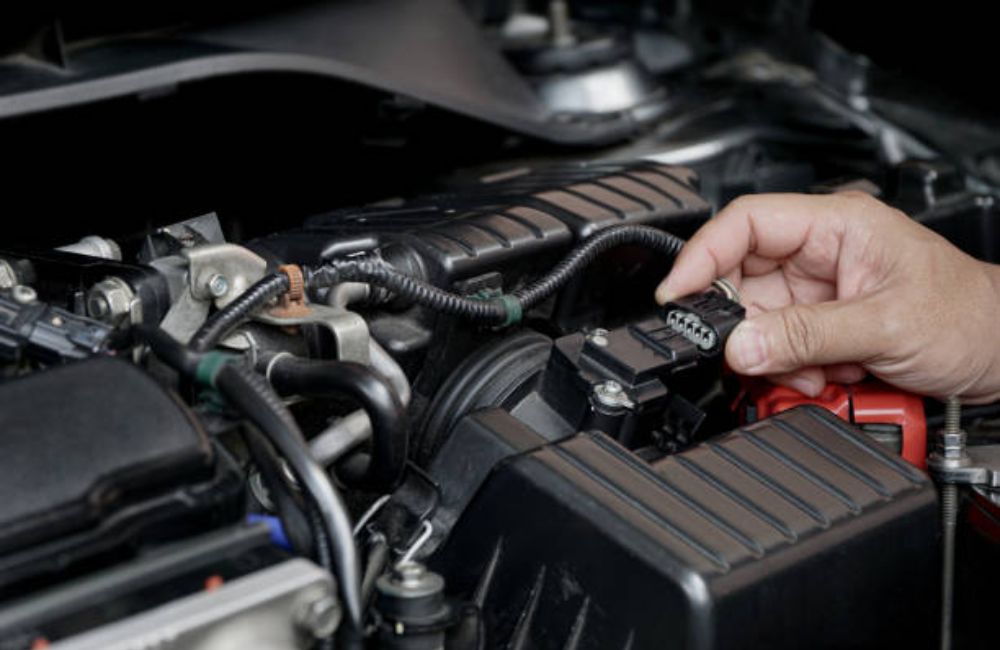
A check engine light means something — but the code alone doesn’t tell you what
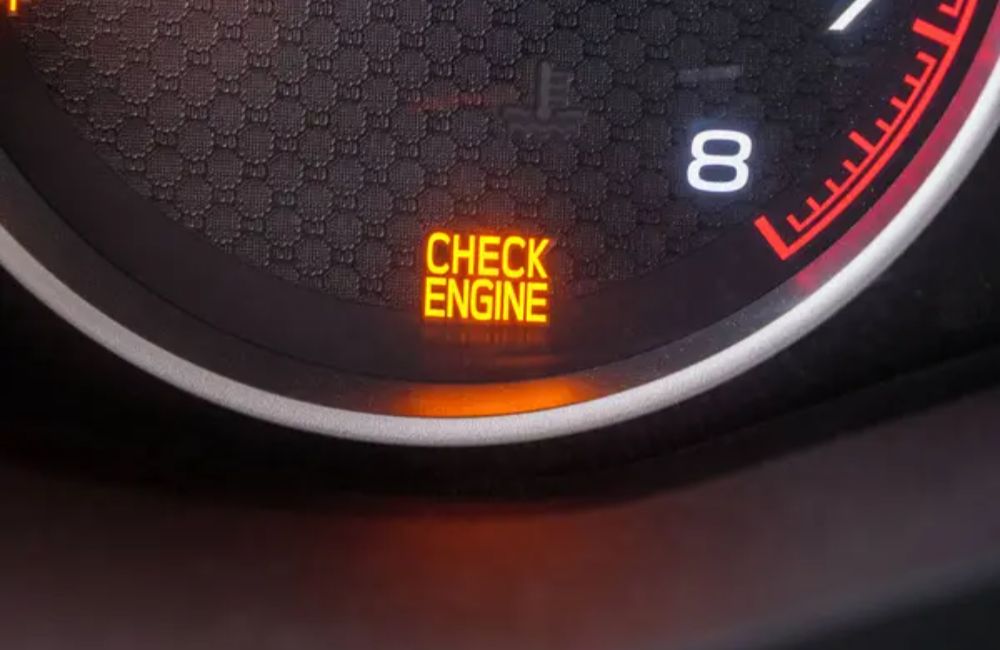
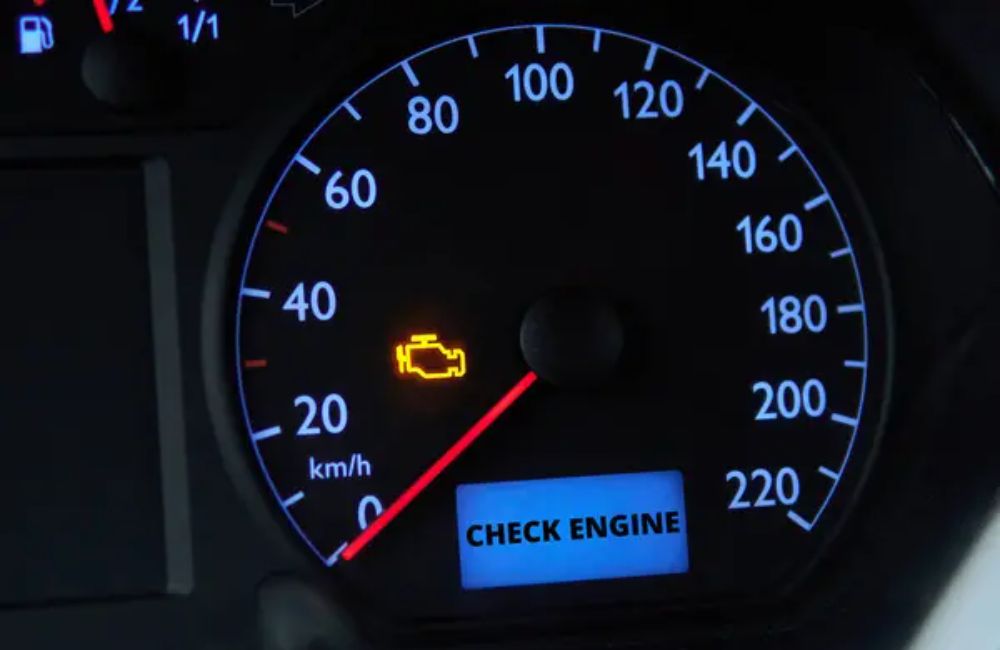
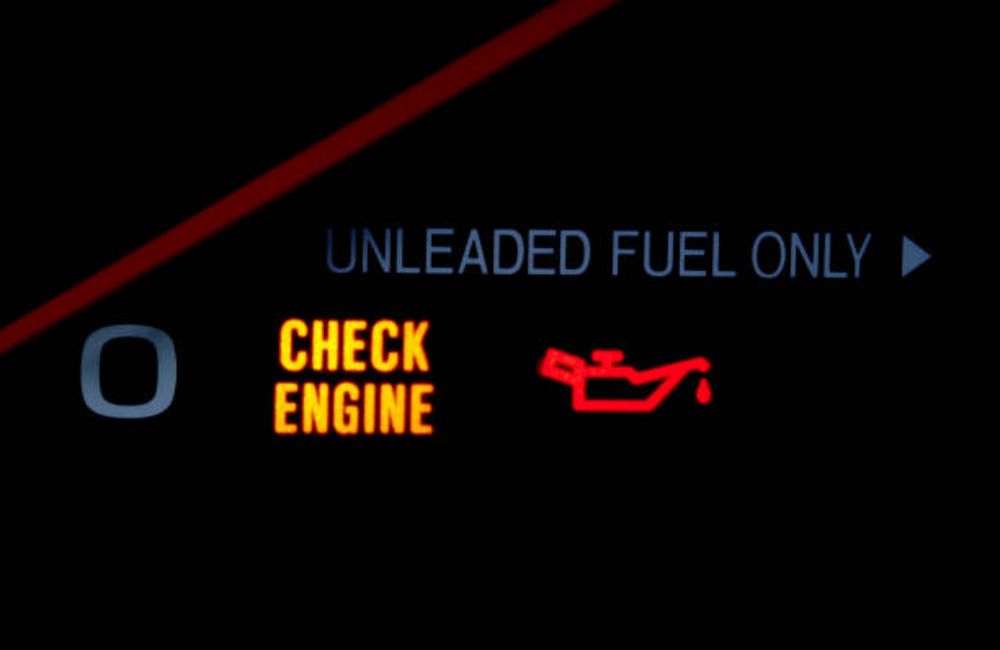
The check engine light is one of the most misunderstood indicators in any vehicle. When it illuminates, the onboard diagnostic system has detected a parameter outside its expected range and stored a fault code — but that fault code is a starting point for diagnosis, not a repair prescription. A P0420 catalyst efficiency code could indicate a failing catalytic converter, an oxygen sensor providing inaccurate data, an exhaust leak skewing sensor readings, or a fuel system issue affecting combustion quality. Replacing the catalytic converter based on the code alone — without verifying which of these root causes is actually present — is how Glendale drivers end up paying for repairs that don’t resolve the problem.
Glendale’s heat and dust create check engine light triggers that other climates don’t
Arizona’s operating environment creates specific check engine light triggers that technicians in cooler, wetter climates encounter far less frequently. Extreme under-hood temperatures accelerate sensor degradation — oxygen sensors, mass airflow sensors, and coolant temperature sensors all have shortened service lives in Glendale’s sustained heat. Fine desert dust infiltrates mass airflow sensors, intake systems, and throttle bodies in ways that affect fuel trim calculations and trigger lean condition codes. Cracked vacuum lines from UV and heat exposure create intake leaks that produce misfire codes, lean codes, and idle instability faults. And the thermal cycling stress of Glendale’s summer-to-winter temperature range causes wiring harness connections to loosen and corrode in ways that produce intermittent fault codes that disappear and return unpredictably.
The parts store code pull problem — why it leads Glendale drivers to the wrong repair
Many Glendale drivers’ first stop after a check engine light is a parts store offering a code scan. The code retrieval itself is straightforward — but the jump from fault code to parts recommendation that often follows is where the problem starts. Parts store associates are not diagnostic technicians, and fault codes do not map reliably to specific failed parts. A misfire code on cylinder 3 could indicate a faulty ignition coil, a failed fuel injector, a compression issue, a vacuum leak affecting that cylinder, or an ignition timing fault — the code identifies the symptom, not the component. A parts purchase based on a code scan without further diagnosis is a coin flip, and Glendale drivers who’ve replaced multiple parts chasing a check engine light know exactly how that gamble tends to end.
Why a flashing check engine light is a different — and more urgent — situation
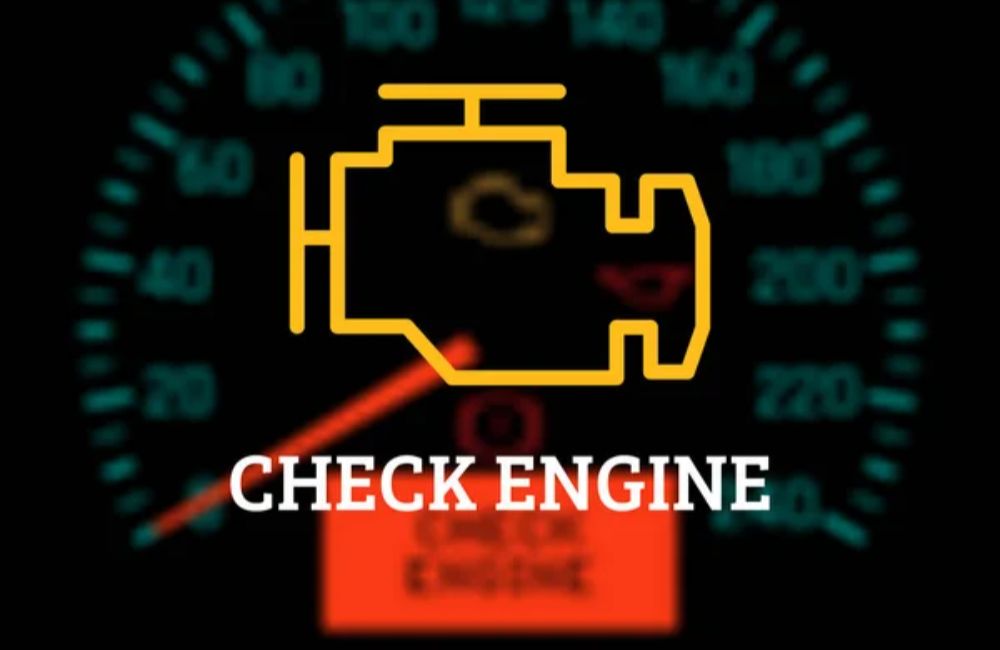
Not all check engine lights communicate the same urgency. A steady check engine light indicates a stored fault that the vehicle’s diagnostic system has detected — serious enough to address but not necessarily an immediate stop-driving situation. A flashing or blinking check engine light is a different message entirely: it indicates an active misfire severe enough to damage the catalytic converter within minutes of continued operation. Glendale drivers who see a flashing check engine light while driving should reduce speed, minimize load on the engine, and have the vehicle diagnosed as quickly as possible. Continued operation with an active misfire in Arizona’s heat accelerates both catalytic converter damage and potential engine harm significantly.
Emissions testing and the Glendale driver’s check engine light dilemma
Arizona requires periodic emissions testing for vehicles registered in Maricopa County — and a vehicle with an illuminated check engine light will fail the emissions inspection automatically, regardless of what the actual emissions levels are. For Glendale drivers facing a registration renewal, a check engine light isn’t just an engine concern — it’s a registration compliance issue with a deadline. Proper diagnosis and repair that resolves the underlying fault code, followed by sufficient drive cycle completion for the vehicle’s readiness monitors to reset, is the correct path to passing emissions. Simply clearing the code without repairing the fault will result in a failed emissions test when the monitors haven’t completed their readiness cycle.
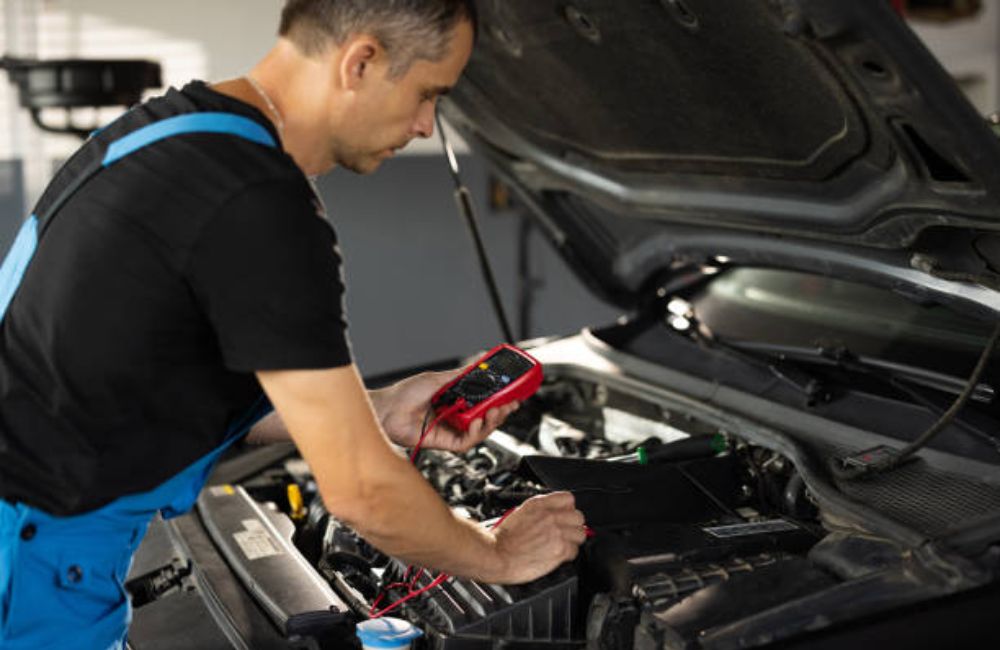
Check Engine Light Diagnostics Glendale
Our Check Engine Light Diagnostic Services
Complete car diagnostic service in Glendale, AZ — covering OBD-II fault code retrieval, live data analysis, root cause diagnosis, and repair recommendation for all vehicle makes navigating Maricopa County’s unique heat and emissions requirements.

OBD-II Diagnostic Scan And Code Retrieval
Professional OBD-II scan tool fault code retrieval with freeze frame data capture — the starting point for every check engine light diagnosis, providing the fault codes and operating conditions that guide the complete diagnostic evaluation.
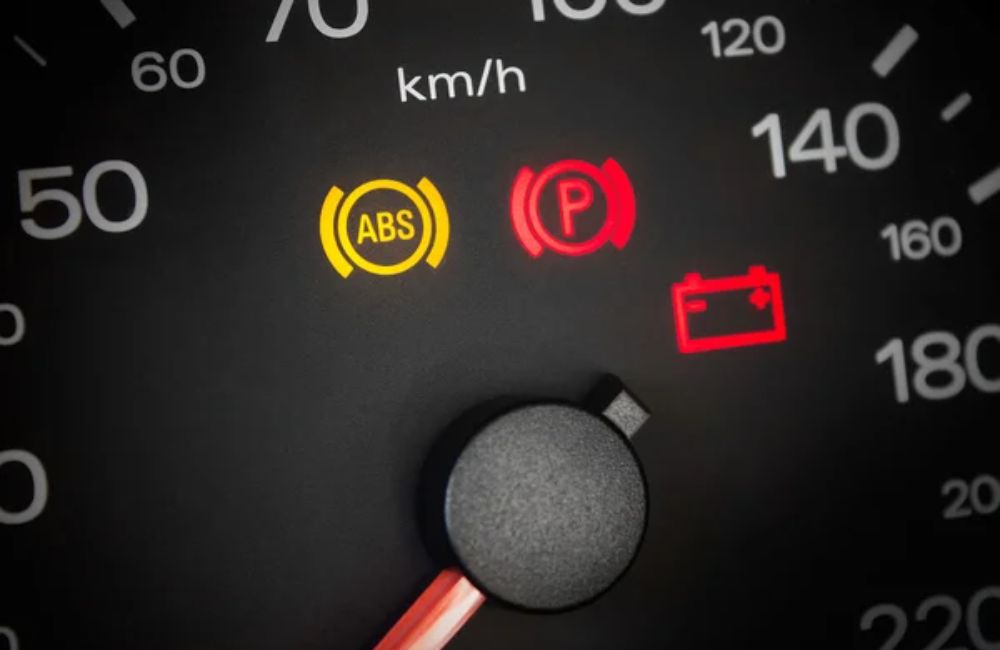
Live Sensor Data Analysis
Real-time sensor data stream evaluation comparing oxygen sensor, MAF, MAP, coolant temperature, throttle position, and fuel trim readings against manufacturer specifications — identifying sensors providing inaccurate data that produce misleading fault codes.

Fuel System Diagnostic Evaluation
Fuel pressure testing, injector performance evaluation, and fuel trim analysis diagnosing the fuel delivery and mixture faults that produce lean codes, rich codes, misfire codes, and emissions failures in Glendale vehicles.
Ignition System Diagnostic Service
Ignition coil testing, spark plug condition evaluation, and ignition timing diagnosis identifying the ignition faults responsible for misfire codes, rough idle complaints, reduced power, and the flashing check engine light that indicates active catalyst-damaging misfires.
Oxygen Sensor And Emissions System Diagnosis
Oxygen sensor performance testing, catalytic converter efficiency evaluation, and EVAP system leak detection addressing the emissions system faults most commonly responsible for check engine lights in Glendale vehicles subject to Arizona’s emissions testing requirements.
Intake And Vacuum System Diagnosis
Intake manifold inspection, vacuum line evaluation, and throttle body assessment identifying the air intake faults that produce lean codes, idle instability, and misfire conditions — particularly relevant in Glendale’s dusty environment where MAF sensors and throttle bodies accumulate contamination.

Transmission Fault Code Diagnosis
Transmission control module fault code retrieval and live solenoid data evaluation diagnosing the transmission electrical and hydraulic faults that illuminate the check engine light alongside shifting complaints in Glendale vehicles.
EVAP System Leak Detection And Repair
Evaporative emission control system smoke testing identifying fuel vapor leaks from the fuel tank, charcoal canister, purge valve, and vent lines — the most common cause of check engine lights without any drivability symptom in Glendale vehicles.

ABS, Traction Control, And Stability System Diagnosis
ABS module fault code retrieval and wheel speed sensor evaluation addressing the stability system faults that illuminate warning lights alongside or independent of the check engine light in modern Glendale vehicles.

Hybrid And EV System Diagnostic Service
Hybrid battery management system evaluation, high-voltage system fault code retrieval, and hybrid control module diagnosis for Glendale’s growing hybrid and plug-in vehicle population — requiring specialized diagnostic equipment and safety protocols beyond standard OBD-II tools.
Check Engine Light Diagnostics Glendale
Why Choose All Valley Car Care For Check Engine Light Diagnostics
All Valley Car Care brings professional-grade diagnostic capability and genuine Arizona vehicle expertise to every car diagnostic service in Glendale. Our technicians work across the complete range of vehicle makes and model years — domestic, imported, hybrid, and diesel — using bi-directional scan tools that go beyond code retrieval to access live sensor data, perform actuator tests, and evaluate system behavior under real operating conditions.
- Professional bi-directional scan tool access to all vehicle control modules — not just OBD-II generic codes but manufacturer-specific enhanced diagnostic data
- Live data stream evaluation comparing sensor readings against specification under operating conditions — identifying sensors providing plausible but inaccurate data that code-only diagnosis misses
- Freeze frame data analysis capturing the exact operating conditions present when the fault was stored — providing diagnostic context that narrows root cause identification significantly
- Fuel trim analysis evaluating short-term and long-term fuel correction values to identify vacuum leaks, MAF sensor drift, fuel pressure faults, and injector performance issues
- Emissions readiness monitor status evaluation confirming which diagnostic monitors have completed their drive cycle after repair — critical for Glendale drivers preparing for Arizona emissions testing
- Wiring harness and connector inspection addressing the intermittent fault codes produced by the heat-related connection deterioration common in Glendale’s extreme thermal cycling environment
- Transparent findings with photo documentation before any repair recommendation is made — fault code plus confirmed root cause, not fault code plus assumption.

Check Engine Light Diagnostics Glendale
How We Deliver Consistent Quality
- Manufacturer-specific diagnostic data access using bi-directional scan tools that retrieve enhanced fault codes, live data parameters, and actuator test capability beyond generic OBD-II readers
- Freeze frame and long-term fuel trim data analysis providing diagnostic context that narrows root cause identification before component testing begins
- Live sensor data comparison against manufacturer specification ranges — identifying out-of-range or plausible-but-inaccurate sensor readings that code-only diagnosis consistently misses
- Arizona-specific diagnostic knowledge base covering the heat, dust, and UV-related fault patterns unique to Glendale’s operating environment — informing root cause evaluation on every diagnostic
- Wiring and connector integrity inspection addressing the intermittent fault codes produced by heat-related harness deterioration that produces inconsistent symptoms and evasive diagnosis
- Emissions readiness monitor status confirmation after every check engine light repair — ensuring the vehicle’s diagnostic system has completed its drive cycle before an Arizona emissions test is attempted
- Photo documentation of fault codes, live data readings, and component condition compiled before any repair recommendation is presented to the customer
- ASE-certified technician oversight on all diagnostic work with post-repair drive cycle verification confirming fault resolution and monitor completion before vehicle return.
Check Engine Light Diagnostics Glendale
Frequently Asked Questions
How much does a car diagnostic cost in Glendale, AZ?
Car diagnostic pricing varies based on the complexity of the fault and the diagnostic time required to confirm root cause. A straightforward single-system fault with clear live data confirmation involves less diagnostic time than an intermittent fault, a multi-code concern, or an EVAP system leak that requires smoke testing. We provide a diagnostic fee disclosure before work begins and apply diagnostic time toward the repair cost when the repair is authorized. Contact us at (623) 303-9225 to discuss your specific check engine light situation and schedule an evaluation.
Why is my check engine light on but my car seems to drive fine?
Many check engine light faults — particularly EVAP system leaks, oxygen sensor efficiency codes, and catalyst efficiency codes — produce no noticeable drivability symptom. The fault is real and the code is stored, but the effect on engine operation may be subtle enough that the driver notices nothing unusual. This doesn't mean the fault is harmless — EVAP leaks allow fuel vapor to escape into the atmosphere, catalyst efficiency faults indicate emissions system degradation, and oxygen sensor faults affect fuel economy and long-term engine efficiency even without obvious drivability impact. A vehicle that drives normally with a check engine light still needs diagnosis.
What's the difference between a car diagnostic and a code scan?
A code scan retrieves the stored fault codes from the vehicle's OBD-II system — a starting point that takes minutes and identifies which system triggered the fault. A car diagnostic uses those codes as the beginning of a structured investigation that includes live sensor data analysis, freeze frame review, component testing, and system-specific evaluation to confirm the root cause of the fault code. The diagnostic is what converts a fault code into an accurate repair recommendation. Many check engine light repair failures trace directly to skipping the diagnostic step and repairing the code rather than confirming the cause.
Can I drive with my check engine light on in Glendale?
Whether it's safe to continue driving depends entirely on the nature of the fault and whether the check engine light is steady or flashing. A steady check engine light in a vehicle driving normally can generally be driven to a diagnostic appointment without emergency urgency, though deferred diagnosis carries the risk of a developing fault worsening. A flashing check engine light indicates an active misfire severe enough to damage the catalytic converter within minutes of continued operation — this warrants reducing speed, minimizing engine load, and scheduling a diagnostic as soon as possible. In Glendale's heat, both scenarios benefit from prompt evaluation.
Will my car fail Arizona emissions testing with a check engine light on?
Yes — Arizona's emissions testing program administered through the Vehicle Emissions Testing Program (VEIP) will fail any vehicle with an illuminated check engine light, regardless of actual tailpipe emissions levels. The check engine light indicates a fault in the emissions-related diagnostic system, which is itself a test failure criterion. After repair, the vehicle's OBD-II readiness monitors must complete their drive cycle — a process that can take several days of normal driving — before the vehicle is ready to pass emissions testing. Rushing to the test station immediately after a repair risks a not-ready failure even if the fault has been correctly resolved.
What causes a check engine light to come back after it was repaired?
A check engine light that returns after repair almost always indicates either an incomplete diagnosis where a contributing factor was missed, a repair that addressed the code rather than the confirmed root cause, or a separate unrelated fault that has developed since the repair. In Glendale's operating environment, intermittent faults caused by heat-related wiring and connector deterioration are a frequent cause of returning check engine lights — the fault appears under hot operating conditions and disappears when the vehicle cools, making a single diagnostic snapshot insufficient. Our live data and wiring evaluation approach is specifically designed to catch these intermittent patterns.
How long does a car diagnostic take at All Valley Car Care?
Most single-system check engine light diagnostics are completed within the same service visit. Complex multi-code concerns, intermittent faults that require extended monitoring under operating conditions, or EVAP system smoke tests may require additional time. We communicate the diagnostic timeline with you before beginning work and update you as findings develop. For Glendale drivers with emissions test deadlines, we prioritize diagnostic scheduling to provide adequate time for both repair completion and readiness monitor drive cycle before the test date.
Check Engine Light Diagnostics Glendale
Our Process At A Glance
Discovery & Assessment
Your service advisor discusses your check engine light history in detail — when it appeared, whether it’s steady or flashing, any drivability changes you’ve noticed, whether it’s appeared before, and what previous diagnostic or repair work has been performed. We confirm your vehicle’s make, model year, and engine configuration before connecting scan tool equipment.
Diagnostic Execution And Repair
Our ASE-certified technicians retrieve all fault codes with freeze frame data, evaluate live sensor data streams under operating conditions, perform system-specific component testing to confirm root cause, and document findings with photos. Findings are reviewed with you before any repair is authorized. Approved repairs are completed using quality components, and post-repair scan confirmation verifies fault resolution.
Performance Verification & Communication
We verify fault codes have cleared, confirm readiness monitors are progressing through their drive cycle, update your digital service record with diagnostic findings and repairs performed, and advise on the emissions readiness timeline if Arizona testing is a near-term requirement before returning your vehicle.
Check Engine Light Diagnostics Glendale
How Our Check Engine Light Diagnostic Suite Works In Glendale
OBD-II Diagnostic Scan And Code Retrieval
The right starting point for every check engine light diagnosis
OBD-II fault code retrieval is the foundation of every check engine light diagnosis — but at All Valley Car Care, it’s treated as the beginning of the diagnostic process rather than the conclusion. Our scan tools retrieve all stored and pending fault codes across every available control module, capture freeze frame data recording the exact operating conditions present when each fault was stored, and provide the system-specific context that guides the complete diagnostic evaluation. For Glendale drivers who’ve had a code scan at a parts store and been given a parts recommendation, the difference in our approach is what happens after the codes are retrieved — structured investigation of root cause rather than a direct path from code to replacement part.
Live Sensor Data Analysis
What the sensors are actually telling your engine — in real time
Live sensor data analysis is the diagnostic step that separates accurate check engine light diagnosis from fault code interpretation. Our bi-directional scan tools access real-time readings from every sensor communicating with your vehicle’s engine control module — oxygen sensors, mass airflow, manifold absolute pressure, coolant temperature, throttle position, crankshaft and camshaft position, knock sensors, and fuel trim values — and compare those readings against manufacturer specification under actual operating conditions. In Glendale’s heat, sensor drift and out-of-range readings are common: a mass airflow sensor contaminated with desert dust may produce a plausible-looking reading that is subtly incorrect, driving fuel trim corrections and misfire conditions that produce fault codes pointing in the wrong diagnostic direction. Live data catches what static code retrieval misses.
Fuel System Diagnostic Evaluation
When the check engine light is really a fuel delivery problem
Fuel system faults are among the most common check engine light causes in Glendale vehicles — and among the most commonly misdiagnosed when the diagnostic path goes from code to parts without confirming fuel system behavior. Our fuel system evaluation includes fuel pressure testing at idle and under load, fuel trim analysis measuring how much the engine control module is correcting injection duration to compensate for lean or rich conditions, and injector performance evaluation identifying cylinders with flow or response anomalies. Glendale’s heat affects fuel system components in specific ways: fuel pressure regulators develop diaphragm failures that create rich conditions at idle, fuel injectors accumulate deposits that restrict flow on vehicles with significant city mileage, and fuel pump performance degrades faster under the sustained heat load of Arizona summer driving.
Ignition System Diagnostic Service
Misfire codes solved at the source, not the symptom
Misfire fault codes — P0300 random misfire, P0301 through P0308 cylinder-specific misfires — are among the most common check engine light triggers in Glendale, and among the most important to diagnose accurately before repair begins. A misfire on cylinder 4 could be caused by a failed ignition coil, a worn spark plug, a failed fuel injector, a compression problem, or a vacuum leak affecting that cylinder’s air-fuel mixture — and the cylinder-specific fault code alone doesn’t identify which of these is responsible. Our ignition diagnostic evaluates coil primary and secondary resistance, spark plug condition and gap, ignition timing accuracy, and cylinder contribution during a power balance test — identifying the specific ignition system component responsible for the misfire before replacement is recommended.
Oxygen Sensor And Emissions System Diagnosis
The emissions system faults that matter most for Glendale’s Arizona testing requirements
Oxygen sensor and emissions system faults represent a disproportionate share of check engine lights in Glendale — and they carry a specific consequence here that they don’t in states without mandatory emissions testing: an automatic Maricopa County emissions test failure. Our emissions system diagnosis evaluates upstream and downstream oxygen sensor switching behavior and response time, catalytic converter efficiency using comparative pre- and post-catalyst oxygen sensor data, and EVAP system integrity using smoke testing to identify vapor leaks anywhere in the fuel vapor management system. For Glendale drivers with an emissions test deadline, we also confirm readiness monitor completion status after repair to ensure the vehicle is genuinely ready for testing — not just cleared of codes.
Intake And Vacuum System Diagnosis
Glendale’s dust makes intake and vacuum faults more common than most drivers realize
The intake and vacuum system is disproportionately affected by Glendale’s operating environment — and the fault codes it produces are among the most misattributed in desert climate vehicle diagnostics. Fine Arizona dust infiltrates mass airflow sensors and throttle bodies, causing lean fuel trim conditions that produce codes pointing toward oxygen sensors or fuel injectors rather than the actual intake contamination source. Heat-cracked vacuum lines create unmeasured air leaks that produce lean codes, idle instability, and misfire conditions that appear to implicate multiple unrelated systems simultaneously. Our intake system evaluation uses smoke testing to locate vacuum leaks not visible to inspection, MAF sensor cleaning and performance verification, and throttle body evaluation to address the intake system faults that Glendale’s environment creates with regularity.
Transmission Fault Code Diagnosis
When the check engine light is coming from the transmission, not the engine
Many Glendale drivers are surprised to learn that transmission faults frequently illuminate the check engine light alongside or instead of a separate transmission warning light. Modern vehicles integrate transmission control module communication with the main powertrain control system, meaning solenoid faults, pressure sensor anomalies, and shift adaptation failures can store codes that trigger the check engine light before any noticeable shifting symptom appears. Our transmission diagnostic evaluation accesses TCM-specific fault codes, live solenoid duty cycle data, and shift adaptation values — distinguishing transmission electrical faults from mechanical issues and providing an accurate repair recommendation before the more expensive conversation about transmission work is necessary.
EVAP System Leak Detection And Repair
The check engine light with no drivability symptoms — solved with smoke testing
EVAP system faults are the most common source of check engine lights that appear without any drivability complaint — the vehicle drives, idles, and accelerates normally, but the check engine light is on and the emissions system has detected a fuel vapor leak. The evaporative emission control system seals fuel vapors in the tank and routes them through a charcoal canister for reburning rather than venting to atmosphere — and any leak in this system, from a loose gas cap to a cracked purge valve hose to a failed vent solenoid, triggers a fault code. Our EVAP diagnosis uses a smoke machine to pressurize the system with low-pressure smoke, making even small leaks visible before any component replacement is recommended. For Glendale drivers with an Arizona emissions test deadline, EVAP system repair and readiness monitor confirmation are time-sensitive priorities we address efficiently.
Hybrid And EV System Diagnostic Service
Specialized diagnostic capability for Glendale’s growing hybrid and electric vehicle population
Hybrid and plug-in electric vehicles require diagnostic equipment and safety protocols that go beyond standard OBD-II tools — and Glendale’s growing hybrid vehicle population increasingly needs technicians with the specific training and equipment to address hybrid system fault codes accurately. Our hybrid diagnostic service covers high-voltage battery management system fault retrieval, hybrid control module communication evaluation, regenerative braking system diagnosis, and auxiliary battery system assessment — using scan tools with hybrid-specific data parameters and observing high-voltage safety protocols throughout. For Glendale hybrid drivers whose check engine light or hybrid system warning light has illuminated, accurate diagnosis by a technician equipped for hybrid systems is the right starting point before any high-voltage system work is considered.
Ready For Expert Check Engine Light Diagnostics In Glendale?
All Valley Car Care serves Glendale and the broader West Valley with professional-grade diagnostic capability, bi-directional scan tools, and a commitment to check engine light diagnosis that finds the actual cause — not just the code. We’re available Monday through Friday from 7:30 AM to 5:30 PM and Saturday mornings from 8 AM to 2 PM — because a check engine light before an emissions deadline or a flashing warning on the freeway deserves a prompt, accurate answer.
Proudly Serving in Glendale, AZ
-
Directions from Avondale, AZ to All Valley Car Care, Glendale, AZ
-
Directions from El Mirage, AZ to All Valley Car Care, Glendale, AZ
-
Directions from Litchfield Park, AZ to All Valley Car Care, Glendale, AZ
-
Directions from Peoria, AZ to All Valley Car Care, Glendale, AZ
-
Directions from Phoenix, AZ to All Valley Car Care, Glendale, AZ
-
Directions from Surprise, AZ to All Valley Car Care, Glendale, AZ
-
Directions from Tolleson, AZ to All Valley Car Care, Glendale, AZ
-
Directions from Youngtown, AZ to All Valley Car Care, Glendale, AZ
Serving Neighborhoods & Districts in Glendale, AZ
-
Directions from Arrowhead Ranch to All Valley Car Care, Glendale, AZ
-
Directions from Catlin Court Historic District to All Valley Car Care, Glendale, AZ
-
Directions from Cholla District to All Valley Car Care, Glendale, AZ
-
Directions from Downtown Glendale to All Valley Car Care, Glendale, AZ
-
Directions from Glendale Sports & Entertainment District to All Valley Car Care, Glendale, AZ
-
Directions from La Buena Vida to All Valley Car Care, Glendale, AZ
-
Directions from Maryvale to All Valley Car Care, Glendale, AZ
-
Directions from Ocotillo District to All Valley Car Care, Glendale, AZ
-
Directions from Rovey Farm Estates to All Valley Car Care, Glendale, AZ
-
Directions from Sahuaro Ranch to All Valley Car Care, Glendale, AZ
-
Directions from Thunderbird Palms to All Valley Car Care, Glendale, AZ
-
Directions from West Plaza to All Valley Car Care, Glendale, AZ
-
Directions from Yucca District to All Valley Car Care, Glendale, AZ
What Our Customers Say
Real Reviews from Real Surprise Neighbors

