
Suspension & Steering Repair In Glendale, AZ
Smooth, Safe, And In Control On Every Road
Expert suspension and steering repair from ASE-certified technicians who understand what Glendale’s roads, heat, and high-mileage driving demand from your vehicle’s handling systems.
- Accurate suspension and steering diagnosis identifying the real cause of handling problems before a single part is replaced
- Wheel balancing near me — same-day and Saturday appointments to eliminate vibration and restore smooth, confident driving
- Complete suspension and steering care covering shocks, struts, control arms, tie rods, ball joints, power steering, and wheel balancing
Suspension & Steering Repair Glendale
Why Suspension & Steering Problems Are Worse In Glendale Than Most Drivers Realize
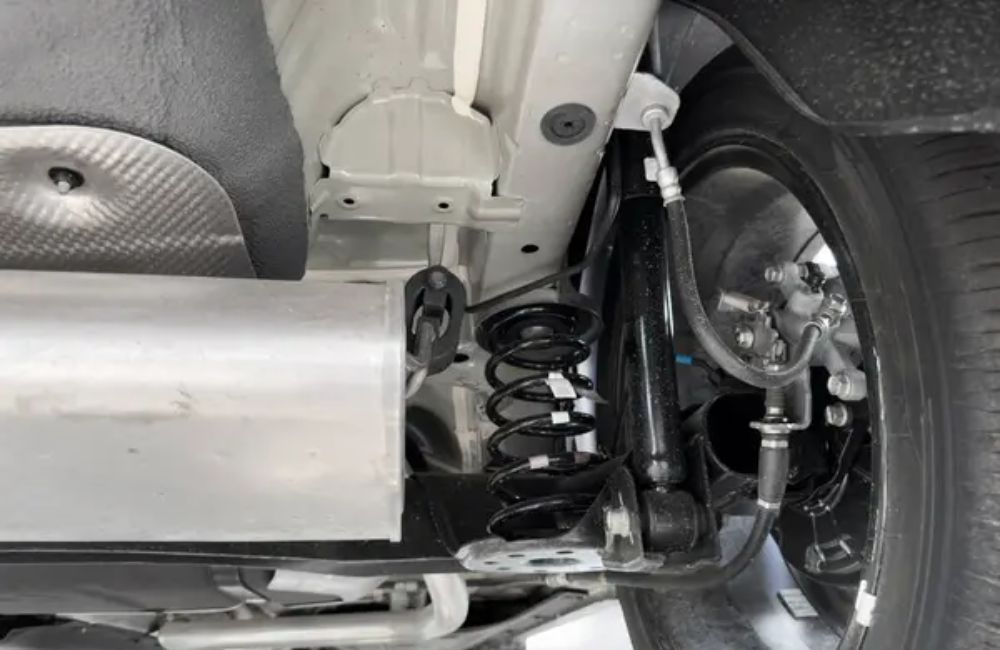
Glendale’s roads and heat create suspension wear that accumulates faster than anywhere else
Suspension and steering components in Glendale vehicles face a combination of stressors that drivers in more temperate climates don’t encounter at the same intensity. Arizona’s sustained extreme heat accelerates the degradation of rubber bushings, ball joint boots, tie rod end seals, and strut mount bearings — the protective components that keep metal-to-metal contact out of your suspension joints. UV exposure dries and cracks rubber components on a timeline measured in months rather than years. And the road surface quality variation across Glendale’s arterials — from smooth maintained sections to the expansion-joint-heavy stretches on Bell Road and Northern Avenue — creates the impact loading that compounds wear on shock absorbers, struts, and control arm components with every mile.
Worn suspension means your vehicle isn’t handling the way you think it is
A vehicle with worn shocks or struts feels normal to a driver who has never experienced the difference — until they need to stop suddenly, swerve around debris, or navigate a sharp corner on a Glendale on-ramp. Shock absorbers and struts don’t just affect ride comfort; they control how quickly your tires return to the road surface after a bump, how effectively your brakes can stop the vehicle, and how confidently the car responds to steering inputs. A vehicle with worn struts that requires 20% more distance to stop than its specification — a realistic consequence of advanced shock absorber wear — is a safety issue that its driver may never notice until an emergency stop makes it obvious.
The wheel balancing problem Glendale drivers dismiss as a road noise issue
Steering wheel vibration and highway shimmy are two of the most commonly misattributed driving complaints in Glendale — and wheel imbalance is among the most frequent causes. As tires wear unevenly from Glendale’s heat-accelerated rubber degradation and the impact loading of city driving, weight distribution around the wheel and tire assembly shifts in ways that produce vibration at specific highway speeds. Many Glendale drivers adapt to this vibration, attributing it to road surface variation or tire noise rather than the correctable wheel balance issue it typically represents. Left unaddressed, wheel imbalance accelerates uneven tire wear, increases steering component stress, and reduces fuel efficiency — compounding the cost of a service that is straightforward to perform.
Steering complaints that develop so gradually Glendale drivers stop noticing them
Power steering systems, rack and pinion assemblies, and steering linkage components communicate their deteriorating condition in ways that are easy to normalize over time. The steering wheel that requires slightly more effort to turn than it once did. The vague, imprecise feel when navigating Glendale’s roundabouts and parking structures. The gentle pull toward one side that the driver unconsciously compensates for on every drive. These symptoms develop gradually enough that many Glendale drivers don’t realize how much their steering precision has degraded — until a wheel alignment, steering component inspection, or comparison drive in a well-maintained vehicle makes the difference unmistakably apparent.
Why suspension problems accelerate other vehicle wear — and repair costs
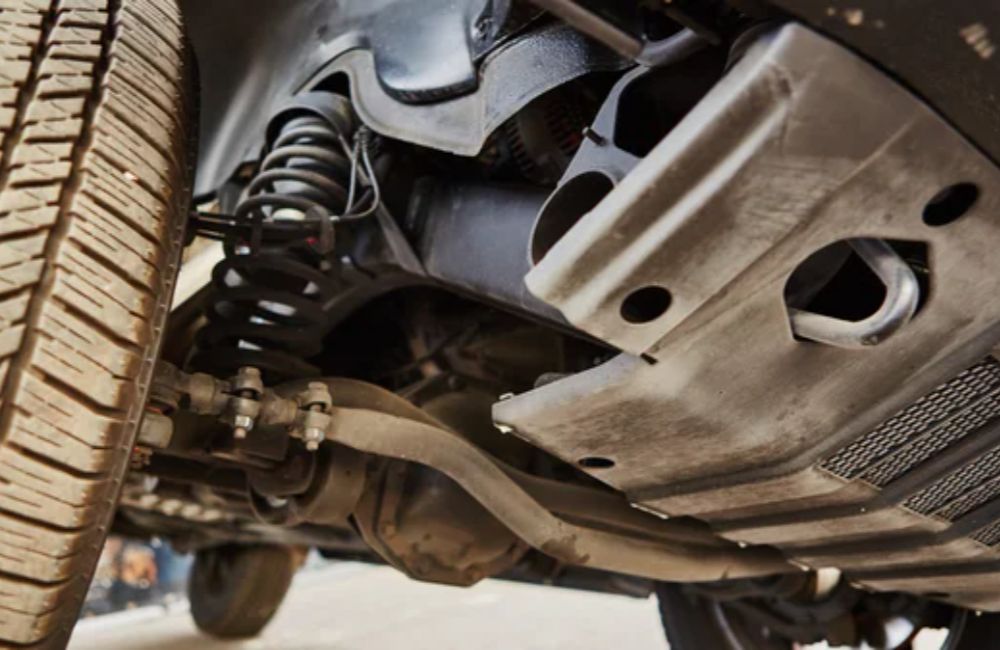
Worn suspension components create a chain reaction of accelerating wear throughout adjacent systems. Worn shock absorbers allow excessive wheel movement that creates uneven tire wear, requiring earlier tire replacement. Failed ball joint boots allow contamination that destroys the joint itself, turning a bushing replacement into a control arm repair. Misalignment from worn tie rod ends creates tire wear patterns that consume tread in weeks on Glendale’s summer-heated asphalt. And the additional vibration transmitted through a vehicle with worn struts and unbalanced wheels places additional stress on wheel bearings, steering rack bushings, and subframe mounts — accelerating failures across the front end simultaneously.
Suspension & Steering Repair Glendale
Our Suspension & Steering Services
Complete suspension and steering repair in Glendale, AZ — covering diagnosis, component replacement, wheel balancing, and alignment for all vehicle makes navigating Maricopa County’s demanding road conditions and extreme heat.
Wheel Balancing And Tire Balancing Service
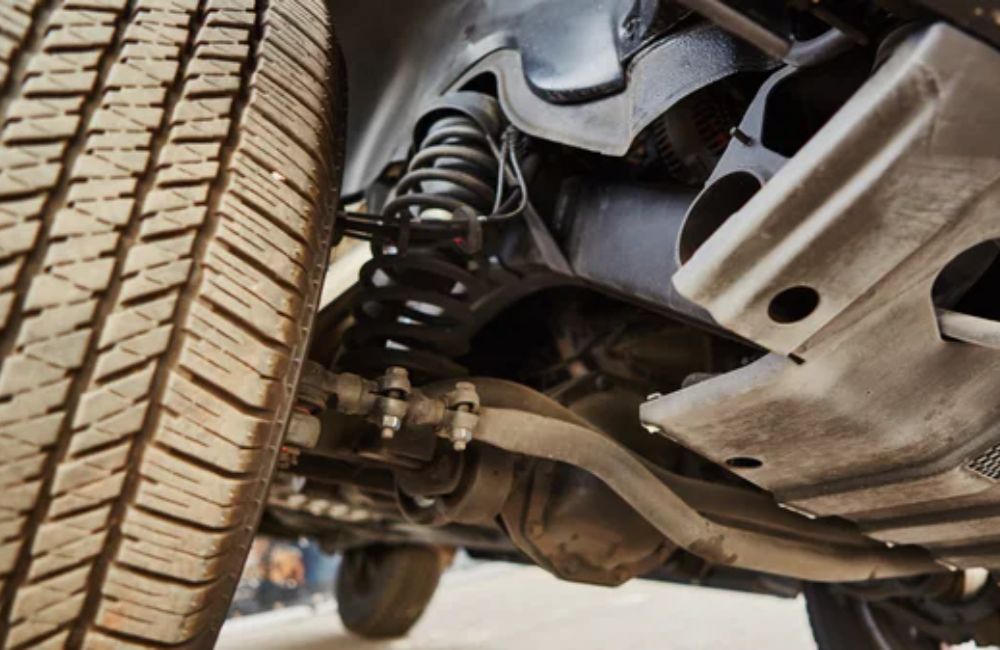
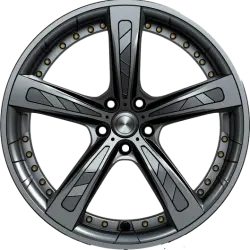
Computerized wheel balancing service measuring and correcting weight distribution imbalances across the wheel and tire assembly — eliminating steering wheel vibration, highway shimmy, and the uneven tire wear that imbalance produces in Glendale vehicles.
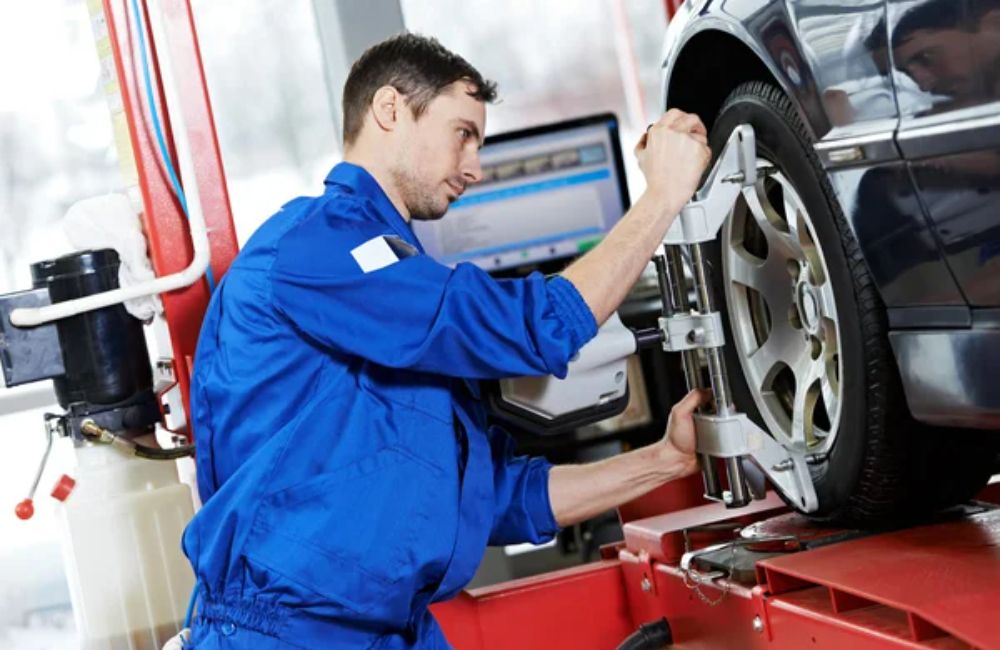
Shock Absorber And Strut Replacement
Shock absorber and strut inspection and replacement restoring ride control, braking effectiveness, and handling stability — addressing the gradual performance degradation that heat and mileage produce in Glendale vehicles’ primary suspension damping components.
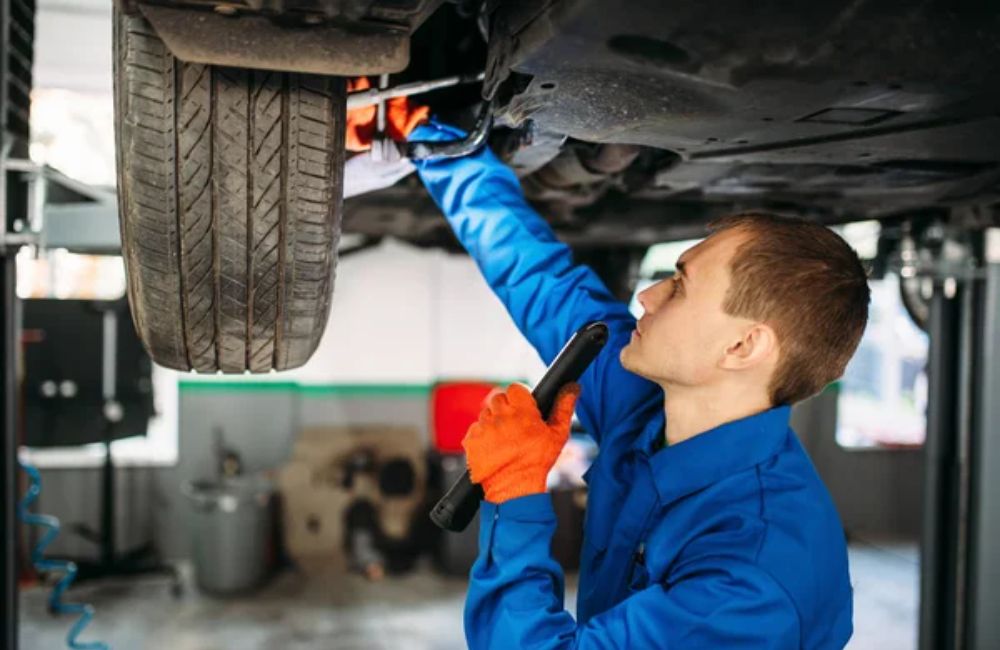
Strut Mount And Bearing Replacement
Strut mount and upper bearing inspection and replacement addressing the noise, vibration, and steering imprecision caused by deteriorated strut mount components — a common failure point in Glendale vehicles exposed to sustained thermal cycling stress.
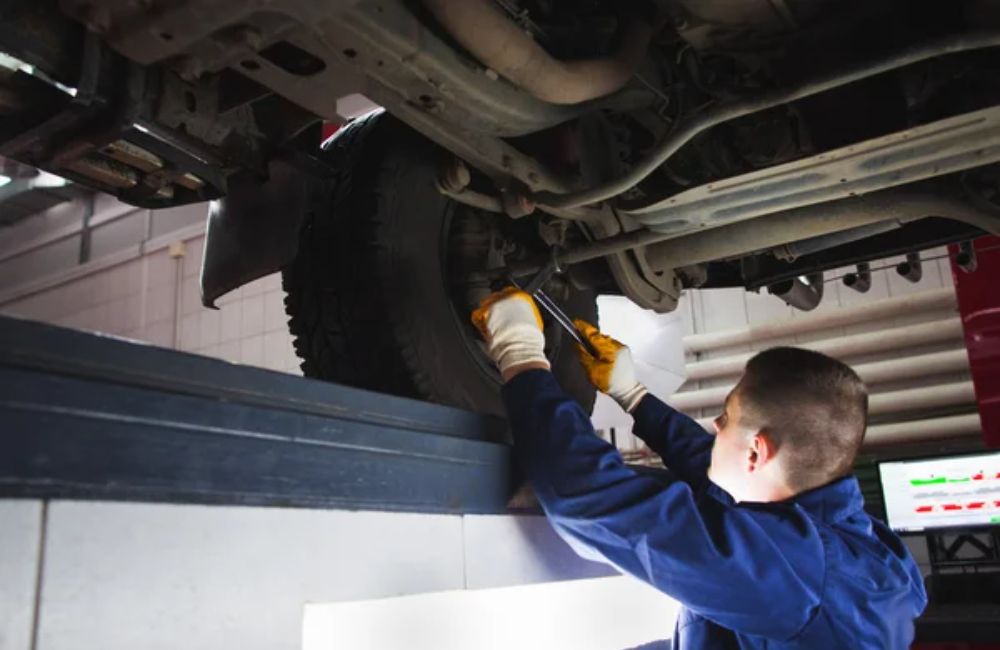
Control Arm And Bushing Replacement
Control arm inspection, bushing replacement, and complete control arm replacement addressing the suspension geometry components most affected by Arizona’s UV and heat-related rubber degradation — restoring precise wheel positioning and eliminating handling vagueness.
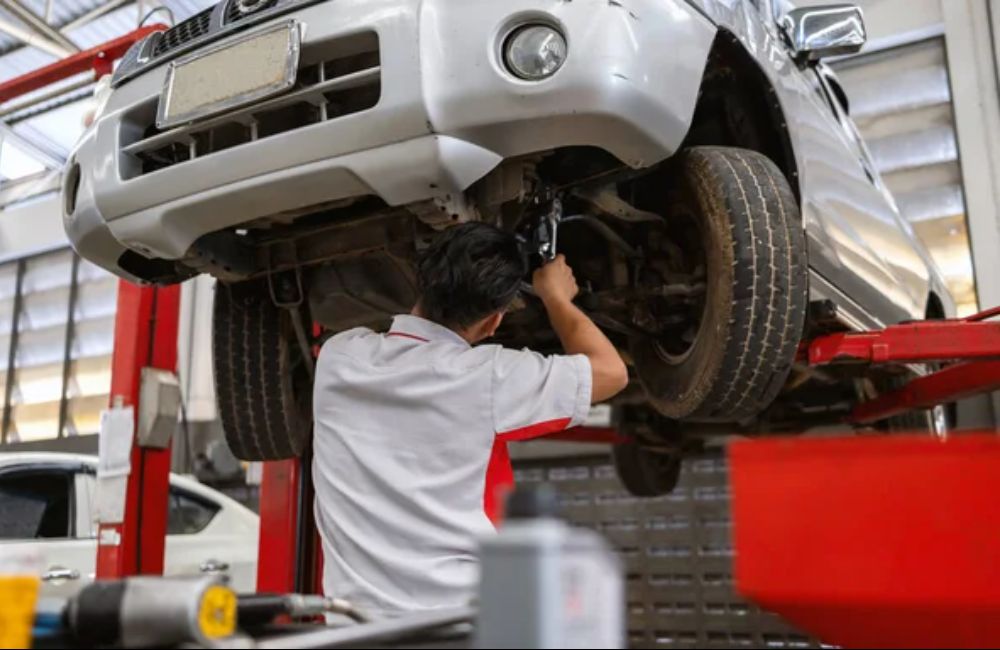
Ball Joint Inspection And Replacement
Ball joint wear measurement and replacement addressing the critical steering and suspension pivot components that determine front-end geometry accuracy and — when severely worn — create a genuine vehicle control safety concern for Glendale drivers.
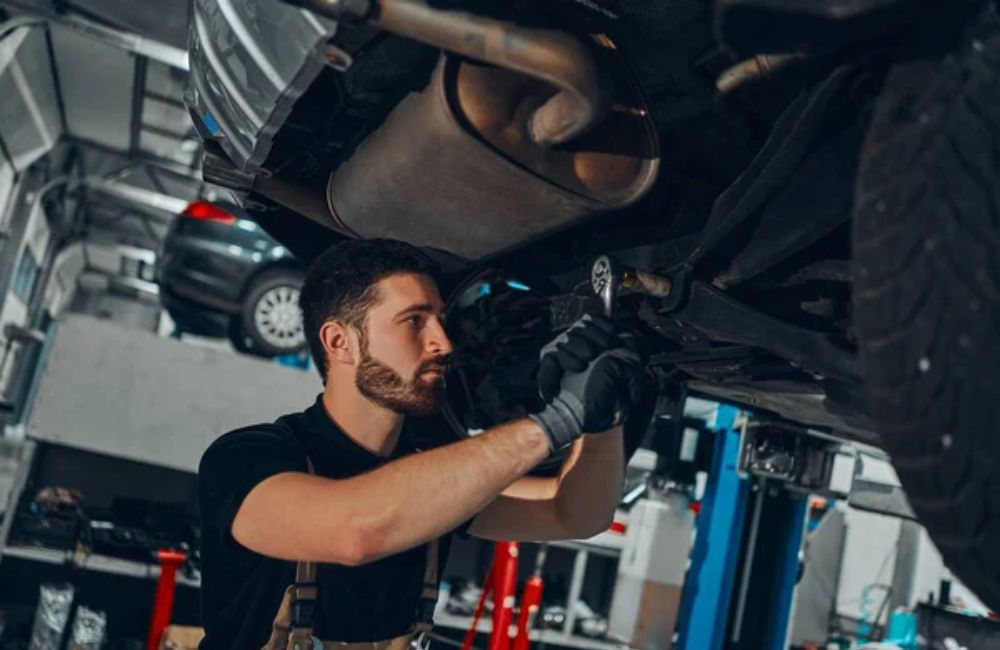
Tie Rod End And Steering Linkage Service
Tie rod end inspection and replacement restoring steering precision, eliminating steering play, and correcting the wheel alignment drift that worn tie rod ends produce — required before accurate wheel alignment can be achieved and maintained.
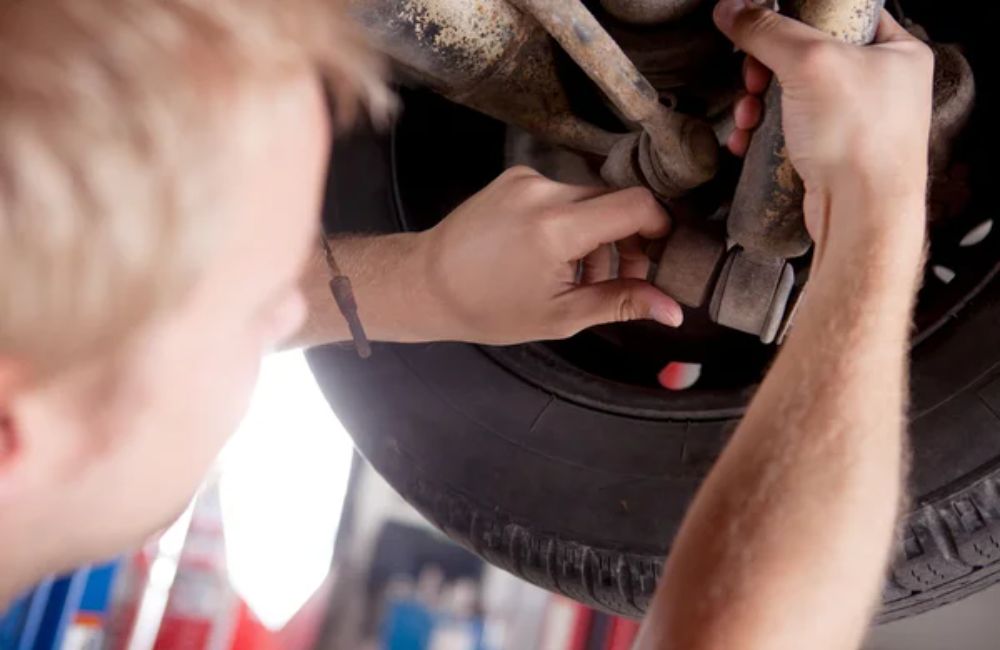
Sway Bar Link And Bushing Service
Sway bar link and bushing inspection and replacement addressing the lateral stability components that reduce body roll during cornering — resolving the clunking over Glendale’s expansion joints and the increased body lean that worn sway bar components produce.
Power Steering System Service And Repair
Power steering fluid condition evaluation, power steering pump testing, rack and pinion inspection, and power steering hose assessment — diagnosing and repairing the hydraulic and electronic steering system faults that cause increased steering effort, noise, and imprecise feel.
Wheel Bearing Inspection And Replacement
Wheel bearing noise diagnosis and replacement addressing the grinding, humming, or rumbling that indicates bearing wear — resolving a failure mode that affects handling stability, tire wear, and ABS sensor function simultaneously in Glendale vehicles.
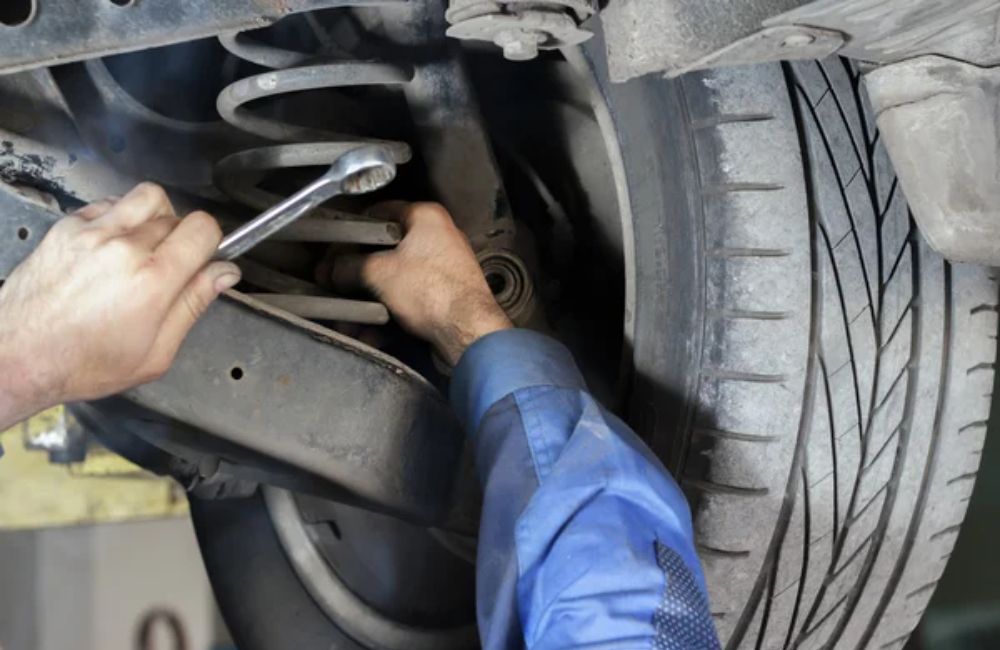
Steering Rack And Pinion Repair
Rack and pinion inspection, leak evaluation, and repair or replacement addressing the central steering component responsible for translating steering wheel input into precise wheel movement — diagnosing the play, looseness, and fluid leaks that indicate rack deterioration.
Suspension & Steering Repair Glendale
Why Choose All Valley Car Care For Suspension & Steering Repair
All Valley Car Care brings specialized suspension diagnostic capability and genuine Arizona road and climate expertise to every suspension and steering repair in Glendale. Our technicians work across the full range of vehicle platforms — domestic cars and trucks, imported vehicles, SUVs, and performance vehicles — using professional alignment equipment, computerized wheel balancing, and a systematic inspection approach that identifies what actually needs repair rather than what’s convenient to replace.
- Computerized wheel balancing equipment providing precise imbalance measurement and correction across the full wheel and tire assembly — not approximation-based static balancing
- Complete suspension inspection covering shock absorbers, struts, strut mounts, control arms, ball joints, bushings, sway bar links, and end links — evaluated under load for accurate wear assessment
- Steering system inspection covering tie rod ends, rack and pinion condition, power steering fluid condition, steering column play, and electronic steering system function
- Four-wheel alignment capability with before-and-after alignment printouts documenting actual correction — not just a post-alignment “looks good” verbal assurance
- Arizona-specific bushing and boot inspection protocol accounting for the UV and heat-accelerated rubber degradation that shortens component life in Glendale’s operating environment
- Transparent photo documentation of worn components, measurement readings, and alignment data before any repair recommendation is presented
- Digital service records tracking suspension inspection findings, alignment history, and upcoming suspension service intervals for every vehicle.
Suspension & Steering Repair Glendale
How We Deliver Consistent Quality
- Manufacturer suspension specification research confirming correct component specifications, torque values, and alignment settings for every vehicle make, model, and year before any service is performed
- Computerized wheel balancing using dynamic balancing equipment that measures imbalance at operating speed — providing accurate correction weight placement rather than static balance approximation
- Suspension component wear assessment performed with the vehicle on a lift and under simulated load conditions — evaluating joint play, bushing deterioration, and damper condition accurately rather than by visual inspection alone
- Four-wheel alignment measurement and correction with before-and-after printouts documenting actual alignment angles and corrections made — not verbal assurance alone
- Arizona-specific rubber component inspection accounting for UV and heat-accelerated degradation that shortens bushing, boot, and seal life in Glendale’s operating environment
- Photo documentation of worn components, measurement readings, and alignment data compiled before any repair recommendation is presented to the customer
- ASE-certified technician oversight on all suspension and steering diagnosis and repair, with post-repair road test confirming handling behavior and noise resolution before vehicle return
- Digital service records tracking suspension inspection findings, component replacement history, and alignment data for every vehicle in our care.
Suspension & Steering Repair Glendale
Frequently Asked Questions
How much does suspension repair cost in Glendale, AZ?
Suspension repair pricing varies considerably based on what the inspection reveals. Wheel balancing and sway bar link replacement are among the more accessible services. Strut replacement involves more labor and parts, particularly on vehicles where strut disassembly requires spring compression equipment. Control arm replacement and steering rack repair are more involved services with correspondingly higher investment. We provide a detailed, itemized estimate after completing our suspension inspection before any repair work begins. Contact us at (623) 303-9225 or bring your vehicle in for an accurate assessment.
How do I know if I need wheel balancing or a wheel alignment in Glendale?
Wheel balancing and wheel alignment address different problems with overlapping symptoms. Wheel imbalance typically produces steering wheel vibration or highway shimmy at specific speed ranges — usually between 55 and 75 mph — and is caused by uneven weight distribution in the wheel and tire assembly. Wheel misalignment typically produces a vehicle pull to one side, uneven or accelerated tire wear across the tread width, and steering wheel off-center — caused by incorrect suspension geometry angles rather than wheel weight distribution. Both can contribute to handling imprecision, and Glendale vehicles often benefit from both services when tires are rotated or replaced.
How do I know if my car AC needs a recharge or something more serious?
A refrigerant recharge is appropriate only after the system has been leak-tested and any leak has been repaired. If your AC was working normally and has gradually lost cooling performance over one or two seasons, a slow refrigerant leak followed by recharge and leak repair is the likely scenario. If performance dropped suddenly, the compressor makes noise during AC operation, or the system cycles rapidly on and off, a more significant component failure is more likely the cause. Our diagnostic evaluation answers this definitively before any refrigerant is added.
What are the warning signs that my shocks or struts need replacement in Glendale?
The most recognizable signs of worn shocks or struts include excessive bouncing after hitting a bump that continues for more than one or two oscillations, nose dive during braking more pronounced than it once was, body lean during cornering that feels greater than it should, steering that feels vague or imprecise compared to how the vehicle used to handle, and uneven cupped wear across the tire tread surface. In Glendale's heat, shock absorber fluid degrades faster than in cooler climates, and suspension bushings that cushion strut movement deteriorate more quickly — both accelerating the handling degradation that worn struts produce.
How often should I have my suspension inspected in Arizona?
An annual suspension inspection — particularly before summer peak heat when road surfaces are most demanding and rubber component degradation is fastest — is a practical standard for Glendale drivers. Vehicles with higher mileage, those driven on roads with significant surface variation, trucks and SUVs carrying regular loads, and any vehicle showing steering or handling changes benefit from inspection at every tire rotation. Glendale's operating environment makes proactive suspension inspection more valuable than reactive repair — catching a worn ball joint boot before it destroys the joint itself is a consistently better outcome.
Can a wheel balancing service fix my steering wheel vibration in Glendale?
Wheel imbalance is one of the most common causes of steering wheel vibration in Glendale vehicles — and wheel balancing resolves it in the majority of cases where vibration appears at highway speeds and diminishes or disappears at slower speeds. However, steering wheel vibration can also be caused by worn tire tread, bent wheels, worn wheel bearings, loose steering components, or driveline vibration depending on where in the vehicle the vibration is most felt. Our suspension inspection evaluates all of these potential causes rather than proceeding directly to balancing — ensuring the correct service addresses the actual source.
How does Glendale's heat affect my vehicle's suspension and steering components specifically?
Glendale's sustained extreme heat and UV exposure degrade rubber suspension and steering components — bushings, ball joint boots, tie rod end seals, strut mount bearings, and power steering hoses — significantly faster than in cooler climates. Ball joint and tie rod end boots that protect grease-filled pivot joints from contamination crack and fail under UV exposure, allowing water and grit to enter and accelerate joint wear. Control arm bushings lose their elasticity and develop cracks that change suspension geometry in ways that affect alignment and handling. Power steering hoses become brittle and develop seeping leaks at fittings under sustained heat cycling. Annual inspection catches these heat-related failures at a manageable stage rather than at component failure.
What causes clunking or knocking from my suspension over bumps in Glendale?
Suspension noise over bumps — particularly clunking, knocking, or rattling — is one of the most diagnostic-rich symptoms a Glendale driver can bring to a shop. Clunking from the front end over speed bumps is most commonly caused by worn sway bar end links, worn strut mount bearings, or loose strut hardware. Knocking from the wheel area may indicate worn ball joints or loose wheel bearing play. Rattling over rough pavement often points to worn heat shields, loose exhaust hangers, or deteriorated subframe bushings. Our suspension inspection uses a lift, simulated load testing, and component-specific evaluation to identify the noise source accurately — rather than replacing components speculatively until the noise disappears.
Suspension & Steering Repair Glendale
Our Process At A Glance
Discovery & Assessment
Your service advisor discusses your suspension and steering symptoms in detail — the nature and location of any noise, when vibration appears and at what speed, whether the vehicle pulls to one side, and what previous suspension or alignment work has been performed. We confirm your vehicle’s make, model, suspension type, and wheel specifications before beginning the inspection.
Diagnostic Execution And Repair
Our ASE-certified technicians perform a complete suspension and steering inspection on the lift — evaluating shock and strut condition, joint play in ball joints and tie rod ends, bushing deterioration, sway bar link and end link condition, and steering system response. Wheel balance is measured on computerized equipment. Findings are photo-documented and reviewed with you before any repair is authorized. Approved repairs use quality components matched to your vehicle’s specifications.
Performance Verification & Communication
We perform a post-repair road test confirming noise resolution, vibration elimination, and handling behavior before returning your vehicle. Alignment is verified after any component replacement that affects wheel geometry, with before-and-after printout documentation. Your digital service record is updated with inspection findings, repairs performed, and the next recommended suspension inspection interval.
Suspension & Steering Repair Glendale
How Our Suspension & Steering Repair Suite Works In Glendale
Wheel Balancing And Tire Balancing Service
Smooth highways start with wheels that are balanced to specification
Wheel balancing near me done properly eliminates one of the most common and most correctable driving complaints in Glendale — steering wheel vibration and highway shimmy that many drivers have learned to live with rather than address. Our computerized balancing equipment spins each wheel and tire assembly at operating speed, measuring the precise location and magnitude of imbalance around the circumference, and directing the placement of correction weights that bring the assembly into dynamic balance. This dynamic balancing approach — as opposed to static balance, which measures only one plane of rotation — addresses the imbalance patterns that highway speed vibration actually involves. For Glendale drivers who’ve had their tires balanced recently but still feel vibration, we evaluate wheel condition, tire uniformity, and mounting accuracy as additional factors that computerized balance measurement alone identifies.
Shock Absorber And Strut Replacement
The handling components that protect everything else in your suspension
Shock absorbers and struts are the primary damping components in your vehicle’s suspension — controlling how quickly and completely the wheel returns to the road surface after a bump, pothole, or road irregularity. Their degradation is gradual and rarely produces a sudden, obvious symptom, which is why many Glendale drivers are genuinely surprised by the handling improvement after replacement. Our strut and shock evaluation uses a combination of bounce test assessment, visual inspection of fluid leakage and physical condition, and road test evaluation of damping behavior under varying road inputs — providing a clear picture of whether replacement is necessary rather than a mileage-based recommendation alone. When replacement is confirmed, we install quality components matched to your vehicle’s suspension design and original performance specification, followed by a four-wheel alignment check to verify geometry after strut installation.
Strut Mount And Bearing Replacement
The worn component behind front-end noise and steering imprecision
The strut mount sits at the top of the strut assembly, connecting the strut to the vehicle’s body structure and containing a bearing that allows the strut to rotate with steering inputs. In Glendale vehicles, strut mount bearings and their rubber isolator pads degrade faster than in cooler climates — the combination of heat, UV exposure, and the thermal cycling stress of Arizona’s summer-to-winter temperature range accelerates both rubber deterioration and bearing wear. A worn strut mount produces a knocking or clunking noise over bumps, a grinding or creaking sensation when turning, and steering imprecision that the driver may attribute to the steering system rather than the suspension mount above it. Strut mount replacement is typically performed alongside strut replacement — addressing the complete strut assembly rather than leaving a worn mount on a new strut.
Control Arm And Bushing Replacement
Restoring the precise wheel positioning that handling accuracy depends on
Control arms are the structural links connecting your vehicle’s wheel hubs to the chassis — defining the arc of wheel movement during suspension travel and maintaining the geometry relationships that make handling predictable. Control arm bushings — the rubber-bonded pivot points at each end of the control arm — absorb road impacts, allow controlled suspension movement, and maintain the compliance that prevents harshness from transmitting directly into the cabin. In Glendale’s UV-intense, heat-extreme environment, these rubber bushings deteriorate significantly faster than in most climates — cracking, hardening, and losing the precise geometry they were engineered to maintain. Our control arm inspection evaluates bushing condition under load, measures joint play at pivot points, and assesses control arm structural integrity — distinguishing the bushing replacement that restores geometry from the complete control arm replacement that structural damage or excessive joint wear requires.
Ball Joint Inspection And Replacement
The safety-critical joint that Glendale’s heat attacks from the outside in
Ball joints are the pivot points connecting the control arm to the wheel hub — allowing the wheel to steer left and right and move up and down in suspension travel simultaneously. They are grease-filled, precision-clearance joints protected from contamination by a rubber boot that, in Glendale’s UV-intense environment, develops cracks and failures on a timeline accelerated significantly from manufacturer design assumptions. Once a ball joint boot fails, contamination enters, grease escapes, and the joint itself begins to wear at a rate that eventually produces measurable play — and at an advanced stage, the risk of joint separation that causes loss of vehicle control. Our ball joint inspection measures joint play using industry-standard measuring tools under load conditions, distinguishing normal wear from replacement-threshold wear from safety-concern wear — and presenting findings with the specificity that allows an informed repair decision.
Tie Rod End And Steering Linkage Service
Steering precision starts with linkage that holds its geometry under load
Tie rod ends connect the steering rack to the wheel hubs, transmitting steering input from the rack to the actual wheel direction. Like ball joints, they are grease-filled pivot joints protected by rubber boots that degrade faster in Glendale’s heat and UV environment than elsewhere. Worn tie rod ends produce steering play — a range of steering wheel movement that produces no corresponding wheel direction change — and create alignment drift that causes the vehicle to pull to one side and consume tire tread unevenly. Our tie rod end evaluation measures inner and outer tie rod play under load, inspects boot integrity, and assesses the complete steering linkage from rack to hub — identifying worn components before they contribute to alignment instability and tire wear that compounds repair cost.
Sway Bar Link And Bushing Service
The quick fix behind most suspension clunking complaints in Glendale
Sway bar links and bushings are among the highest-failure-rate suspension components in Glendale vehicles — and among the most frequently responsible for the clunking and knocking that drivers bring to suspension shops. The sway bar connects left and right suspension through links and bushings that allow controlled lateral compliance while limiting body roll during cornering. Sway bar end links — the connecting rods between the sway bar and the strut or control arm — are small, relatively inexpensive components that experience high-cycle loading with every road irregularity. In Glendale’s heat, the rubber bushings in these links crack and fail on accelerated timelines, producing the characteristic clunk over speed bumps and expansion joints that is easy to reproduce during our suspension inspection. Diagnosis is typically straightforward and repair is often same-day — making sway bar link service one of the better-value suspension repairs available to Glendale drivers.
Power Steering System Service And Repair
Effortless steering starts with a system that isn’t fighting itself
Power steering systems — hydraulic, electric-assisted hydraulic, and fully electric — reduce the effort required to steer, particularly at low speeds and in parking maneuvers, and provide the consistent steering feel that drivers rely on in emergency situations. Hydraulic power steering systems are most affected by Glendale’s heat: power steering fluid degrades and loses its anti-wear properties, power steering hoses become brittle and develop seeping leaks at fittings, and pump seals degrade under sustained thermal stress. Electronic power steering systems are generally more heat-tolerant but develop control module faults and motor bearing wear that produce variable assist, steering error warnings, and loss of power assist. Our power steering evaluation covers fluid condition, pump output pressure, rack integrity, hose and fitting condition, and electronic steering module function — identifying the specific component responsible for steering complaints before repair is recommended.
Wheel Bearing Inspection And Replacement
The noise that gets louder — and the safety concern that gets more serious
Wheel bearing failure is one of the more unmistakable suspension complaints — a grinding, humming, or rumbling noise that changes with vehicle speed, often varying as weight transfers in turns, and grows progressively louder as bearing wear advances. In Glendale vehicles, wheel bearing failure is accelerated by the combination of heat, dust infiltration through deteriorated seals, and the impact loading of city driving on road surfaces that vary significantly in smoothness across the West Valley. Our wheel bearing diagnosis uses road test evaluation of noise characteristics, bearing play measurement on the lift, and in some cases electronic scan tool access to ABS wheel speed sensor data — identifying failed or failing wheel bearings and distinguishing their sound from similar tire noise, CV axle noise, and brake noise that can produce overlapping symptoms.
Steering Rack And Pinion Repair
The central steering component — evaluated honestly before repair is recommended
The rack and pinion is the central mechanical component of modern vehicle steering systems — translating rotational steering wheel input into the lateral movement of the tie rods that steer the wheels. Rack and pinion deterioration produces a recognizable combination of symptoms: play or looseness in the steering wheel center that makes the vehicle feel vague, fluid leaks from rack seals that appear on the driveway or on the rack housing itself, and inconsistent steering feel that varies between light and heavy steering effort without corresponding to vehicle speed. Steering rack replacement is a significant repair in both labor and parts cost — which makes accurate diagnosis before recommending it particularly important. Our rack evaluation distinguishes rack play and leak severity from tie rod looseness and power steering fluid loss at other points in the system, ensuring that a rack replacement recommendation is based on confirmed rack fault rather than symptom overlap.
Ready For Expert Suspension & Steering Repair In Glendale?
All Valley Car Care serves Glendale and the broader West Valley with specialized suspension diagnostic capability, computerized wheel balancing, and a commitment to handling repairs that restore the safety and precision your vehicle was built to deliver. We’re available Monday through Friday from 7:30 AM to 5:30 PM and Saturday mornings from 8 AM to 2 PM — because Glendale’s roads don’t get easier on worn suspension components, and handling problems don’t resolve themselves with time.
Proudly Serving in Glendale, AZ
-
Directions from Avondale, AZ to All Valley Car Care, Glendale, AZ
-
Directions from El Mirage, AZ to All Valley Car Care, Glendale, AZ
-
Directions from Litchfield Park, AZ to All Valley Car Care, Glendale, AZ
-
Directions from Peoria, AZ to All Valley Car Care, Glendale, AZ
-
Directions from Phoenix, AZ to All Valley Car Care, Glendale, AZ
-
Directions from Surprise, AZ to All Valley Car Care, Glendale, AZ
-
Directions from Tolleson, AZ to All Valley Car Care, Glendale, AZ
-
Directions from Youngtown, AZ to All Valley Car Care, Glendale, AZ
Serving Neighborhoods & Districts in Glendale, AZ
-
Directions from Arrowhead Ranch to All Valley Car Care, Glendale, AZ
-
Directions from Catlin Court Historic District to All Valley Car Care, Glendale, AZ
-
Directions from Cholla District to All Valley Car Care, Glendale, AZ
-
Directions from Downtown Glendale to All Valley Car Care, Glendale, AZ
-
Directions from Glendale Sports & Entertainment District to All Valley Car Care, Glendale, AZ
-
Directions from La Buena Vida to All Valley Car Care, Glendale, AZ
-
Directions from Maryvale to All Valley Car Care, Glendale, AZ
-
Directions from Ocotillo District to All Valley Car Care, Glendale, AZ
-
Directions from Rovey Farm Estates to All Valley Car Care, Glendale, AZ
-
Directions from Sahuaro Ranch to All Valley Car Care, Glendale, AZ
-
Directions from Thunderbird Palms to All Valley Car Care, Glendale, AZ
-
Directions from West Plaza to All Valley Car Care, Glendale, AZ
-
Directions from Yucca District to All Valley Car Care, Glendale, AZ
What Our Customers Say
Real Reviews from Real Surprise Neighbors

