
How Long Should a Car Battery Last in Surprise, AZ — and How Do You Know It’s Time to Replace It?
If you’re driving around Surprise and your car is starting a little slower than it used to — or you’ve already been stranded in a parking lot with a dead battery — you’re not imagining things. Car batteries in the Phoenix West Valley genuinely don’t last as long as they do in most other parts of the country. While a battery might get five years out of a car parked in Seattle or Denver, here in the desert you’re looking at two to three years, sometimes less. The heat is the culprit, and understanding that can save you from a very bad day.
Why Arizona Heat Is So Hard on Car Batteries
Most people associate dead batteries with cold weather, and that’s fair — freezing temperatures do make it harder for a battery to deliver a strong charge. But extreme heat actually does more long-term damage. When temperatures climb above 100°F day after day, the fluid inside your battery evaporates faster, internal components degrade more quickly, and the chemical reactions inside the battery that generate power start to break down in ways that can’t be reversed.
In Surprise, Peoria, El Mirage, and the surrounding West Valley, we routinely see summer temperatures pushing past 115°F. Under the hood of a car sitting in the sun, it’s even hotter. That heat doesn’t just affect one summer — it accumulates. By year two or three, a battery that still shows voltage on a basic meter may not have the cold cranking amps (CCA) to reliably start your engine, especially when you need it most.
This is one of those things that national chain shops and quick-lube spots often gloss over. They’ll check your battery voltage quickly, tell you it’s “reading fine,” and send you on your way. But voltage alone doesn’t tell the full story — a load test is what actually reveals whether a battery can hold up under the stress of starting your engine.
Warning Signs Your Battery Is Getting Ready to Fail
Batteries rarely die with zero warning. Here are the signs that mean it’s time to get yours tested:
- Slow cranking when you start the car — that sluggish, labored sound when you turn the key is one of the clearest early signals
- The battery warning light is on — this can also indicate a charging system issue, so get it diagnosed, not just cleared
- Your headlights seem dimmer than usual, especially at idle
- Electrical accessories acting strange — power windows moving slowly, the radio resetting, interior lights flickering
- You’ve jumped the battery more than once in the past year — a healthy battery shouldn’t need jumping regularly
- Your battery is more than two years old and hasn’t been tested recently
If two or more of these apply to your vehicle, don’t wait for a no-start moment. Getting stranded at a gas station in Goodyear in July — or in a Sun City West parking lot — is not a fun situation.
What a Real Battery Test Actually Involves
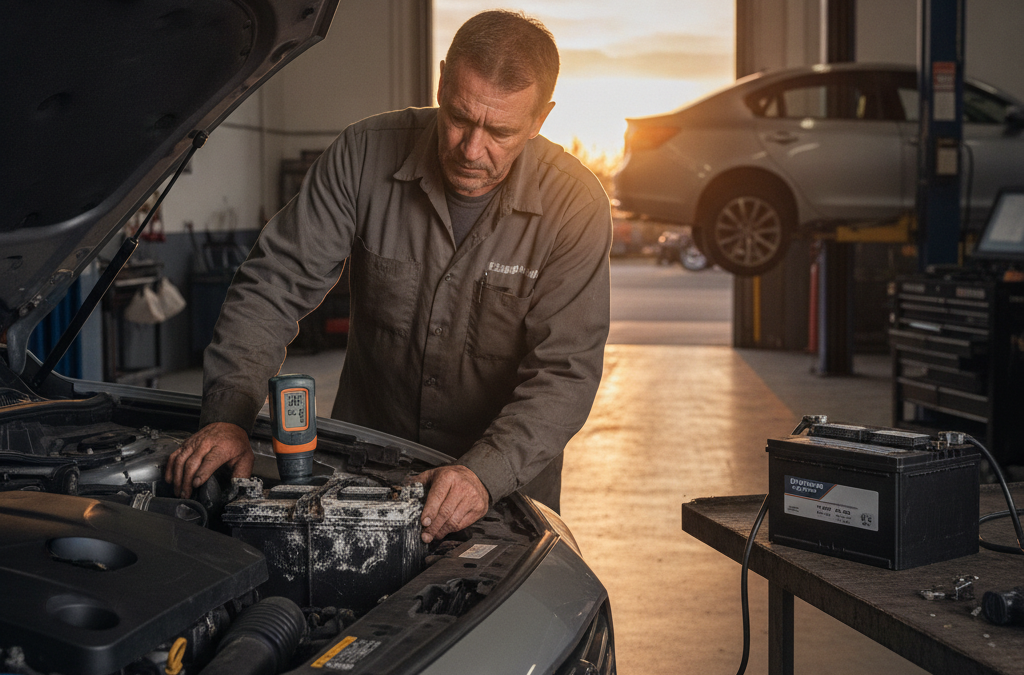
A proper battery test isn’t just plugging in a meter and reading voltage. At All Valley Car Care in Surprise, we run a full load test that checks how your battery performs under real starting conditions — not just sitting still. We also inspect the battery terminals for corrosion buildup, check the connections, and test the alternator to make sure it’s charging the battery correctly while you drive.
Why does the alternator matter? Because a failing alternator will drain even a brand-new battery. If your shop replaces your battery without checking the charging system, you might be back in a week with the same problem — and a lighter wallet.
We’ll tell you straight what we find. If the battery tests strong and the problem is elsewhere, we’ll say so. No pressure to buy something you don’t need. That’s been the way we’ve operated since 2010, and it’s not changing.
How Often Should You Have Your Battery Checked in the Desert?
Given the accelerated wear that desert heat causes, we recommend having your battery tested at least once a year — and proactively at the two-year mark even if you haven’t noticed any symptoms. Many of our customers in Youngtown, Sun City, and the surrounding communities bring their vehicles in during our cooler months (November through February) when it’s a good time to assess how the battery held up through summer.
If you bought your car used and don’t know when the battery was last replaced, that’s worth finding out quickly. A full vehicle inspection is a smart move any time you’re unsure of a car’s service history, and the battery check is part of that.
Can You Test Your Own Battery at Home?
You can buy a basic battery tester at an auto parts store, and those are useful for a quick voltage check. If it reads significantly below 12.4 volts with the engine off, that’s a red flag. But as mentioned above, voltage alone doesn’t tell you how the battery performs under load — that’s what the professional tester measures. Think of it like checking tire pressure with a glance instead of a gauge. You’ll catch obvious problems but miss the subtler ones.
Plenty of drivers in Glendale and across the Phoenix metro have been caught off guard by a battery that tested “okay” on a basic store tester and failed completely a few days later. If you’re even slightly concerned, bring it in and let us run the full test. It doesn’t take long, and it’s the kind of thing that genuinely prevents a very bad day.
Frequently Asked Questions
How much does a battery replacement cost in the Surprise area?
Battery prices vary based on the battery type and your vehicle’s requirements. We’ll give you a written estimate upfront so there are no surprises on the final invoice. Call us or stop in and we can give you a real number for your specific vehicle.
Does the heat from Arizona summers void my battery warranty?
Most battery warranties are prorated and don’t exclude heat-related failure outright, but the terms vary by brand. We can help you understand what your battery’s warranty covers and choose a replacement that’s rated appropriately for high-heat environments.
My battery is less than a year old — why is it dying already?
A few possibilities: the alternator isn’t charging it properly, there’s a parasitic drain (something drawing power when the car is off), or the replacement battery wasn’t the right spec for your vehicle. Bring it in and we’ll find the actual cause rather than guessing.
Can a dead battery cause my check engine light to come on?
Yes, it can. Voltage drops can trigger all kinds of electronic fault codes in modern vehicles. If your check engine light appeared after a battery issue or jump-start, have it properly diagnosed — don’t just clear the code and hope for the best.
Do you service batteries for commercial vehicles and fleets?
We do. If you’re running a small business with multiple vehicles out of the Surprise or greater Phoenix area, we can schedule battery inspections as part of a broader fleet maintenance routine to keep your trucks and vans on the road.
Don’t Wait Until You’re Stranded
A battery failure is one of the most preventable breakdowns there is. Two minutes of attention at your next oil change — or a quick stop for a load test — can tell you exactly where you stand. If it’s good, you’ll know. If it’s marginal, you’ll have time to plan for a replacement instead of scrambling in a parking lot.
All Valley Car Care has been serving drivers across Surprise, Glendale, and the surrounding West Valley since 2010. We’re not here to sell you a battery you don’t need — we’re here to give you an honest answer and take good care of your vehicle. Contact us to schedule a battery test or any other service — we’ll tell you exactly what’s going on and what it’ll take to fix it.