
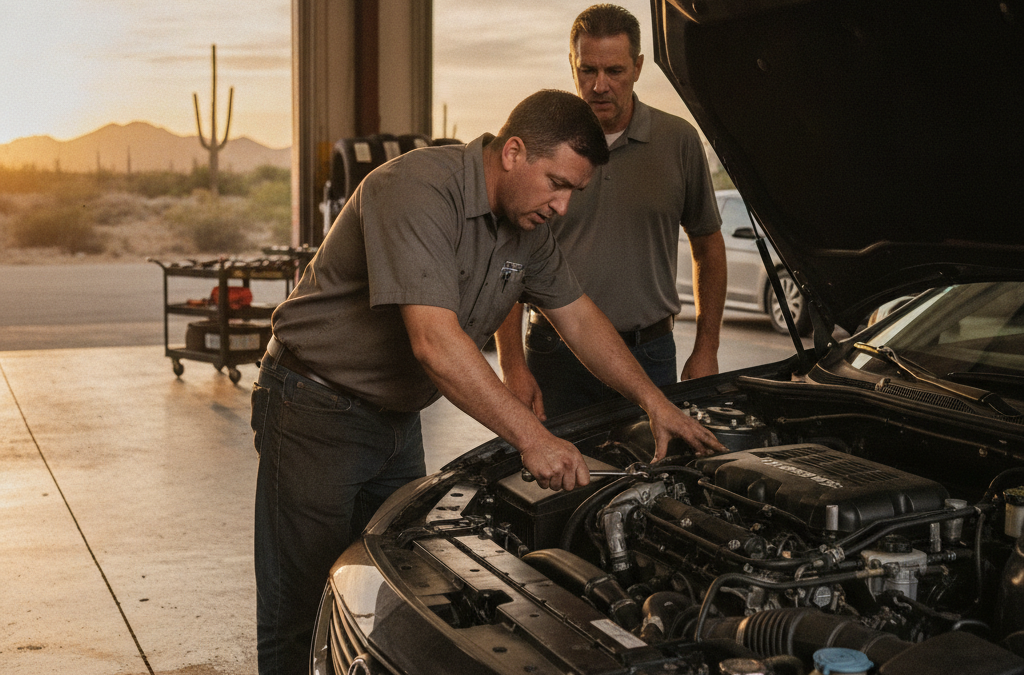
How Do You Know If Your Car’s Power Steering Is Failing — and What Does It Cost to Fix in Surprise, AZ?
If your steering wheel has started feeling heavier than usual — especially when you’re pulling into a parking spot or making a slow turn — your power steering system may be starting to go. For drivers in Surprise and across the Phoenix West Valley, this isn’t a problem you want to ignore. A failing power steering system doesn’t just make driving less comfortable; it can make your car genuinely harder to control, particularly in emergency situations. The good news is that most power steering problems give you warning signs well before they become a full failure. Here’s what to watch for, why Arizona’s extreme heat plays a role, and what it typically costs to fix.
What Does Power Steering Actually Do?
Your power steering system is what makes turning the wheel feel effortless. Without it, steering — especially at low speeds or when parking — would feel like turning a truck with flat tires. There are two types in common use today: hydraulic power steering (HPS), which uses a pump driven by your engine and pressurized fluid to assist your turns, and electric power steering (EPS), which uses a motor and sensors instead of fluid. Older vehicles and many trucks and SUVs still use hydraulic systems. Most vehicles made after 2010 have shifted to electric.
Both systems can fail — just in different ways. Knowing which type your vehicle has helps you understand what symptoms to expect.
Warning Signs Your Power Steering Is Failing
These are the most common signals that something is wrong, regardless of which system your vehicle uses:
- Stiff or heavy steering wheel — especially noticeable at low speeds, in parking lots, or during tight turns. If the wheel suddenly feels like you’re fighting it, that’s not normal.
- Whining or groaning noise when turning — a classic sign of a struggling hydraulic power steering pump. The noise usually gets louder as you approach full lock (turning all the way to one side).
- Steering wheel shudders or vibrates during turns — this can point to a failing pump, a worn steering rack, or low fluid.
- Loose or wandering steering feel — if the wheel feels vague, slow to respond, or like there’s too much play in it, the rack and pinion or steering gear may be wearing out.
- Fluid puddle under the front of the car — hydraulic systems use power steering fluid, which is typically reddish or clear. A leak under the front-center or passenger-side front is a red flag.
- Power steering warning light — vehicles with electric power steering often have a dedicated warning light (sometimes labeled EPS or a steering wheel icon). If it comes on, get it scanned.
- Burning smell near the engine — if your hydraulic fluid is leaking onto hot engine components, you may notice a sharp, slightly sweet burning smell.
If you’re noticing any of these, it’s worth getting the system checked. These problems don’t fix themselves, and in Arizona’s summer heat, what starts as a minor fluid leak can escalate quickly once temperatures are regularly pushing past 110°F.
Why Arizona Heat Is Hard on Power Steering Systems
Hydraulic power steering fluid is a lot like any other automotive fluid — heat breaks it down over time. In a place like Surprise or Peoria, where your car may sit on asphalt that’s pushing 150°F in July, the fluid degrades faster than it would in a milder climate. When the fluid thins out or oxidizes, the pump has to work harder. That extra stress shortens pump life significantly.
Hoses and seals in hydraulic systems are also vulnerable. The constant expansion and contraction from extreme heat cycles causes rubber hoses to crack and seals to harden and leak. What might last 10 years in a cooler climate could start leaking in five to seven years here in the Valley of the Sun.
Electric power steering systems aren’t entirely off the hook either. The control modules and sensors that run EPS can be affected by heat over time, and wiring connections under the hood are exposed to the same brutal conditions.
What Are the Most Common Power Steering Repairs — and What Do They Cost?
Power steering repairs range from relatively minor (a fluid top-off and hose replacement) to more involved (a full rack and pinion replacement). Here’s a rough breakdown of what’s most common:
- Power steering fluid flush and refill — If the fluid is degraded or contaminated, flushing and refilling it can restore smooth performance. This is one of the lower-cost services, typically in the $80–$130 range depending on the vehicle.
- Power steering hose replacement — Cracked or leaking hoses are common in Arizona. Parts and labor generally run $150–$400 depending on whether it’s the high-pressure line or the return hose.
- Power steering pump replacement — This is the most common major hydraulic repair. Depending on your vehicle, expect somewhere in the $300–$700 range for parts and labor. Some trucks and SUVs run higher.
- Rack and pinion replacement — More involved, and priced accordingly. This can range from $650 to over $1,500 depending on the vehicle make and whether it’s a hydraulic or electric rack. It’s not a job you want to skip if the rack is genuinely worn — loose steering is a safety issue.
- Electric power steering module or sensor repair — Diagnosis is the first step here. Sometimes a software update or sensor replacement resolves the issue without replacing the whole motor assembly.
At All Valley Car Care in Surprise, we give you a written estimate before any work starts. No surprises on the bill — and no pressure to approve repairs you’re not ready for.
Hydraulic vs. Electric Power Steering: What You Should Know Before You Go In for Service
This is an area that many local shops — and quite a few competitor websites in the Phoenix area — don’t explain clearly. It matters, because the diagnosis and repair process is completely different depending on which system your vehicle has.
If you have hydraulic power steering: The tech will check fluid level and condition first, inspect hoses and connections for leaks, test pump pressure, and look at the steering rack for wear or seepage. Many problems in this system are catch-able early if you pay attention to that whining noise or notice the fluid is low.
If you have electric power steering: There’s no fluid to check. Diagnosis starts with a scan tool to pull fault codes from the EPS control module. Symptoms like intermittent stiffness, warning lights, or unusual steering feel all get traced through the vehicle’s computer first. This is why you can’t just “check the fluid” on a newer car when the steering feels off — there’s no fluid to check.
Knowing which system your vehicle has will help you ask better questions when you bring your car in. If you’re not sure, your owner’s manual will tell you — or just ask us when you call.
Can You Drive With a Power Steering Problem?
Technically, yes — but it depends on how far along the failure is. If the pump is whining a little but the steering still feels normal, you have some time to schedule a repair. If the wheel is noticeably stiff or you’ve lost fluid suddenly, we’d recommend not driving it until it’s been looked at. A car with severely compromised steering is harder to control in a panic stop or sudden lane change — and on West Valley highways where speeds are high and road construction is constant, that’s not a risk worth taking.
Drivers in El Mirage and Sun City West who do longer daily commutes on the 303 or Grand Avenue corridor especially shouldn’t put this one off.
Frequently Asked Questions
How often should power steering fluid be changed?
Most manufacturers recommend a power steering fluid flush every 50,000–75,000 miles, but in Arizona’s heat, it’s worth checking it more frequently — especially if your vehicle is older or has high mileage. If the fluid looks dark brown or smells burnt, it’s overdue.
Can low power steering fluid damage the pump?
Yes. Running a hydraulic system with low or degraded fluid causes the pump to cavitate — essentially spinning without enough fluid to lubricate and cool it. That wears the pump out faster. It’s a small service that protects a much more expensive component.
My car has electric power steering and the warning light came on. What should I do?
Get it scanned as soon as you can. EPS warning lights don’t always mean the system is about to fail completely, but they indicate a fault code that needs to be identified. Sometimes it’s a sensor, sometimes a software issue, and occasionally it’s the motor assembly. You won’t know until it’s diagnosed.
Is power steering noise always the pump?
Not always. A whining or groaning noise when turning is most commonly the pump, but worn rack and pinion components and low fluid can also cause noise. A proper inspection will narrow it down quickly so you’re not replacing parts you don’t need.
Does All Valley Car Care service both hydraulic and electric power steering systems?
Yes. We work on both systems across domestic vehicles, European imports, and newer EV platforms. Our ASE-certified technicians use computerized diagnostic equipment to identify EPS faults accurately, so you’re not guessing at the repair. See our full list of services for more detail.
Get Your Power Steering Checked at All Valley Car Care
Whether your steering has been feeling stiff lately, you’ve noticed a whine when turning, or you spotted fluid under the front of your car this morning, it’s worth getting eyes on it before it turns into a bigger repair. Our team in Surprise has been helping West Valley drivers — from Goodyear to Glendale — keep their vehicles safe and reliable since 2010. We’ll tell you exactly what we find, give you a written estimate, and never push you toward repairs you don’t need.
Ready to get it checked out? Contact All Valley Car Care to schedule an appointment — we’re here when you need us.