
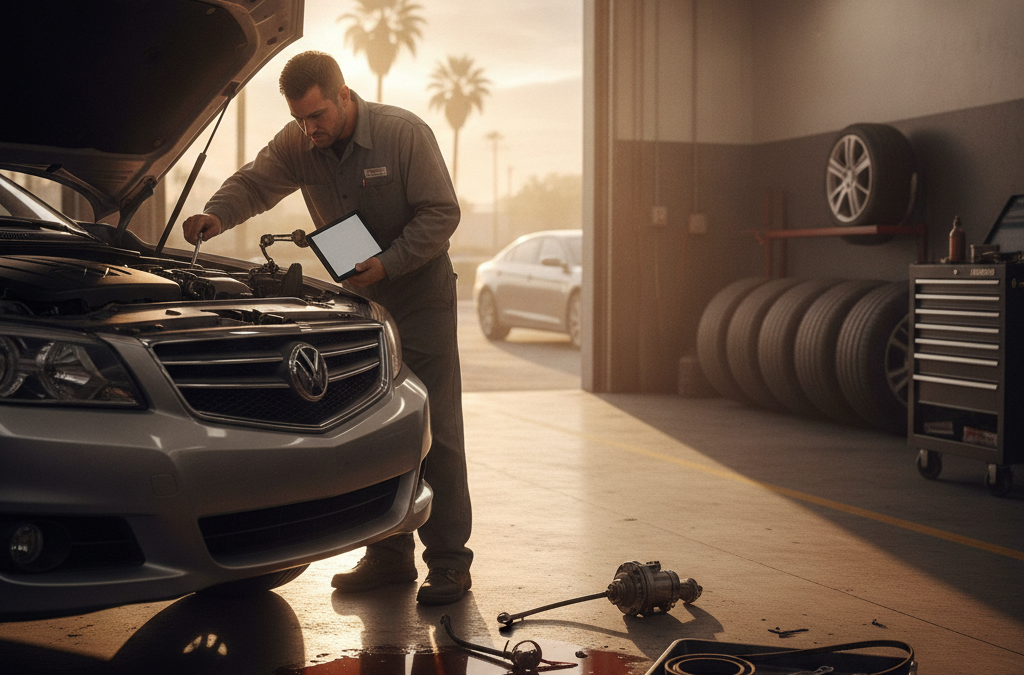
How Do You Know If Your Car’s Power Steering Is Going Out — and What Does It Cost to Fix in Surprise, AZ?
You’re pulling out of a parking lot in Surprise on a 108-degree afternoon, and the steering wheel fights back. It feels heavy, stiff, almost like it doesn’t want to cooperate. Maybe you’ve also noticed a low whining or groaning sound when you make a tight turn. That’s not normal — and it’s not something to put off. Power steering problems tend to get worse quickly, and in some cases they can become a safety issue. The good news is they’re usually fixable without breaking the bank, especially if you catch them early.
What Power Steering Actually Does
Power steering is what makes it easy to turn a 4,000-pound vehicle with one hand. Without it working properly, you’d need real muscle to maneuver — especially at low speeds, in parking lots, or while parallel parking. Most vehicles on the road in the Phoenix West Valley use one of two types of power steering systems: hydraulic or electric.
Hydraulic power steering uses a pump driven by your engine, along with pressurized fluid, to help you steer. This is the older, more common setup on trucks and older SUVs. When the fluid is low or the pump is failing, you’ll feel and hear it.
Electric power steering (EPS) is found on most newer vehicles. Instead of a fluid pump, it uses an electric motor and sensors to assist the wheel. EPS failures often show up as warning lights or erratic assist rather than a fluid leak — but they still need professional diagnosis.
Warning Signs Your Power Steering Is Failing
Here are the most common things drivers report before a power steering problem becomes a full breakdown:
- Stiff or heavy steering wheel — especially noticeable at low speeds or when parking. If it feels harder to turn than it used to, that’s a red flag.
- Whining or groaning noise when turning — on hydraulic systems, this usually means low fluid or a struggling pump.
- Steering wheel that shakes or vibrates — not the same as alignment vibration; this tends to happen specifically when turning or at parking-lot speeds.
- Fluid puddles under the front of the car — power steering fluid is usually clear to slightly amber. A leak at the front of the vehicle near the wheels or engine can point to a power steering hose or rack issue.
- A warning light on your dash — newer vehicles with electric power steering will often display a steering wheel icon or a general warning when the system detects a problem.
- Delayed or jerky response — if the wheel doesn’t respond smoothly when you turn it, or there’s a lag before the car follows, the system is compromised.
Any one of these on its own is worth getting checked. Two or more together means don’t wait.
Why Arizona Heat Is Hard on Power Steering
Here’s something a lot of drivers in the Phoenix area don’t realize: the extreme heat in places like Surprise, El Mirage, and Goodyear is particularly rough on power steering components. When temperatures hit 115°F outside and the pavement underneath your car is 150°F or hotter, the fluid in a hydraulic power steering system degrades faster than it would in a milder climate. Seals dry out and crack. Hoses get brittle. The power steering pump works harder because the fluid has thinned and lost some of its lubricating properties.
If your vehicle has been sitting outside most of its life in the West Valley sun — and most of them have — the rubber hoses and seals in your steering system have taken a beating. This is especially true on older trucks and SUVs that haven’t had the power steering fluid changed in years. A fluid flush and inspection can catch problems before a seal fails or a pump burns out.
What Repairs Actually Cost — and What Questions to Ask
Power steering repairs have a pretty wide range depending on what’s wrong. Here’s a realistic breakdown so you know what you’re walking into:
- Power steering fluid flush and refill — This is the least expensive service, usually well under $100, and often overlooked entirely. If your fluid is dark, burned, or hasn’t been changed in years, this alone can extend pump life.
- Power steering hose replacement — Hoses crack and develop slow leaks over time, especially in Arizona’s heat. Depending on which hose and your vehicle, this typically runs a few hundred dollars with parts and labor.
- Power steering pump replacement — This is a bigger job. Parts and labor combined can run $300–$700 or more depending on make and model. A pump that’s whining loudly and cavitating (making a grinding noise) needs to be replaced, not topped off and ignored.
- Rack and pinion replacement — The most involved power steering repair. This is the steering rack itself, and replacement can run $500–$1,200 or more. Worth getting a second opinion on if a shop recommends it without first addressing simpler causes.
- Electric power steering motor or control module — On newer vehicles with EPS, this requires proper diagnostic scanning to identify, not just a visual inspection. Costs vary significantly by vehicle make.
Whatever a shop tells you, always ask for a written estimate before work begins. At All Valley Car Care, that’s standard practice — you know what the job costs before anyone picks up a wrench. No surprises, no pressure.
What Competitors Often Miss: The EPS Diagnostic Gap
Most local shop websites that mention power steering at all focus entirely on hydraulic systems — fluid leaks, pump noise, hose replacement. That covers a lot of older vehicles, but it leaves out a growing number of drivers in Peoria, Glendale, and Sun City West who are driving newer cars with electric power steering and have no idea what to do when that steering warning light comes on.
EPS problems don’t leak fluid. They don’t whine. They show up as strange behavior — the wheel suddenly feeling light on one side, assist cutting in and out, or a persistent dashboard warning. Diagnosing EPS requires a scan tool that reads steering system codes, not just a look under the hood. If a shop doesn’t mention that, they may not be equipped for it.
All Valley Car Care uses computerized diagnostic equipment that reads the full range of trouble codes — including steering and chassis systems — on domestic vehicles, European imports, and modern EVs. If your power steering warning light is on and you’re not sure why, we can read those codes and explain in plain language exactly what they mean.
Can You Drive With a Power Steering Problem?
Short answer: maybe for a little while, but you shouldn’t. A car with compromised power steering is harder to control — particularly in emergency situations where you need to swerve or make a sharp turn quickly. On Youngtown’s neighborhood streets and the construction-heavy stretches around the Grand Ave corridor, that extra effort to turn the wheel could matter when you least expect it.
If your steering feels fine at highway speed but heavy at low speed, you likely have enough function left to drive to a shop safely — but make it soon. If the wheel is suddenly very hard to turn at all speeds, or if you’ve completely lost fluid, call for a tow rather than risk it.
Learn more about our Surprise location and schedule a steering inspection today.
Frequently Asked Questions
How often should power steering fluid be changed in Arizona?
There’s no universal rule, but in the Phoenix heat, checking it annually and replacing it every 50,000–75,000 miles is a reasonable starting point. Old, dark fluid that smells burned should be replaced regardless of mileage.
Can I add power steering fluid myself to buy some time?
You can top it off temporarily if the reservoir is low, but adding fluid doesn’t fix a leak or a worn pump — it just delays the inevitable. If you’re consistently losing fluid, there’s a problem somewhere that needs to be found.
My car has electric power steering and the light just came on. Is it safe to drive?
Get it scanned as soon as you can. Some EPS warnings are minor sensor issues; others indicate the assist motor is struggling. Until you know what’s causing it, drive carefully and avoid situations that require quick steering inputs.
Is it worth fixing power steering on a high-mileage vehicle?
It depends on what else is going on with the vehicle. A fluid flush or hose replacement on a 150,000-mile truck is usually worth it. A full rack replacement on a car with multiple other known issues is a different conversation — one worth having honestly with a shop you trust before you commit.
Does All Valley Car Care service electric power steering systems?
Yes. We work on hydraulic and electric power steering systems across domestic vehicles, European imports, and EVs. If your steering warning light is on or something doesn’t feel right, bring it in and we’ll diagnose it properly.
Get Your Steering Checked Before It Gets Worse
Power steering problems rarely fix themselves — and in the Arizona heat, they tend to move fast. Whether you’re dealing with a groaning pump, a slow fluid leak, or a warning light you don’t understand, the team at All Valley Car Care will tell you exactly what’s going on and what it actually takes to fix it. No unnecessary repairs, no hidden costs — just honest answers from a shop that’s been serving Surprise and the West Valley since 2010.
Contact us or request a service appointment online — we’ll get you in, get it diagnosed, and get you back on the road with steering you can count on.