
Should You Buy That Used Car in Glendale? Here’s What a Pre-Purchase Inspection Will Tell You
You found a used car in Glendale that looks clean, the price feels right, and the seller seems straightforward. But before you hand over a check or sign anything, there’s one step that can save you from a very expensive mistake: a pre-purchase inspection from an independent mechanic. In the Phoenix area, that inspection matters even more than it would somewhere with a milder climate — because Arizona’s heat is brutal on cars in ways that don’t always show up during a test drive.
Why Used Car Buyers in the Phoenix Area Need an Independent Inspection
The used-car market across the Phoenix metro — from Glendale and Peoria on the west side to Avondale and Goodyear further out — moves fast. Sellers know that. Private sellers and even some dealers bank on buyers feeling pressure to decide quickly, especially when a car looks good and runs fine around the block. But a vehicle that feels fine at 45 mph on surface streets can have a transmission starting to slip, a battery on its last legs, or brake rotors that are dangerously thin.
An independent pre-purchase inspection gives you an honest, third-party look at what you’re actually buying. A shop that has no financial stake in whether you purchase the car will tell you the truth — the whole truth — about what’s good, what’s questionable, and what’s going to need money soon.
What Arizona Heat Does to Used Cars That Out-of-State Buyers Never Expect
If the vehicle spent most of its life in the Valley of the Sun, it’s been through conditions that most cars were never designed for. Summers here regularly hit 115°F or higher. Under the hood, it’s hotter. The pavement can reach 150°F or more. That environment wears out certain components much faster than the manufacturer’s schedule assumes — because those schedules were written for average climates, not Phoenix.
- Batteries: In milder parts of the country, a battery might last five years. In the Phoenix area, two to three years is more realistic. A used car that’s been sitting in Surprise or El Mirage for a few years may have a battery that looks fine but is already borderline.
- AC systems: Arizona drivers run their air conditioning eight or more months a year. That’s heavy wear on compressors, condensers, and refrigerant systems. A failing AC in a used car isn’t a small fix — it can run into the hundreds or even over a thousand dollars depending on what failed.
- Hoses, belts, and seals: Heat degrades rubber fast. Coolant hoses, serpentine belts, and gaskets can look okay from the outside and still be cracked or brittle underneath.
- Tires: Hot pavement accelerates tire aging beyond just tread wear. Sidewall cracking and dry rot are common on vehicles that sat outdoors for extended periods in Phoenix summers.
- Cooling systems: Radiators, thermostats, and water pumps work overtime here. A vehicle that overheated even once can have internal engine damage that isn’t obvious without a proper diagnostic scan.
A thorough pre-purchase inspection will catch these issues before they become your problem.
What a Pre-Purchase Inspection Actually Covers
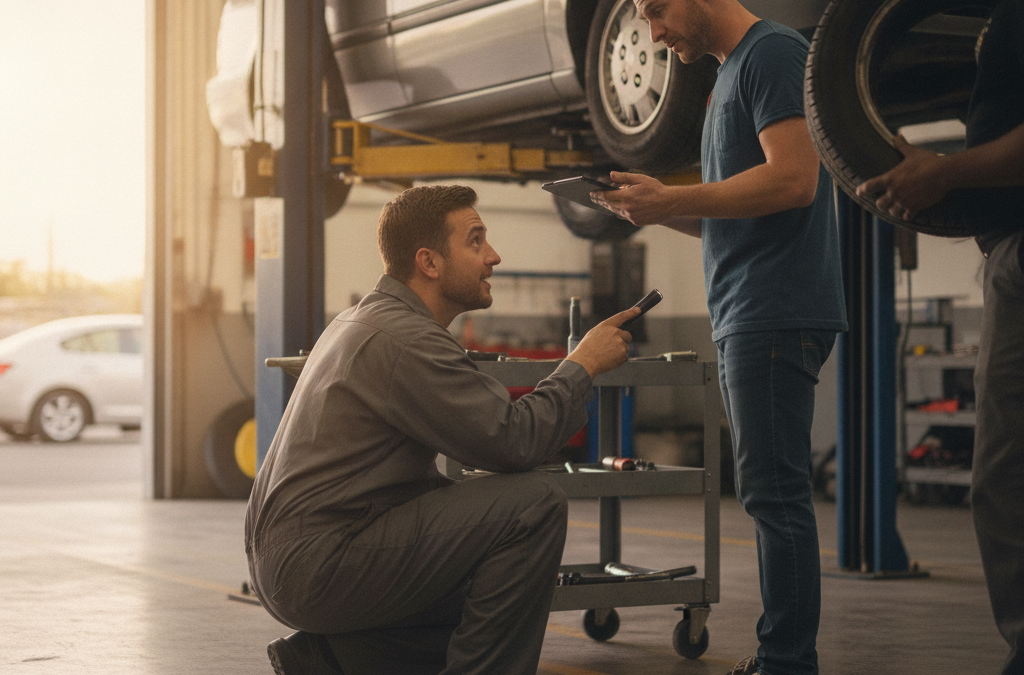
At All Valley Car Care’s Glendale location, a pre-purchase inspection is a systematic, top-to-bottom look at the vehicle. It’s not a quick visual once-over — it’s a real inspection by ASE-certified technicians using the same diagnostic tools and lift access they use for full repair work. Here’s what gets checked:
- Engine and fluid condition: Oil level and color, coolant condition, transmission fluid, brake fluid — all checked for signs of leaks, contamination, or neglect.
- Computerized diagnostic scan: The vehicle’s onboard computer is scanned for stored trouble codes — including codes the seller may have cleared recently to hide a problem. This is one of the most important steps.
- Brakes: Pad thickness, rotor condition, caliper function, and brake lines — all inspected. Worn brakes are one of the most common used-car surprises.
- Suspension and steering: Ball joints, tie rods, shocks, struts, and CV axles are checked for play, wear, and damage — especially relevant on vehicles that have lived through years of Arizona road construction and potholes.
- Tires and alignment: Tread depth, sidewall condition, and uneven wear patterns that signal alignment or suspension problems.
- Battery and charging system: Battery load test and alternator output check.
- AC and heating system: Refrigerant charge, compressor function, and airflow — critical on any car in this climate.
- Exterior and undercarriage: Frame condition, signs of previous accident repair, rust (less common here but not unheard of), and fluid leaks from underneath.
At the end, you get a plain-English rundown of exactly what the technician found — no upselling, no scare tactics, just the facts. You decide what to do with that information.
How Much Does a Pre-Purchase Inspection Cost — and Is It Worth It?
A pre-purchase inspection typically runs between $100 and $200 at an independent shop, depending on the depth of the inspection and whether a full diagnostic scan is included. That might feel like an extra expense when you’re already stretched on a vehicle budget — but consider the alternative. A transmission service can run $300–$500. A compressor replacement can exceed $1,000. A used car with hidden engine damage from an overheating event can cost thousands to repair.
The inspection cost is almost always worth it. If the car is in great shape, you buy with confidence. If it has problems, you either negotiate the price down or walk away from a bad deal. Either outcome saves you money.
Can You Use a Pre-Purchase Inspection to Negotiate the Price?
Yes — and this is one of the most practical reasons to get one. If the inspection finds that the vehicle needs new brake pads, a battery, or fresh tires, those are real, documentable costs you can present to the seller. Many sellers will either knock the price down or agree to fix the items before the sale. You’re not guessing anymore — you have a written report from a licensed shop backing up your position.
That’s a very different conversation than just saying “I think the brakes sound a little off.”
Sellers who refuse to allow an independent inspection — especially if they’re pushing you to decide quickly — are worth being cautious about. A car with nothing to hide can handle 90 minutes at a shop.
Where to Bring the Car for Inspection
Ideally, you bring the vehicle to a shop you trust — not one the seller recommends. If you’re buying a car in Glendale, Sun City, Peoria, or anywhere in the Phoenix West Valley, All Valley Car Care can inspect it before you commit. We’ve been serving this area since 2010, and we give you the same straight answer whether you’re buying a $6,000 commuter car or a $25,000 pickup. See our full list of inspection and diagnostic services to understand what we cover.
We work on domestic vehicles, European imports, and electrics — so whatever you’re considering buying, we can inspect it properly.
Frequently Asked Questions About Pre-Purchase Inspections in the Phoenix Area
How long does a pre-purchase inspection take?
Plan on about one to two hours for a thorough inspection. If you need a diagnostic scan on top of the standard check, it may take a little longer. Call ahead and we can give you a realistic time estimate based on the vehicle type.
Does the seller have to bring the car, or can I?
Either works. Ideally, you drive the car yourself to the shop — it gives you a chance to notice anything unusual on the way over, and it confirms the car is drivable. If the seller insists on being present during the inspection, that’s fine too.
What if the inspection finds something serious?
That’s exactly what the inspection is for. We’ll walk you through what was found, give you a rough sense of what repairs would cost, and let you make the call. We don’t have a stake in whether you buy the car — our job is just to give you accurate information.
Is a pre-purchase inspection different from an emissions test?
Yes. Arizona’s emissions testing (required in Maricopa County for most vehicles) is a separate, government-mandated test focused on exhaust output. A pre-purchase inspection is a full mechanical evaluation done by a repair shop. Both matter, but they serve different purposes. You can learn more about Maricopa County’s vehicle emissions program through the Maricopa County Air Quality Department.
Should I skip the inspection if the car has a clean vehicle history report?
No. Vehicle history reports are useful for checking title issues, accident records, and ownership history — but they don’t tell you the condition of the brakes, the state of the battery, or whether the AC compressor is about to go. Those reports show paperwork history, not mechanical reality. An inspection shows you what’s actually happening under the hood right now.
Get a Pre-Purchase Inspection Before You Buy
If you’re shopping for a used car anywhere in the Glendale, Surprise, or greater Phoenix West Valley area, don’t skip this step. A pre-purchase inspection from All Valley Car Care is one of the most straightforward ways to protect yourself from a costly mistake. We’ll give you an honest report, written in plain English, with no pressure and no hidden agenda. You make the call — we just make sure you’re making it with accurate information.
Contact All Valley Car Care today to schedule your pre-purchase inspection. We serve drivers across the Phoenix West Valley from our locations in Surprise, Glendale, and Gilbert — and we’re happy to work around your timeline so you don’t lose a vehicle you’re genuinely interested in.